Mixed Reactions from Netizens on the Story
Average Lunch Cost for Office Workers Nationwide Exceeds 10,000 Won
A story about employees spending 370,000 KRW on Korean beef using their boss's card, which was given for lunch, has recently become a hot topic. On the 8th, an anonymous post titled "I gave my card to employees for lunch" was uploaded on the workplace anonymous community 'Blind'.
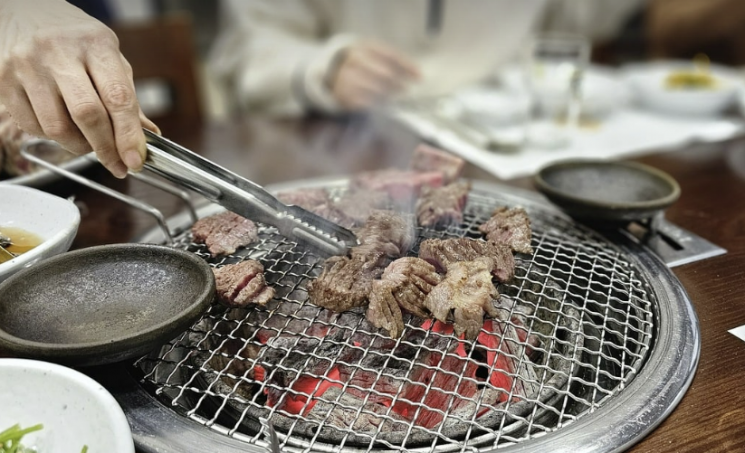
The author, Mr. A, who identified himself as the CEO of a company, explained the situation: "I decided to buy lunch for the employees that day, but suddenly a client came, so I gave them the card separately." He added, "I was embarrassed when I received the receipt," and said, "I didn’t want to make a fuss about what they ate, so I let it go, but it was a bit ridiculous." The receipt showed that five employees had eaten Korean beef worth 370,000 KRW.
Netizens who read the story had mixed reactions. Most commented, "The employees have no sense," "It’s just lunch, not a company dinner, this is too much," "Employees with no awareness," and "They should have been more reasonable." On the other hand, some netizens responded, "Maybe there were many built-up frustrations," "Think of it as a company dinner once," "I’m curious about the employees’ perspective," and "There must have been a reason why all five employees agreed."
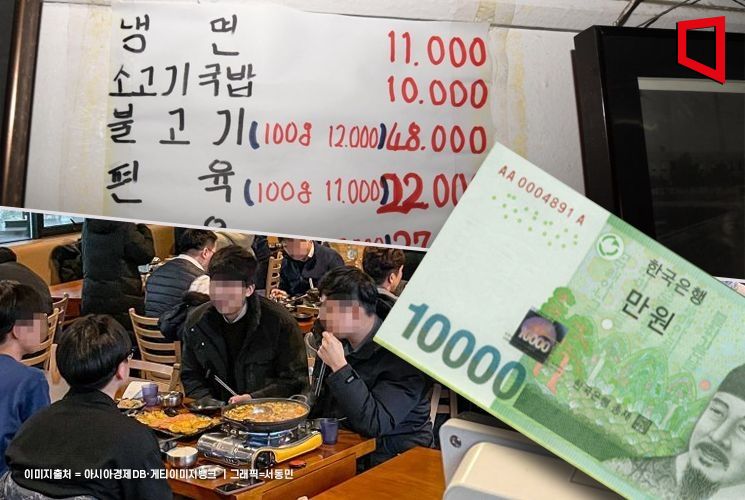
Meanwhile, according to data released by food tech company SikSin around April, the average lunch cost for office workers nationwide has exceeded 10,000 KRW. Additionally, the trend of rising lunch prices, which started in the metropolitan area, is spreading nationwide. Especially in the past two years, lunch prices have risen sharply. The average lunch price, which was 7,529 KRW in the first quarter of 2020, rose to 8,537 KRW in 2022, and this time it exceeded 10,000 KRW for the first time. The region with the highest lunch price was Seoul (10,798 KRW), and the lowest was Gangwon (9,355 KRW).
The rate of increase was higher in regions other than Seoul. The Chungcheong region rose 13.7% compared to the same period last year, followed by Gangwon at 11.7%, Gyeonggi at 9.6%, and Gyeongsang at 6.7%. A SikSin official analyzed, "The 'lunchflation' phenomenon first occurred in Seoul last year, and other regions have recently followed suit." The lunch price increase rate in Seoul in the first quarter was 0.3%.
Even company cafeterias, which are cheaper than external restaurants, were not spared from the effects of lunchflation. The average payment per meal at company cafeterias nationwide was 8,560 KRW, significantly higher than in 2020 (4,832 KRW) and 2022 (5,571 KRW). Among these, a recent report titled 'Ordinary People Report' published by Shinhan Bank found that 68.6% of office workers are trying to reduce their lunch expenses. For men, using company cafeterias, convenience stores, or even skipping meals was common, while women often cut back on coffee and used restaurant gift certificates or gifticons. The most common lunch-saving method cited by both men and women was 'preparing lunchboxes.'
© The Asia Business Daily(www.asiae.co.kr). All rights reserved.


















