Female Leaders, 174 from 87 Countries Since 1960
First Emerged in Sri Lanka, India, and Israel
Margaret Thatcher and Others Appeared Relatively Late in G7 Countries
"Kamala Harris is cracking the highest and hardest glass ceiling (the presidency). Through the cracks, Harris taking the oath (as U.S. president) can be seen. It is time to move forward for the future." - On the 19th (local time), former U.S. Secretary of State Hillary Clinton
With the upcoming U.S. presidential election in November, Vice President Harris has been confirmed as the Democratic presidential candidate. The world’s attention is focused on whether Harris will seize the title of "America’s first female president" against former President Donald Trump. Although women’s political participation is gradually increasing, including former German Chancellor Angela Merkel, once the most influential female politician in the world, and Ursula von der Leyen, the first woman to be re-elected as President of the European Commission (EU), it remains difficult for women to emerge as heads of state or government such as presidents or prime ministers.
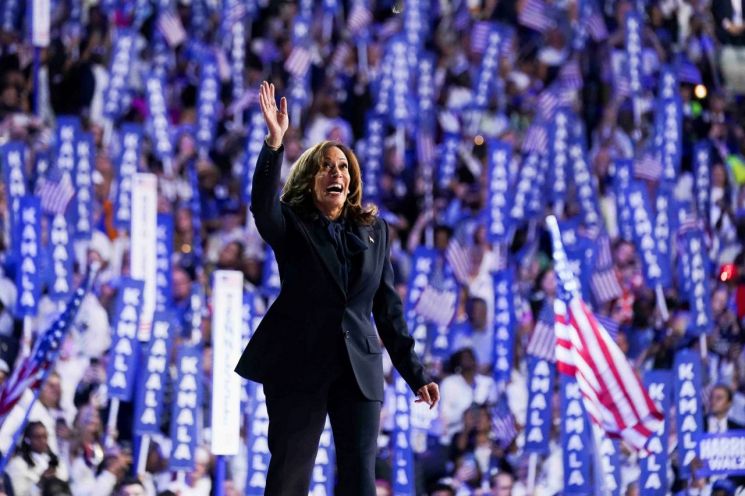 On the 22nd (local time), Vice President Kamala Harris was confirmed as the Democratic presidential candidate in the United States.
 [Image source=Reuters News Agency]
"Only one female leader from 45 countries including South Korea... World’s first female prime minister in 1960 from Sri Lanka"
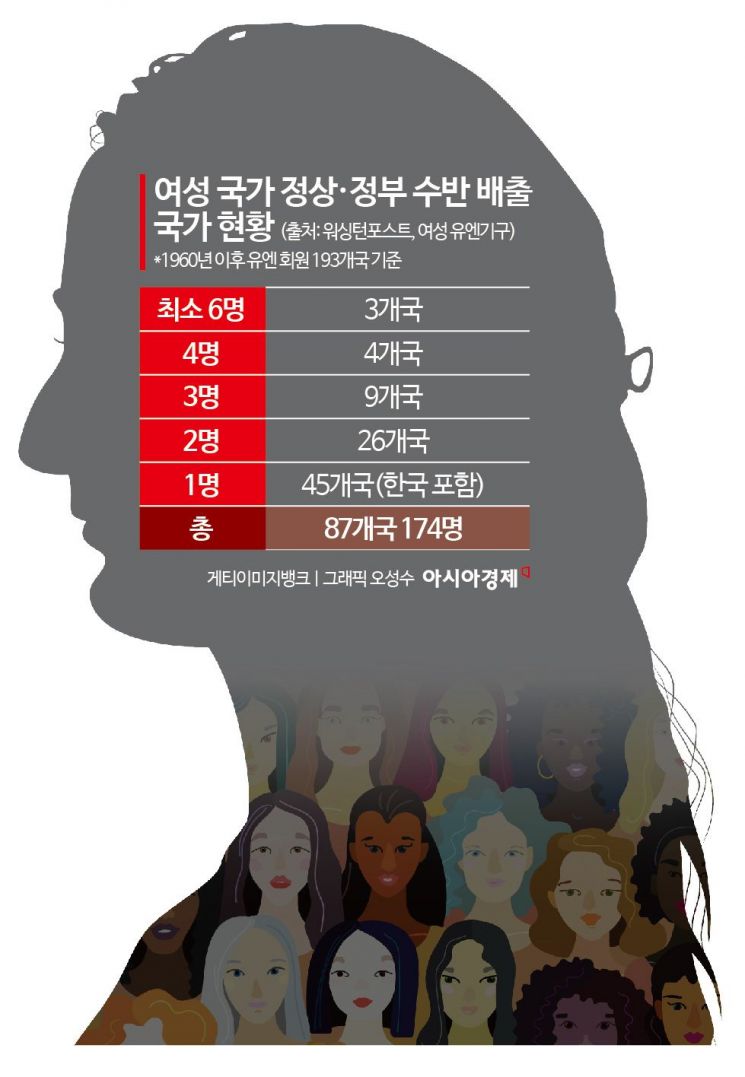
The Washington Post (WP) recently analyzed female heads of state or government in 193 UN member countries based on data from UN Women, reporting that "among the world’s 20 largest economies, the United States is one of seven countries where a woman has yet to serve as head of state or government." According to the report, since 1960, there have been 174 women who have served as heads of state or government in 87 countries worldwide.
Countries where women have served as head of state or government at least six times include Peru, San Marino, and Switzerland. Among them, San Marino holds the record for the most female leaders worldwide, with women serving as heads of state or government 20 times. Finland, Iceland, Lithuania, and Moldova are four countries where female leaders have appeared four times.
Additionally, nine countries including India, New Zealand, and the United Kingdom have had women serve three times, while 26 countries including France and Argentina have had women serve twice as heads of state or government. Forty-five countries, including South Korea (President Park Geun-hye), are classified as having had a woman serve exactly once as president or prime minister.
The world’s first female prime minister was Sirimavo Bandaranaike of Sri Lanka. After her husband, who became prime minister in 1956, was assassinated in 1959, she took office as prime minister a year later in 1960. She served as the country’s leader for three terms totaling 18 years until her death from a heart attack in 2000, and remained active in politics during other periods. When first appointed prime minister, she reportedly responded to a reporter’s question about whether women could better solve the world’s problems by saying, "We will see."
Six years later, in 1966, Indira Gandhi became India’s first female prime minister. Early in her tenure, she was even disparagingly called a "dumb doll," but she went on to serve nearly 16 years as head of government and is regarded as one of India’s most influential prime ministers, WP explained. Following her, in 1969, Israeli politician Golda Meir became prime minister and led during the 1973 Arab-Israeli War.
No history of female leaders in 3 of the G7 countries... "Hard to gain power in presidential systems"
Among the Group of Seven (G7) major countries, female heads of state or government appeared relatively late. In 1979, Margaret Thatcher, the "Iron Lady," won the UK general election and is still regarded as the most powerful female politician in British history. Among the G7 countries, female heads of state or government have appeared in four countries: the UK, France, Italy, and Canada. In the United States, where the first female president is currently anticipated, women make up only 28% of congressional members.
WP pointed out that it is structurally more difficult for women to become presidents in countries with a presidential system, one of the democratic governance models, compared to parliamentary systems. Since 2020, 27 female heads of state have emerged in countries with semi-presidential or parliamentary systems where presidential powers are partially distributed to prime ministers, but only two countries with presidential systems?Honduras and Mexico?have had female leaders.
Julie Ballington, policy advisor at UN Women, analyzed that in parliamentary systems, women can gradually build their position within parties and rise through the ranks, but in presidential systems, where the top position is directly contested, structural barriers make it harder for women to gain power.
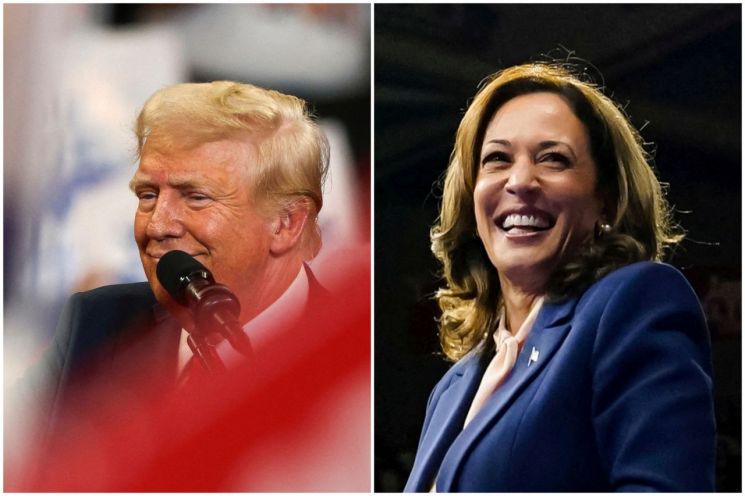 Ahead of the U.S. presidential election this November, Donald Trump, the confirmed Republican candidate (former president, left), and Kamala Harris, the Democratic candidate (current vice president) [Image source=Reuters]
Female heads of state or government who have emerged in this difficult structure have faced attacks based on their gender for decades. There have been issues where women’s clothing or appearance received more attention than their political abilities. When President Joe Biden withdrew from the race last month and Vice President Harris took center stage, former President Trump launched personal attacks, saying, "I look better than Harris." Reports also surfaced that he made sexist remarks in private.
Vice President Harris, accelerating her campaign, is not emphasizing the title of the first female president. This is because during the 2016 election, when Hillary Clinton first challenged to become the first female president, former President Trump rallied his base by emphasizing his male identity. Harris is interpreted to be taking a relatively light approach to the "first" label, choosing a strategy that avoids the division Trump intends to cause.
The New York Times (NYT) reported, "Democratic women say much has changed and lessons have been learned since Clinton’s failed White House bid in 2016." It conveyed the perception among Democratic women that the atmosphere has changed from the campaign that confronted misogyny and sexism at that time, placing them in a situation where they can imagine a woman actually becoming president.
© The Asia Business Daily(www.asiae.co.kr). All rights reserved.
!["The Woman Who Threw Herself into the Water Clutching a Stolen Dior Bag"...A Grotesque Success Story That Shakes the Korean Psyche [Slate]](https://cwcontent.asiae.co.kr/asiaresize/183/2026021902243444107_1771435474.jpg)


















