National Contract Dispute Mediation Committee Dismisses Hanwha's Mediation Review Application
Hanwha Likely to Decide Position While Participating in Space Aviation Agency's Mediation Talks
Civil Litigation Possibility Remains
Launch Vehicle Development Progressing Normally... Delays Burden All Parties
Role of Space Aviation Agency Without Mediation Authority Questioned
The conflict between the Korea Aerospace Research Institute (KARI) and Hanwha Aero Systems over the ownership of intellectual property rights in the next-generation launch vehicle system total contractor project, which involves a national budget of 950.5 billion KRW, has reached a crossroads between autonomous resolution through mediation by the Korea Space Agency and legal disputes. However, all parties involved in this matter have expressed consensus that there can be no delays in the next-generation launch vehicle project.
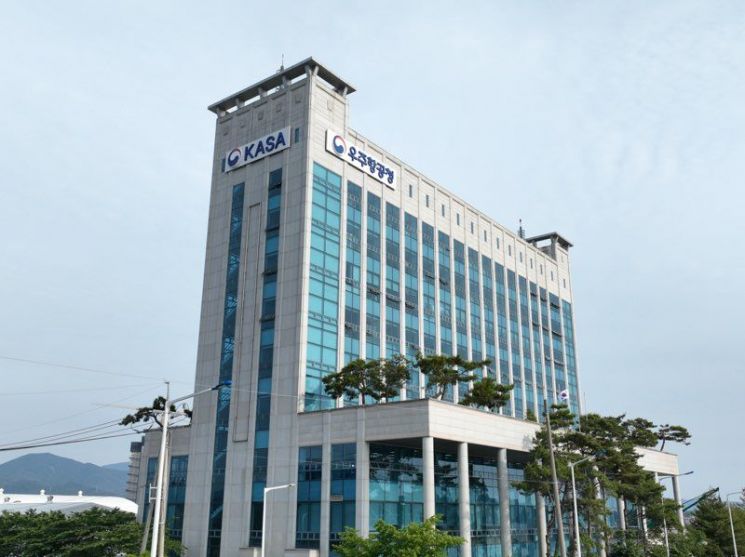
According to the Korea Space Agency on the 22nd, the National Contract Dispute Mediation Committee concluded on the 21st that the objection filed by Hanwha Aero, claiming issues with the next-generation launch vehicle project contract, is not subject to national contract dispute mediation and dismissed the case.
The Mediation Committee judged that the dismissal decision was made because Article 39 of the additional special conditions in the contract between KARI and Hanwha stipulates that dispute resolution methods are "court judgment or arbitration under the Arbitration Act."
Accordingly, the only remaining options to resolve this conflict are reaching an agreement through mediation by the Korea Space Agency, arbitration through the Korean Commercial Arbitration Board, or civil litigation.
The choice is up to Hanwha. Hanwha has not yet decided on a clear stance and has not ruled out attempts at arbitration through the Korean Commercial Arbitration Board or civil litigation. KARI maintains a firm position that it cannot back down due to potential issues such as breach of trust if contract terms are changed. KARI has stated that even with the appointment of a new president, their position will not change. The current KARI president, Lee Sang-ryul, has completed his term, and the process of appointing a new president is underway.
However, both KARI and Hanwha denied the allegations of a side agreement that surfaced during this controversy. They explained that since the project was conducted in the form of a procurement contract from the outset, a side agreement could not exist.
The Korea Space Agency, responsible for resolving the conflict, stated, "We will make efforts to prepare a mediation proposal by specifically listing the demands of both parties to find a compromise," emphasizing, "What is more important is the normal progress of the next-generation launch vehicle project." They clarified that apart from the conflict over intellectual property rights, the project must proceed as planned under the existing contract. According to the current schedule, the next-generation launch vehicle is expected to conduct its first launch in 2030, the second launch in 2031, and the lunar lander launch mission in 2032.
Both KARI and Hanwha agree on the importance of the success of the next-generation launch vehicle project. Therefore, all three parties say that discussions for mediation and development-related talks are ongoing. Any disruption to this national project would be a burden for both KARI, a government-funded research institute, and Hanwha, a corporation. The fact that Hanwha Group has many dealings with the government in the defense sector is also a factor to consider.
Since the Korea Space Agency's mediation lacks legal legitimacy, it is questionable how much persuasive power it can exert. The Korea Space Agency cannot arbitrarily request concessions from KARI. The agency is aware of these issues. This is why criticism arises that the Ministry of Science and ICT and the Korea Space Agency have failed to prevent such problems in advance or review legal issues, leaving the conflict unresolved and failing to fulfill their roles.
Previously, Hanwha Aero raised objections claiming that intellectual property rights related to the next-generation launch vehicle should be jointly owned based on clauses in the project proposal. In response, KARI insists that since the research and development project is fully funded by the national budget and conducted in a procurement format, it should solely own the intellectual property rights.
© The Asia Business Daily(www.asiae.co.kr). All rights reserved.

















