Additional Increase in Emergency Room Specialist Consultation Fee
15 out of 136 Regional Emergency Medical Centers Designated as 'Base Hospitals'
The government has decided to increase the patient co-payment for mild cases using emergency rooms from the current 50-60% or more in order to minimize treatment gaps for severe and emergency patients, such as those experiencing 'emergency room spinning.' Additionally, to secure emergency medical personnel, the government plans to add extra consultation fees when specialists examine patients in emergency rooms.
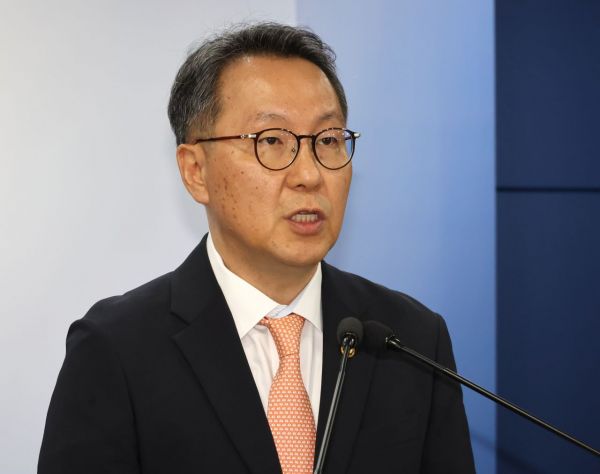
On the 22nd, Park Minsu, Chief Coordinator of Collective Medical Action at the Central Disaster and Safety Countermeasures Headquarters (Vice Minister of Health and Welfare), held a briefing at the Government Seoul Office and stated, "Currently, mild and non-emergency patients account for about 42% of emergency room users, which is still a significant proportion."
Vice Minister Park further explained, "This measure focuses on supporting emergency medical personnel on the ground to prevent their departure, encouraging mild patients with low urgency or necessity to refrain from visiting emergency medical centers, and supporting smoother follow-up treatment to shorten emergency room stay times as much as possible."
Accordingly, the government plans to further increase the consultation fee surcharge for cases where emergency room specialists examine patients, in addition to the 100% surcharge applied since February. It will also strengthen wage support for regional emergency medical centers and local emergency medical centers.
For the purpose of dispersing mild patients, about 15 out of 136 regional emergency medical centers and local emergency medical centers will be designated as base hospitals to focus on treating severe and emergency patients. Patients with moderate or lower severity will be prioritized for treatment at local emergency centers and emergency medical institutions, and when mild or non-emergency patients use regional or local emergency medical centers, their outpatient co-payment will be increased from the current 50-60%.
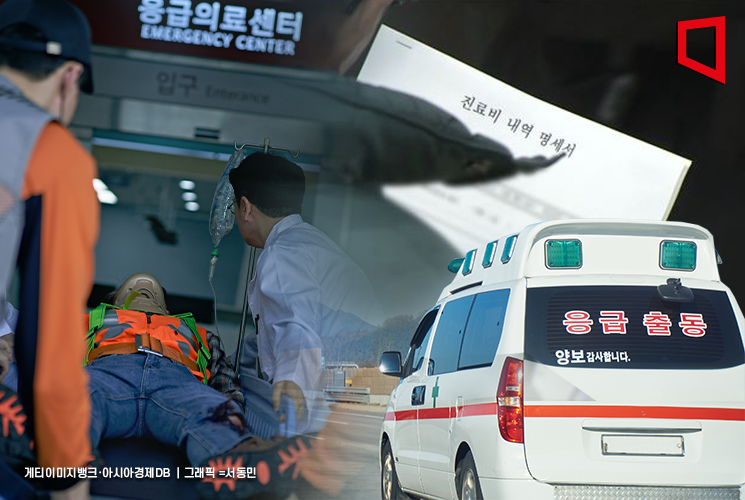
Furthermore, the government will evaluate emergency treatment contributions such as the acceptance rate of severe and emergency patients and the acceptance rate of transferred patients between hospitals, providing additional incentives to excellent institutions. It will also increase fees for follow-up treatments such as surgery, procedures, and anesthesia after hospitalization beyond emergency room treatment to strengthen follow-up care.
To enable rapid treatment of emergency patients, the transport and transfer system will be reorganized. From next month, the severity classification criteria at the transport stage (Pre-KTAS) will be implemented to determine the appropriate hospital based on patient severity during transport.
In preparation for an increase in COVID-19 patients during the upcoming Chuseok holiday, the emergency consultation fee surcharge, which is temporarily applied during the holiday period, will be expanded from the current 408 emergency medical institutions to emergency medical facilities. Fever clinics will be designated and operated at public hospitals such as provincial medical centers and local clinics to ensure timely treatment for COVID-19 patients. If necessary, beds at the National Medical Center, 270 nationally designated inpatient treatment beds, and 436 emergency treatment beds will be activated.
Chief Coordinator Park said, "The difficulties faced on the ground due to the departure of residents are not new but accumulated problems caused by delays in medical reform. The government will do its best to promote medical reform to fundamentally solve these issues, not just respond to immediate problems."
© The Asia Business Daily(www.asiae.co.kr). All rights reserved.

![A Woman with 50 Million Won Debt Clutches a Stolen Dior Bag and Jumps... A Monster Is Born [Slate]](https://cwcontent.asiae.co.kr/asiaresize/183/2026021902243444107_1771435474.jpg)
















