Cancellation of 3-Row SUV Production Plan... Shift to Electric Vans and Trucks
Aiming for IRA Benefits... Increased Battery Production with Korean Companies in the US
U.S. automaker Ford has decided to revise its electric vehicle (EV) investment plans. While adjusting the pace of EV production plans, it will increase EV battery production in the U.S. through cooperation with Korean battery manufacturers.
On the 21st (local time), Ford announced in a press release that it would cancel the production plan for the 3-row sport utility vehicle (SUV), which had previously been postponed. The annual capital expenditure ratio related to pure electric vehicle production will be reduced from the existing 40% to 30%. Instead of producing SUVs, Ford plans to develop an electric commercial van in 2026 and an electric pickup truck in 2027.
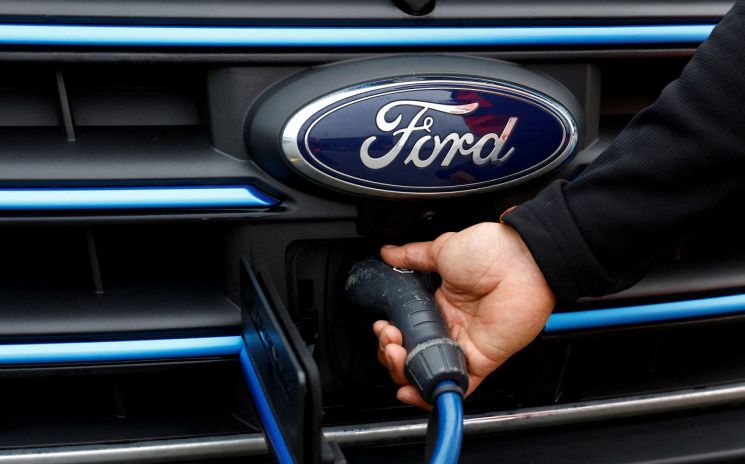
In addition, Ford will increase and accelerate the schedule for U.S. production of EV batteries. Ford stated that it is cooperating with LG Energy Solution to relocate some battery production used in the Mustang Mach-E model from Poland to its Michigan plant next year. This is to meet the qualification requirements for the tax credit provision under the Inflation Reduction Act (IRA) of the Joe Biden administration, which offers up to $7,500 in tax credits for electric vehicle purchases.
Ford said that BlueOvalSK, a joint venture with domestic SK On, plans to produce batteries for the current 'E-Transit' electric truck and 'F-150 Lightning' electric pickup truck at its Kentucky Plant 1 starting from mid-2025.
Also, BlueOvalSK's Tennessee plant will begin battery production for Ford's new electric commercial van by the end of 2025. These battery cells are expected to be used not only for the next-generation electric trucks produced at the 'BlueOval City' EV manufacturing complex being built in Tennessee but also for future new technology electric vehicles.
SK On and Ford announced in 2021 that they would invest a total of 10.2 trillion KRW (5.1 trillion KRW each) to establish an electric vehicle battery joint venture and build one battery plant in Tennessee and two in Kentucky. Construction of these plants has been underway since 2022.
Ford stated, "As the market evolves, this shared battery cell strategy will secure flexibility for manufacturing multiple vehicle segments and electric vehicle platforms."
© The Asia Business Daily(www.asiae.co.kr). All rights reserved.

















