Heritage for All Senior Researcher Revealed
Damage Assessment of Sculptures in Gyeongbokgung Palace
"Measures Needed Considering Visitors and Environment"
Damage to Geunjeongjeon, the central building of Gyeongbokgung and a national treasure, as well as to the stone structures around Gyeonghoeru, has been confirmed, raising concerns about the urgent need for management.
On the 21st, Ji-Young Kim, a senior researcher at Heritage4All, stated, "As a result of assessing the damage level of stone sculptures within Gyeongbokgung, the areas with the highest physical damage are Geunjeongjeon, Pumgyeseok, and the Gyeonghoeru area." This information was disclosed by researcher Kim ahead of the academic conference hosted by the National Research Institute of Cultural Heritage scheduled for the 29th. She identified these three locations as requiring focused management through future preservation measures and regular monitoring.
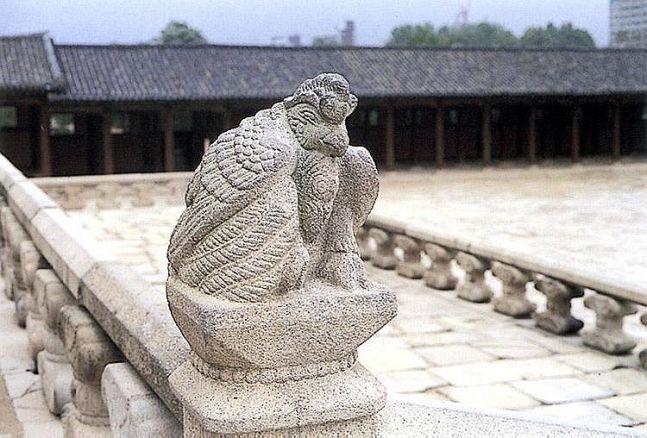
In particular, researcher Kim mentioned that after investigating the damage status and characteristics of a total of 915 stone sculptures, railings, and other items inside Gyeongbokgung, delamination and exfoliation were confirmed in 325 pieces, accounting for 35.5% of the 915 stone sculpture components. Cracks were found in 220 pieces (24.0%), and detachment was observed in 195 pieces (21.3%).
In the case of Geunjeongjeon, where several animal statues are carved on the railing pillars around the stairs, a total of 432 components showed various damages such as cracks, detachment, delamination and exfoliation, black discoloration, and biological growth. Furthermore, when evaluating the degree of physical damage as well as discoloration and biological damage, the cases corresponding to damage level 3, which indicates a relatively urgent need for preservation management, were most frequently found in the Gyeonghoeru and Geunjeongjeon areas.
Researcher Kim said, "The Geunjeongjeon and Pumgyeseok areas have the highest density of stone sculptures and are important locations visited by the largest number of visitors in Gyeongbokgung. The Pumgyeseok stones in the front yard of Geunjeongjeon showed the highest damage level, and the installation of active protective facilities capable of controlling rainfall and sunlight is necessary."
Meanwhile, considering this situation, the Cultural Heritage Administration plans to partially restrict viewing of Geunjeongjeon.
© The Asia Business Daily(www.asiae.co.kr). All rights reserved.

















