PCR Test Fees Vary Greatly by Hospital
Charged from Minimum 80,000 to 130,000 Won
Hidden Confirmed Cases Raise Concerns Over Spread Increase
#Recently, Wang Mo (30), an office worker, visited a hospital due to muscle pain and coughing symptoms but left without getting tested. When he asked the hospital about the cost of a PCR test, he was told it would be 100,000 won. For a rapid antigen test (RAT), he was informed that he would have to pay 30,000 won. Wang said, "I hesitated about whether I really needed the test and ended up going home," adding, "Since my bronchial tubes were not severely swollen, the test cost felt burdensome."
Although COVID-19 has been resurging recently, more citizens are hesitating to get tested due to the high costs. There are concerns that the number of hidden confirmed cases who do not visit hospitals despite having suspicious symptoms could accelerate the spread of COVID-19.
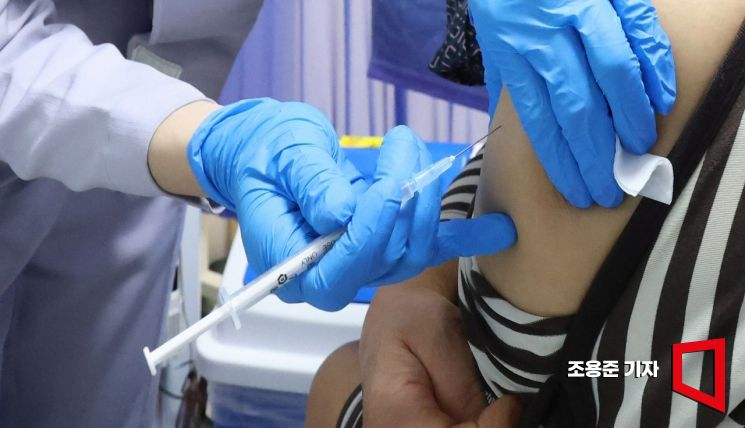 On the 19th, when free COVID-19 vaccinations began for high-risk groups and seniors aged 65 and older, an elderly person visiting a hospital in Gangseo-gu, Seoul, received the Pfizer vaccine. General individuals aged 12 to 64 who are not in the high-risk group will be eligible for free vaccinations starting from the 1st of next month. Photo by Jo Yongjun jun21@
On the 22nd, Asia Economy inquired at seven hospitals in Seoul and confirmed that rapid antigen tests cost patients an average of 20,000 to 30,000 won. For PCR tests, some hospitals charged between 80,000 and 130,000 won. Prices varied by hospital, with differences ranging from 10,000 to 50,000 won.
The test fees reaching up to 100,000 won are entirely borne by the patients. This is because the Korea Disease Control and Prevention Agency (KDCA) downgraded COVID-19’s infectious disease classification to level 4, the same as influenza, last August, reducing the scope of test fee support. PCR tests are covered by health insurance only for symptomatic patients eligible for oral antiviral treatments, resulting in out-of-pocket costs of 10,000 to 30,000 won. Rapid antigen tests receive partial support only for patients visiting emergency rooms or admitted to intensive care units, with subsidies around 6,000 to 9,000 won per test.
However, general patients must pay the full cost themselves, leading to an increase in cases where people suspected of infection avoid testing. Dr. A, a physician at an internal medicine clinic in Seongbuk-gu, Seoul, said, "These days, because testing costs are high, most patients hesitate and do not get tested," adding, "If you have suspicious symptoms, the best course is to avoid contact with acquaintances."
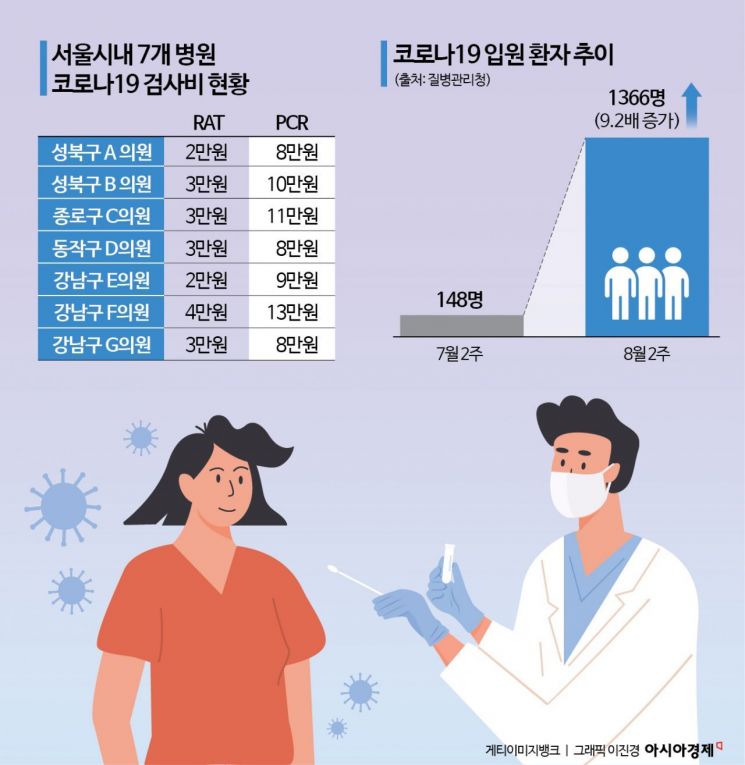
There are concerns that an increase in hidden confirmed cases could negatively impact infection control. According to the KDCA, the number of COVID-19 inpatients, which was only 148 in the second week of last month, surged to 1,366 in the second week of this month. If the number of untested confirmed cases rises, the spread could accelerate further.
However, the current quarantine authorities are not considering support for test fees for general patients. A KDCA official stated, "Although the number of COVID-19 patients is increasing, general patients are receiving symptomatic treatment," and added, "There are no plans to allocate budget to support testing."
Experts have suggested that measures are needed to prevent the spread caused by hidden confirmed cases. Professor Lee Chang-ryul of the Department of Respiratory Medicine at Hallym University Chuncheon Sacred Heart Hospital said, "To prevent disease transmission, the first step is to confirm whether the patient is infected," expressing concern that "if this is not identified, patients may not recognize the need for isolation and continue their daily lives." He emphasized, "It is necessary to subsidize the costs of diagnostic kits and rapid antigen tests to lower the barriers to testing accessibility."
© The Asia Business Daily(www.asiae.co.kr). All rights reserved.


















