Defense Budget Expected to Surpass 60 Trillion Won for the First Time
Plan to Maintain Sound Fiscal Policy to Reduce National Debt
As the government and the ruling party held a party-government consultation meeting and revealed the basic direction of next year's budget, the defense budget for the next year is expected to exceed 60 trillion won for the first time in history. Approximately 900 billion won will be invested solely in supporting service conditions, including raising the monthly salary of a private first class to 2.05 million won.
On the 20th, Money Today and SBS reported that the government is expected to raise the monthly salary of a private first class in the military by more than 2 million won next year, and also plans to increase support for small business owners. This year, the monthly salary of a private first class is 1.25 million won, and with government support through asset formation programs, it reaches up to 1.65 million won. Additionally, the budget for improving the treatment of military personnel will increase next year, and the monthly salary of a private first class is expected to rise to a maximum of 2.05 million won.
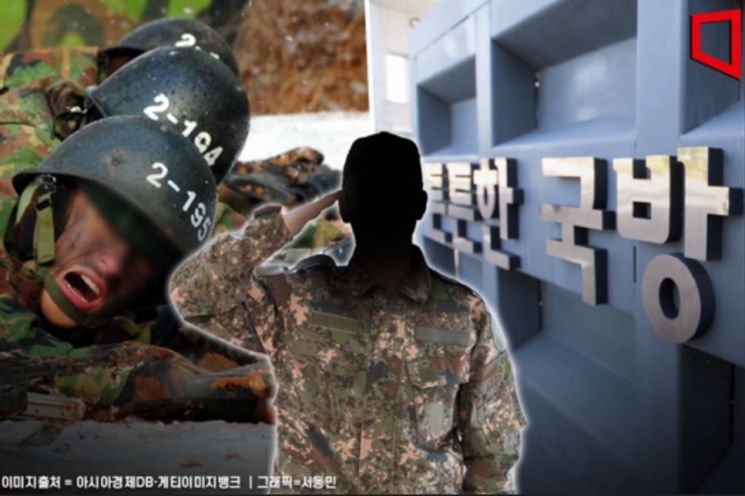 The government and the ruling party held a party-government consultation meeting and revealed the basic direction of next year's budget, with the defense budget expected to exceed 60 trillion won for the first time in history. Approximately 900 billion won will be invested solely to support service conditions, including raising the monthly salary of a sergeant to 2.05 million won.
 [Photo by Seodongmin, Asia Economy]
The key point in the formation of next year's defense budget is the increase in soldiers' salaries. The basic salary for a private first class will be raised from 1.25 million won to 1.5 million won, and the asset formation program (Military Tomorrow Preparation Support) will be increased from 400,000 won to 550,000 won. Accordingly, from next year, a private first class will receive 2.05 million won per month. Considering the military service period, a private first class will receive over 8 million won during the four months of service. Including the salary increase, about 900 billion won is expected to be spent solely on improving soldiers' service conditions. Plans such as improving barracks from 8-9 persons per room to 2-4 persons per room and raising the meal cost for soldiers from the current 13,000 won to 15,000 won are being discussed.
Budget will also be allocated to improve the treatment of officers. This is because concerns may arise about wage inversion between junior officers and privates due to the increase in the private first class salary. Within the military, there are calls for a 'pinpoint basic salary increase' for junior officers, but it is realistically difficult as it is linked to the overall public servant wages. Even this year, the starting salary for grade 9 public officials was increased by 2.5%, the same as before. The salary for non-commissioned officers is around 1.8 million won for the first year of service.
Instead, an increase in short-term service incentive pay (allowance) is under consideration. According to the mid-term defense plan, the incentive pay will be expanded considering the future increase in soldier salaries. For officers, the incentive pay increased from 9 million won last year to 12 million won this year, and for non-commissioned officers, it rose from 7.5 million won to 10 million won, an increase of over 30%. Additionally, it is expected that several hundred billion won have been spent on overall service condition improvements, such as providing single rooms for officers' accommodations.
Increased Budget for Small Business Support and Social Issues
Not only the defense budget but also the government has increased the budget for supporting small business owners. The issuance scale of Onnuri gift certificates will be increased to 5.5 trillion won, and the places where they can be used will be significantly expanded. The 'New Start Fund,' which was previously 30 trillion won, is also planned to be increased to over 40 trillion won to support debt restructuring for small business owners. The plan to reduce kiosk fees for small business owners by half will be promoted within this year.
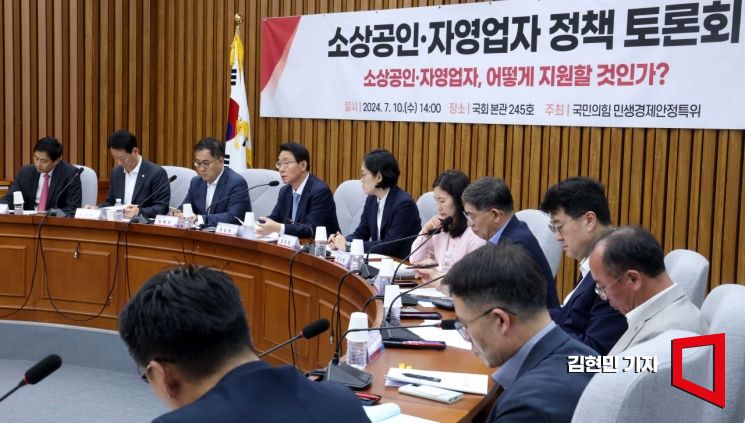 Kim Sang-hoon, Chairman of the People Power Party's Special Committee on Stabilizing the Livelihood Economy, is speaking at the policy forum "How to Support Small Business Owners and Self-Employed" held at the National Assembly on July 10.
 [Photo by Kim Hyun-min kimhyun81@]
The budget for social issues has also been increased. The number of houses purchased to compensate victims of jeonse fraud will be increased from 5,000 to 7,500, and the distribution of electric vehicle fire prevention chargers will be increased by 90,000 units. Benefits for multi-child families will also increase. The subsidy for electric vehicle purchases for multi-child families will be increased up to twice, reaching 6 million won, and subsidies will be applied to all vehicle types including vans. Amid this, the government plans to maintain a sound fiscal policy to minimize the increase in national debt, even in a situation where tax revenue shortfalls are likely for the second consecutive year. Accordingly, the total expenditure growth rate of next year's budget is expected to be around 3%, increasing by about 20 trillion won compared to this year.
© The Asia Business Daily(www.asiae.co.kr). All rights reserved.


















