Seems to Reflect Retaliation Concerns, Lower Than Original Plan
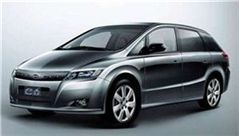 Photo of the Chinese BYD electric vehicle e6 to aid in understanding the article
The European Union (EU) has decided to impose tariffs of up to 46.3% on Chinese-made electric vehicles starting around November. However, since the tariff rates are lower than initially planned and the EU has left room for negotiations with China, there is analysis suggesting that the EU is mindful of potential trade retaliation from China.
On the 20th (local time), the European Commission announced a draft decision on definitive tariffs for Chinese electric vehicles, stating that additional tariffs on Chinese electric vehicles, excluding Tesla, range from 17.0% to 36.3%. This is a downward adjustment compared to the preliminary investigation announcement, which had disclosed a range of 17.4% to 37.6%.
By company, the countervailing tariff rates were slightly lowered: BYD from 17.4% to 17.0%, Geely from 19.9% to 19.3%, and Shanghai Automotive Industry Corporation (SAIC) from 37.6% to 36.3%. European automakers such as Volkswagen and BMW, which have joint ventures with Chinese local companies and cooperated in the investigation, will also face an additional tariff rate of 21.3%.
For Chinese-made Tesla vehicles, the countervailing tariff rate was set at 9% reflecting the level of subsidies received in China. EU officials explained that since Tesla's Chinese factory receives relatively fewer tax breaks and government subsidies compared to Chinese electric vehicle manufacturers, the tariff rate was set relatively lower.
The EU currently imposes a uniform 10% tariff on electric vehicles produced in China and exported to the EU. Accordingly, the final tariff rate for Chinese electric vehicles, excluding Tesla, is expected to be 27.0% to 46.3% after adding the countervailing tariffs.
The draft definitive tariff announced on this day is a follow-up measure after additional investigations conducted since the preliminary investigation results were announced in June. The EU has been conducting an anti-subsidy investigation since October last year, claiming that Chinese electric vehicles are flooding the market like a 'tsunami' and undermining European industries. This draft will undergo a ten-day public consultation process, followed by a vote among the 27 member states, and is expected to be implemented for five years.
However, the EU has left the door open for negotiations regarding this 'tariff bomb' on Chinese electric vehicles. Olof Zeil, EU Commission spokesperson for trade, emphasized at a regular briefing, "Today's (definitive tariff) preliminary disclosure is part of the procedure to inform stakeholders," and added, "I want to make it clear that no final political decision has been made."
Some interpret that China's active response to the EU's high tariff policy may have influenced this outcome. China's announcement last month of an anti-dumping investigation into EU exports of brandy and pork was widely regarded as a retaliatory measure against the EU.
At the same time, China has also employed a conciliatory approach by approaching Germany, whose automotive industry heavily depends on the Chinese market, to propose tariff reductions. Analysts suggest that Germany's effective abstention, which was tantamount to opposition, in the preliminary vote last month on additional tariffs on Chinese electric vehicles is related to this.
In a statement on the same day, China's Ministry of Commerce expressed "strong opposition and serious concern" over the EU's imposition of countervailing tariffs. It added, "We hope the EU will take rational and pragmatic attitudes to cooperate with China and take substantive measures to prevent the escalation of trade frictions." The China Chamber of Commerce to the EU emphasized that "(the EU's) protectionist approach will ultimately weaken the resilience of the European electric vehicle industry."
© The Asia Business Daily(www.asiae.co.kr). All rights reserved.
















