Sweden Records Negative Net Immigration for the First Time in 50 Years
Rising Unemployment and Housing Prices Amid Refugee Influx Worsen Public Opinion
Anti-Immigration Far-Right Party Gains Influence Over Government Policy
Sweden, once known as a country welcoming to immigrants, has entered an era where more people are leaving than arriving. This is attributed to changes in immigration policies among regional countries due to the European refugee crisis, as well as the growing influence of far-right parties that are negative toward accepting refugees.
According to The Guardian and others on the 19th (local time), the Swedish government recently announced that net immigration from January to May this year recorded a negative figure for the first time in half a century. During this period, the number of people who moved to Sweden was about 5,700 fewer than those who left to live in other countries.
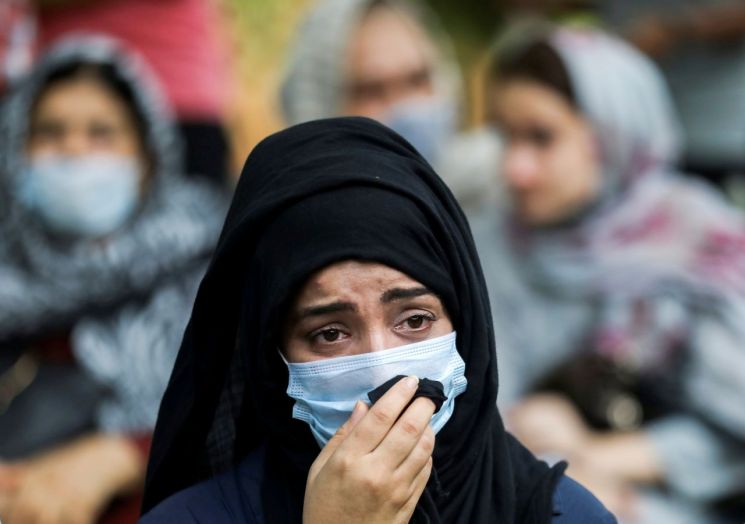
Maria Malmer Stenergard, Sweden's Minister for Migration, stated, "The number of asylum applications is heading toward historically low levels, residence permits related to asylum continue to decrease, and Sweden has recorded negative net immigration for the first time in 50 years," predicting that this trend will continue. The basis for this is that the number of immigrants decreased by 15%, the number of emigrants increased by 60%, and asylum applications are at their lowest since 1997.
Refugee support organizations criticize the Swedish government's aggressive policies and rhetoric toward immigrants as the main reasons driving refugees to leave. The Guardian also pointed out that "the moderate Swedish government has been pushed by the influence of far-right forces to implement increasingly restrictive asylum policies, including the 'push-out law'." The push-out law forces public sector workers to report illegal immigrants.
Sweden was not originally harsh toward immigrants. Since the 1990s, Sweden accepted asylum seekers from major conflict zones such as Yugoslavia, Syria, Afghanistan, Somalia, Iran, and Iraq. There were practical purposes as well, including securing labor to drive economic growth alongside humanitarian reasons. As a result, last year, the foreign-born population in Sweden increased to about one-fifth of the total population.
However, Sweden's inclusive immigration policy began to change from the end of 2015. When the number of immigrants fleeing civil wars and violence in Syria, Afghanistan, Iraq, Somalia, and other regions exceeded 160,000, unemployment and housing prices soared, government fiscal burdens increased, and anti-immigration sentiment spread.
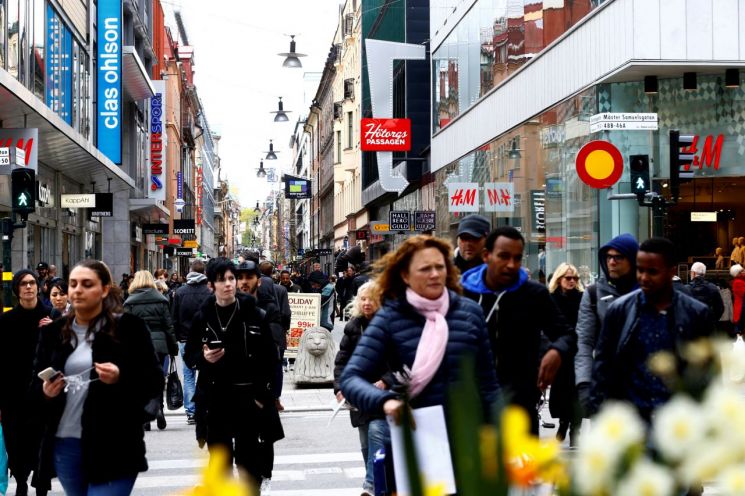
In particular, the far-right Sweden Democrats (SD), which advocate white supremacy, made significant gains in the September 2022 Swedish general election, becoming a practical force influencing government policy, accelerating Sweden's anti-immigration stance. The coalition government formed by Ulf Kristersson (Moderate Party) holds less than a parliamentary majority, making it difficult to secure policy momentum without cooperation from the Sweden Democrats. Under pressure from the far-right party, Sweden strengthened employment immigration contract requirements and permanent residency application qualifications, and tightened immigration requirements for low-skilled workers.
Minister Stenergard and the Swedish government have been self-praising the phenomenon of refugees leaving Sweden as a policy success, saying "efforts are bearing fruit." This is based on the judgment that reducing the number of immigrants can improve the efficiency of social integration.
However, Annika Sandlund, UNHCR Nordic and Baltic representative, said, "Considering Sweden's labor shortage and aging trend, such policies may not be a beneficial choice," and diagnosed that "successful social integration requires creating a social atmosphere where immigrants themselves feel welcomed."
© The Asia Business Daily(www.asiae.co.kr). All rights reserved.


















