January 'Bad Fathers' Operator Koo Bon-chang Found Guilty Again
"Non-payment of Child Support by Specific Individuals Is Not a Public Concern"
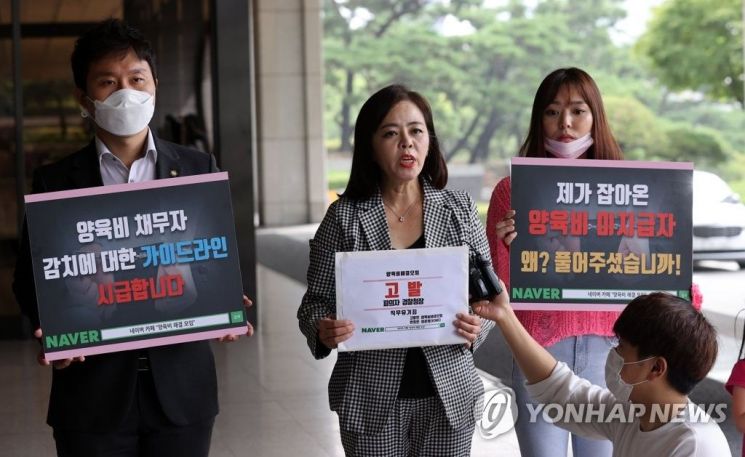
The operator of the 'Bad Parents' website, who disclosed the personal information of a father who did not pay child support after divorce on the internet, was confirmed guilty of defamation under the Information and Communications Network Act.
According to the legal community on the 20th, the Supreme Court's 2nd Division (Presiding Justice Shin Sook-hee) dismissed the appeal of Kang Min-seo, the representative of the 'Child Support Resolution Group,' who was indicted for defamation under the Information and Communications Network Act, thereby upholding the original court ruling that sentenced Kang to a fine of 800,000 KRW.
The court explained the reason for dismissing Kang's appeal, stating, "There is no error affecting the judgment such as failing to conduct necessary hearings for the original judgment, violating the rules of logic and experience, exceeding the limits of free evaluation of evidence, or misunderstanding the legal principles regarding the possibility of dissemination and the purpose of defamation under the Information and Communications Network Act."
In 2019, Kang posted a captured KakaoTalk profile picture of Mr. A, who had not paid child support for nearly 15 years after divorce, on the Bad Parents (formerly Bad Fathers and Mothers) website, which discloses the personal information of parents who fail to pay child support, revealing A's name, age, residence, and other personal details.
At that time, Kang wrote in the post, "Unpaid amount approximately 100 million KRW," "A heartless father who completely ignores his son despite multiple surgeries due to physical disability," "Resident of Jung-gu, Incheon, former Pyeongchang Olympic ski instructor," and "Dishonest person who runs a business under another family member's name but has no money to pay child support." The prosecutor charged Kang under Article 70(2) of the Information and Communications Network Act, considering the parts about "former Olympic ski instructor" and "running a business under another family member's name" to be false.
Article 70(2) of the Information and Communications Network Act, which regulates defamation by false facts, states, "Anyone who publicly reveals false facts through an information and communications network with the purpose of defaming another person shall be punished by imprisonment for up to seven years, suspension of qualifications for up to ten years, or a fine of up to 50 million KRW."
The first trial court acquitted Kang.
The court acknowledged that some parts of Kang's post were factually incorrect but found that the post was largely based on actual facts. It also considered that Kang, who had reviewed materials received from A's spouse through an employee and heard explanations, would have found it difficult to recognize that some parts of the post were false.
Although A had never worked as a ski instructor, he held a ski instructor license and had served as a ski-related executive during the Pyeongchang Olympics. The materials sent by A's spouse included a photo of their daughter holding a solo picket protest and a court ruling ordering A to pay about 92 million KRW in child support, including 20 million KRW in alimony.
Following the first trial court's judgment, the prosecution requested a change in the indictment during the appeal trial, adding a charge of defamation by stating facts as an alternative charge.
Article 70(1) of the Information and Communications Network Act (Penalties) states, "Anyone who publicly reveals facts through an information and communications network with the purpose of defaming another person shall be punished by imprisonment for up to three years or a fine of up to 30 million KRW," thereby punishing defamation by stating facts as well.
The appellate court found Kang guilty of defamation by stating facts, which was added as an alternative charge by the prosecution, and sentenced Kang to a fine of 800,000 KRW.
In the trial, Kang's side argued that the facts stated by Kang were related to the "public interest," thus denying the "purpose of defamation."
Kang's side cited the following reasons: ▲ The issue of unpaid child support is a public interest problem that the state and society must solve amid the increasing number of divorced families nationwide ▲ Kang's motivation and purpose in operating the site and disclosing the personal information of parents who failed to pay child support were for the public good ▲ Due to such efforts, the Child Support Enforcement Act was amended around 2020, allowing driver's license suspension, travel bans, public disclosure of names, and criminal penalties for those who fail to pay child support despite contempt orders, and enabling disclosure of the debtor's name, age, occupation, address or workplace, duration of nonpayment, and amount owed ▲ No malicious or abusive expressions were used when disclosing A's personal information.
However, the court rejected Kang's arguments, stating, "The facts stated by the defendant cannot be considered related to the public interest, and it can be recognized that the defendant defamed the victim by publicly stating facts through an information and communications network with the purpose of defaming the victim."
First, the court judged that the personal information disclosure system, which causes significant disadvantages to the disclosed individual, should be conducted by state agencies based on law, not by individuals or private organizations. Considering that under current law, personal information disclosure with photos is only allowed for sex offenders, and even in those cases, many decisions are made to keep the information private after strict procedures, it should not be left to arbitrary judgment.
The court pointed out, "Because personal information disclosure causes significant disadvantages to the disclosed individual, even when it is deemed necessary or useful as a punishment or indirect coercive measure, it must be conducted cautiously by state agencies through strict procedures stipulated by law."
The court added, "Cases where personal information disclosure is actually possible are very limited in a few laws, and the only case where photos are disclosed is the sex offender personal information disclosure system, which often results in rulings not to disclose personal information after considering all circumstances."
Furthermore, "Therefore, personal information disclosed arbitrarily by a private organization without any procedures on an internet bulletin board with high dissemination cannot objectively be considered related to the public interest," the court stated.
The court also found that even under the amended law, this case did not meet the requirements at all.
Specifically, the personal information was disclosed by an individual or private organization, not a state agency; no contempt order was issued against A; no opportunity to explain was given; and the disclosure far exceeded the scope prescribed by law.
Additionally, the court stated that "the fact of a specific individual's nonpayment of child support" cannot be regarded as a matter of public interest.
The court said, "The victim is not a public figure. Even if the social problem of unpaid child support is a matter of public interest, the fact of a specific individual's nonpayment of child support itself is difficult to consider a public interest matter."
It added, "The main purpose of the post in this case was to force the victim's ex-spouse to pay child support, and generally, debt collection between private individuals cannot be evaluated as public interest."
The court noted, "The child support claim in question arose in the past. The victim and ex-spouse divorced over 20 years ago, and their children, born in 1992 and 1994 respectively, are adults. While it is clear that they have suffered greatly due to the defendant's nonpayment of child support from the past to the present, at the time of posting, the children had long been adults, so the special nature of child support claims requiring special protection due to the risk of harm to minor children's welfare has been greatly diluted."
It added, "It is also difficult to see the necessity of taking emergency measures to forcibly make payment urgently."
The court also judged from a subjective perspective that it was difficult to view the action as done for the public interest without the purpose of defamation.
The court pointed out, "The post in this case not only pointed out that the victim simply did not pay child support but also posted several photos of the victim, along with their name, age, birthplace, unpaid child support amount, and additional details. The content and expressions were quite aggressive, harshly criticizing the victim who failed to pay child support."
It continued, "This was posted with the exact phrases desired by the victim's ex-spouse, reflecting the ex-spouse's anger and negative evaluation of the defendant. Even though the defendant was the poster, the purpose of posting cannot be evaluated differently from that of the victim's ex-spouse."
Furthermore, the court concluded, "The ex-spouse's posting purpose was to publicly defame the victim as a nonpayer of child support on an internet bulletin board with strong dissemination, enabling not only people around the victim but also unspecified many to criticize or attack the victim, thereby forcing the victim to pay child support by making them unable to bear the disadvantages. Therefore, the posting purpose of this post cannot be said to be non-defamatory."
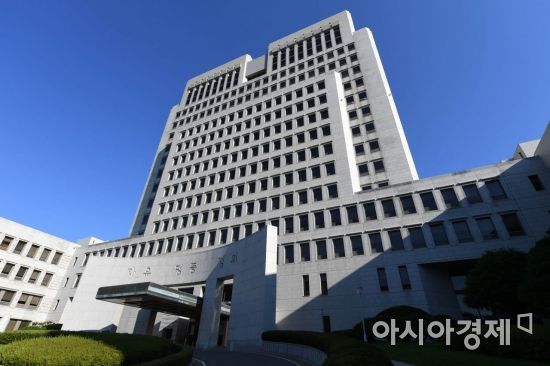
Kang appealed, but the Supreme Court's judgment was the same.
There was no error affecting the judgment such as failing to conduct necessary hearings for the original judgment, violating the rules of logic and experience, exceeding the limits of free evaluation of evidence, or misunderstanding the legal principles regarding the possibility of dissemination and the purpose of defamation under the Act on Promotion of Information and Communications Network Utilization and Information Protection (defamation).
The court stated, "The victim (Mr. A) failed to properly fulfill his obligation to pay child support for two children as ordered by the divorce judgment finalized by the Supreme Court in April 2005. Due to this, the former spouse filed a lawsuit to suspend the statute of limitations and won a judgment in October 2017 ordering payment of 71.44 million KRW in child support, among other things, and appears to have faced considerable difficulties raising the children alone."
However, the court pointed out, "The defendant posted the victim's photo, residence, occupation, and the above unpaid child support facts along with critical phrases on the site operated by the Child Support Resolution Group cafe, and did not go through fact-checking procedures or provide sufficient opportunities for the victim to explain."
The court also said, "At the time the defendant posted the victim's information around 2019, the victim's children were already adults, so it cannot be seen that 'urgent child support payment was necessary at that time.'"
Finally, the court noted, "The amended Child Support Enforcement Act, effective January 12, 2021, introduced a system for disclosing the list of child support debtors (Article 21-5). This disclosure is limited to those who fail to fulfill child support obligations despite enforcement orders, and only after review and resolution by a committee upon application by the child support creditor, disclosing the debtor's name, age, occupation, address, workplace, duration of nonpayment, and amount owed, while providing the debtor with at least three months to explain (Enforcement Decree Article 17-4)."
It added, "As previously noted, the procedure and content of information disclosure regarding the victim in this case differ from the above list disclosure."
In January this year, the Supreme Court also confirmed a guilty verdict against Gu Bon-chang (61), the operator of 'Bad Fathers,' the original site for disclosing child support debtors, stating it was "close to a private sanction."
© The Asia Business Daily(www.asiae.co.kr). All rights reserved.

















