"44% of Emergency Room Visitors Are Mild or Non-Emergency Patients"
As the medical gap prolongs, causing difficulties in emergency room treatment nationwide, the government has decided to implement decentralization measures such as operating night and weekend fever clinics at public hospitals.
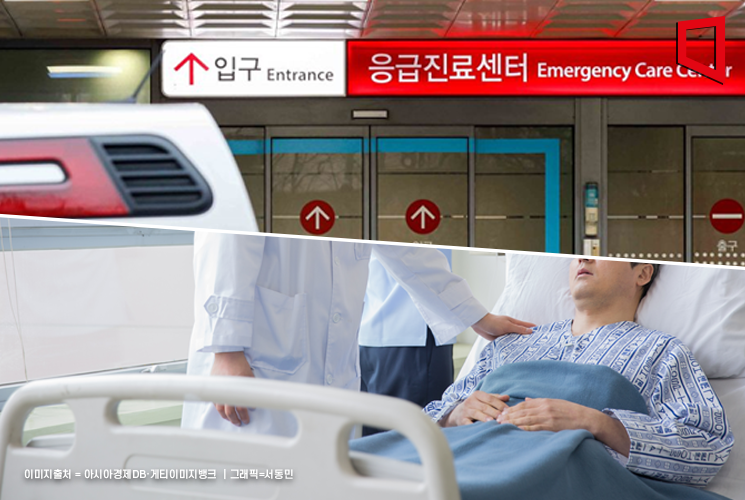
On the 20th, the Ministry of Health and Welfare held a press briefing stating, "Due to recent collective actions by the medical community, some emergency medical institutions temporarily restricted treatment, but this is a partial reduction of functions, not a complete paralysis of emergency rooms," and added, "Emergency rooms that had limited operations have quickly resumed normal treatment or are expected to normalize soon." According to the Ministry, so far, only 5 out of 408 emergency medical institutions, or 1.2%, have experienced operational issues.
However, the Ministry acknowledged that the increasing fatigue of medical staff is exacerbating difficulties in emergency room treatment.
Jung Tong-ryong, Director of Public Health Policy at the Ministry of Health and Welfare, explained, "Compared to the end of last year, the number of emergency medicine specialists at regional and local emergency medical centers increased from 1,418 to 1,502, but at the same time, about 500 residents left, making it difficult to provide the same level of care as before."
He continued, "About 44% of recent emergency room visitors are mild or non-emergency patients. If these patients are appropriately distributed to local clinics and hospitals, capacity for treating severe emergency patients can be secured. Just like the recent push to restructure tertiary general hospitals, it is time to reform the emergency medical system to reduce dependence on residents and provide stable treatment," he emphasized.
Accordingly, the Ministry of Health and Welfare introduced policies to relieve emergency room overload and reform the emergency medical delivery system, including ▲increasing the additional fee for surgery on severe emergency patients from 100% to 150%, ▲doubling the specialist consultation fee by 100%, and ▲paying 150,000 KRW each when mild patients are transferred from regional centers to other institutions. Additionally, the number of metropolitan situation rooms will be increased from 4 to 6, and additional incentives will be provided to institutions receiving transfers through these situation rooms.
In response to the recent surge in COVID-19 patients and the resulting increase in emergency room visits, additional decentralization measures will be implemented.
Director Jung stated, "First, night and weekend fever clinics will be operated at public hospitals, and hospitals with experience designated and operated as COVID-19 base hospitals will be designated as cooperative hospitals to actively admit and treat COVID-19 patients. If the situation worsens further, we will maximize the use of infection-related medical infrastructure such as hospitals with 270 nationally designated inpatient treatment beds and 436 emergency treatment beds, as well as central and regional infectious disease specialized hospitals," he said.
© The Asia Business Daily(www.asiae.co.kr). All rights reserved.

















