Yoon Announces Unification Doctrine... North Korea Remains Unresponsive for Five Days
Unable to Explain the Rationale for Abandoning the 'Unification Concept' to Residents
Jo Han-beom: "The More Unification Is Mentioned, the Greater the Burden on Kim Jong-un"
President Yoon Suk-yeol proposed inter-Korean dialogue while announcing the '8.15 Unification Doctrine,' but North Korea has shown no response for five consecutive days. Unlike the immediate rejection at the time of the 'Bold Initiative' announcement, interpretations vary as to whether North Korea's delayed response indicates 'ignoring' or 'deliberation.'
As of the morning of the 20th, based on North Korea's official media, there has been no statement regarding the Unification Doctrine. When the Yoon Suk-yeol administration launched and announced the new North Korea policy, the 'Bold Initiative,' Kim Yo-jong, vice department director of the North Korean Workers' Party, issued a statement rejecting it within four days.
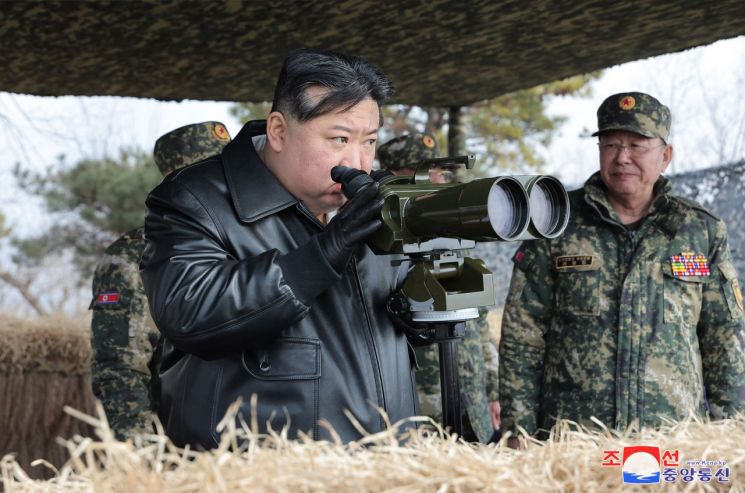
On August 15, President Yoon announced the Unification Doctrine in his Liberation Day speech. He positioned 'North Korean residents' as the main agents of unification and declared specific tasks to improve North Korean human rights, including access to information. At the same time, there is analysis that this policy could be interpreted by the Kim Jong-un regime as 'absorption unification.' Many of the newly proposed unification tasks focus on North Korean residents. While the government states that the message is principled and based on the constitution, North Korean authorities may interpret it as a message that 'there is no place for the Kim Jong-un regime in a unified Korea.'
In the same context, there is little possibility of a positive response to the practical-level proposal to establish a 'dialogue consultative body.' Although an open stance of 'dialogue without preconditions' was shown, North Korea does not even acknowledge the facts regarding the issues of South Korean prisoners of war, abductees, and detainees, which President Yoon mentioned as humanitarian concerns.
Especially, the fact that Chairman Kim Jong-un has abandoned the concept of 'unification' since early this year and promoted the theory of two hostile states is considered the biggest obstacle. There is no established logic to justify denying unification, which was the reason for the regime's survival, even negating the achievements of previous leaders.
Cho Han-beom, senior research fellow at the Korea Institute for National Unification, analyzed, "After Kim Jong-un abandoned the concept of unification, several follow-up measures were taken, but there was no procedure to explain the reasons and justification for this change to the residents. Unification is a task based on Juche ideology and the legacy of Kim Il-sung, and unlike South Korea, it is a great value akin to the purpose of life for North Korean residents, so there is no logic to deny it." He added, "North Korea will likely issue a (rejection) statement soon, but merely mentioning the concept of unification, which Kim Jong-un ordered to be abandoned, will be a considerable burden."
An official from the Ministry of Unification said, "We will observe North Korea's response without prejudice," and added, "Since this proposal was made directly by the president with clear principles of dialogue without preconditions, we believe North Korea will carefully consider it."
© The Asia Business Daily(www.asiae.co.kr). All rights reserved.

















