Five Seoul-Gyeonggi Routes Discontinued or Shortened
Passengers: "How Will We Commute to Seoul Now?"
Seoul City: "Transport Environment Changes... Adjustment Is Inevitable"
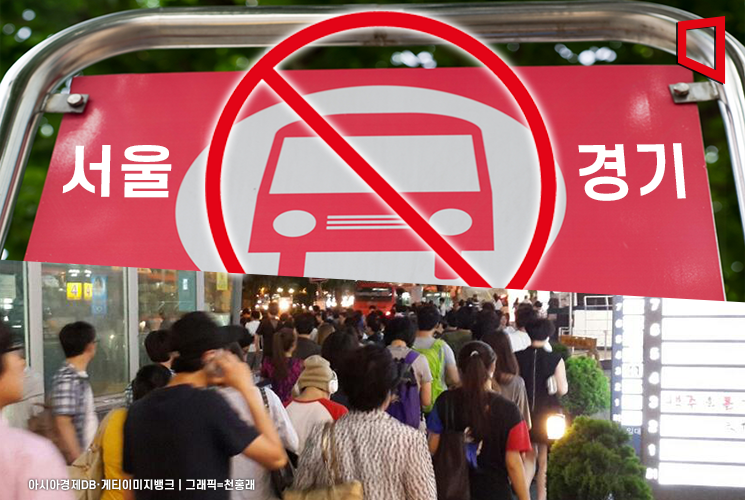
Five bus routes traveling between Seoul and Gyeonggi Province are being discontinued or shortened this month, sparking backlash from citizens commuting to Seoul. The Seoul city government, which decided on the discontinuations, stated that reducing the number of buses or adjusting routes is inevitable due to declining bus transport share and population decrease.
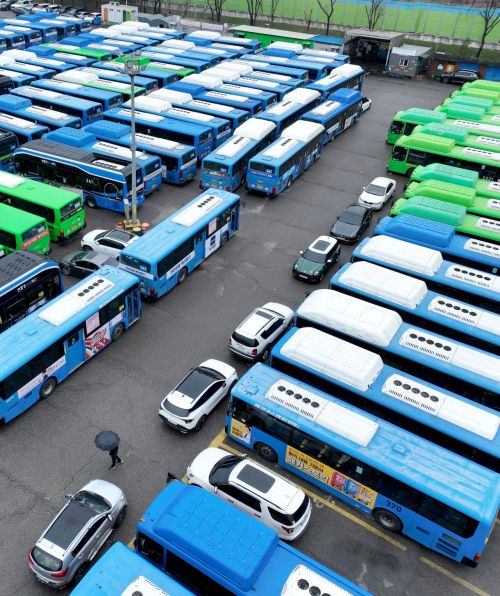
According to Seoul city on the 20th, bus routes 773 (Paju Gyoha~Seoul Eunpyeong) and 9714 (Paju Gyoha~Seoul Jung-gu) are scheduled to be discontinued in the second half of this year. Bus 704 (Yangju Jangheung~Seoul Jung-gu) will have its route shortened, ceasing operation between Yangju and Gupabal Station. The transportation company responsible for this route changed, making it impossible to use the previously utilized Songchu and Gyoha garages, prompting route adjustments. Passenger levels per bus were also evaluated as 'underutilized' or 'severely underutilized.' Previously, routes 106, running between Uijeongbu and Seoul, and 542, running between Gunpo and Seoul, were also discontinued to secure vehicles for new routes.
Citizens are protesting as routes between Gyeonggi and Seoul are being discontinued one after another. In Uijeongbu, a rally opposing the discontinuation of bus route 106 was held last month. Mr. Lee (40), a resident of Songchu, criticized the shortening of bus route 704, saying, "How are people living in Songchu supposed to commute to Seoul now?" Although local governments have announced plans to provide alternative routes, there is criticism that "alternative routes should have been established before announcing route shortening or discontinuation."
The Seoul city government stated that due to changes in the transportation environment, such as a decrease in bus transport share, readjusting bus routes or reducing the number of operating buses is unavoidable. A city official explained, "Although the total number of buses is not legally or ordinance-bound, the population decrease in Seoul and the decline in bus transport share mean that the number of buses must be practically reduced. Therefore, to establish new routes, other routes must be discontinued or the number of operating buses reduced." The number of authorized buses in Seoul decreased slightly from 7,395 in 2021 to 7,384 last year, while the number of routes slightly increased from 373 to 384 during the same period to maintain balance.
The Board of Audit and Inspection also urged Seoul to reduce the number of city buses in its 2021 audit report on the 'Operation Status of Local Government City Bus Semi-Public System,' citing route deficits as a reason. The Board analyzed that Seoul's public transportation system is shifting to a subway-centered model, resulting in a declining trend in city bus transport share and daily ridership. According to the Ministry of Land, Infrastructure and Transport's integrated traffic card big data system, Seoul bus transport share for city buses was 37.3% in 2021, 36.9% in 2022, and 36.2% in 2023, showing a gradual decrease. In contrast, the subway (urban railway) public transportation mode share increased from 50.4% in 2021 to 51.5% in 2022 and 53% in 2023.
© The Asia Business Daily(www.asiae.co.kr). All rights reserved.


















