One Month of Public Opinion Collection... 59% Support for National Symbol Space
Established as a 'Memory Space' Realizing Freedom and Peace for Veterans
Incorporating Latest Technologies Like Media Art and Light Sculptures
Plan to Be Unveiled Through Design Competition in September... Ongoing Opinion Gathering
The Seoul Metropolitan Government is transforming Gwanghwamun Square into a space honoring the sacrifices of the countries that participated in the Korean War. This decision follows the collection and reflection of public opinions after controversy over the proposed construction of a 100-meter-high Taegukgi flagpole. The symbolic structure representing the square will incorporate advanced technology to enable various content implementations, with detailed plans to be established through a design competition.
On the 20th, Seoul announced that it set this establishment direction after gathering public opinions for a month starting from the 15th of last month, aiming to create Gwanghwamun Square’s national symbolic space as a place embodying the wishes of the people. A Seoul city official explained, "Based on citizens’ proposals and ideas, we intend to create a national symbolic space that reflects the meaning of South Korea’s prosperity, honors the dedication of UN veterans who defended freedom and peace, and remembers the sacrifices that laid the foundation for the nation’s prosperity."
Citizen Proposals... Suitable Symbols for National Symbolic Space Are Taegukgi and Mugunghwa
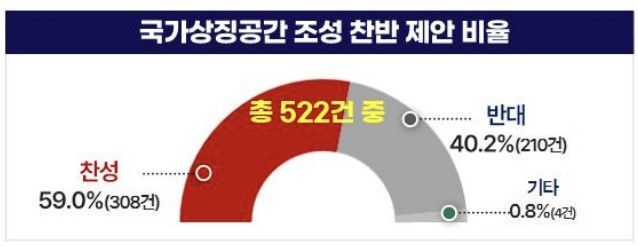
A total of 522 citizen proposals were received, with 59% (308 cases) supporting the creation of the national symbolic space, 40% (210 cases) opposing it, and 1% (4 cases) categorized as others.
Among the citizen proposals, the most suitable symbols for the national symbolic space were the Taegukgi flag with 215 cases (41%), Mugunghwa (Korean hibiscus) with 11 cases, the national emblem and the official seal with 2 cases each, and the national anthem with 1 case. Other suggestions included Hunminjeongeum (the Korean script), pine trees, historical gardens, flags of the 6.25 war participant countries, and Dokdo Island.
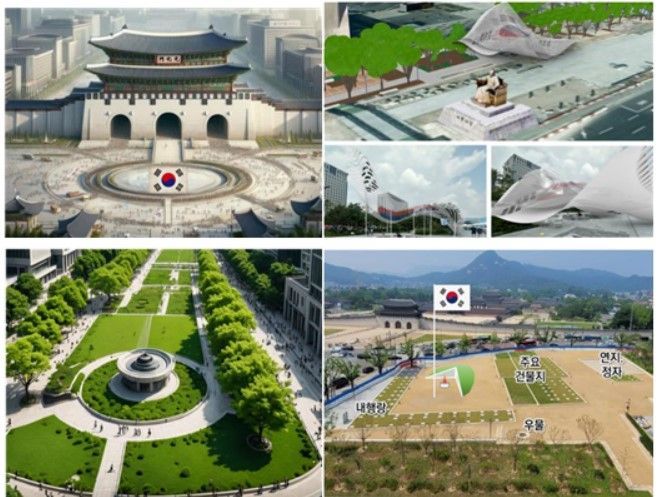
There were also opinions to express the five major national symbols recognized by the government of South Korea (flag, anthem, national flower, national emblem, official seal) as a composite sculpture, to create the symbolic space with Mugunghwa landscaping (Mugunghwa Square) and Mugunghwa pattern sculptures, and to produce video and sculptural works inspired by the four verses of the national anthem. Additionally, proposals included creating content and exhibitions featuring regional representative symbols such as Hunminjeongeum, pine trees, tigers, the Gwanggaeto Stele, Dokdo Island, and the Jikji metal type from Chungbuk.
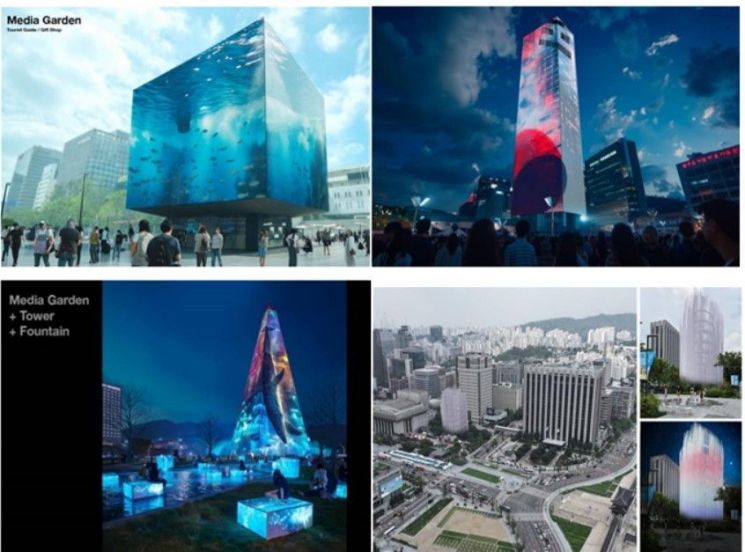
Various ideas were also suggested regarding the design of the symbolic structure. Proposals included using media art or light sculptures to make Gwanghwamun Square a space combining artistic value, creating symbolic structures with artistic aesthetics such as media poles in the form of flagpoles and kinetic (moving) art, and enhancing the status of Gwanghwamun Square through historically significant symbols like sundials and Hunminjeongeum. There were also suggestions to develop national symbolic architectural structures and parks that harmonize with the surroundings.
Some opinions opposed the creation of the national symbolic space, stating that "there is already a flagpole near Gwanghwamun Square, so additional symbols are unnecessary," "the existing national symbols such as the statue of King Sejong sufficiently represent the historical significance of the square, so the current state should be maintained," and "project implementation should consider policy and budget priorities."
Promoting the Creation of a National Symbolic Space Reflecting Universal Human Values Such as Freedom and Peace for Veterans
In response, Seoul plans to actively promote the creation of Gwanghwamun Square’s national symbolic space focusing on three main aspects based on citizen proposals: the meaning of the symbolic space, communication with citizens, and design diversity incorporating cutting-edge technology. The aim is to reflect universal human values such as "freedom" and "peace," conveying the significance of veterans from around the world, regardless of skin color or nationality, who dedicated themselves to making today’s South Korea possible.
The core is to embody the noble sacrifice of soldiers from around the world who willingly participated in the Korean War to protect freedom and peace. The space will symbolize the prosperous South Korea, a beacon of liberal democracy and human peace, and honor the sacrifices of veterans from 22 countries that laid the foundation for the nation’s prosperity, passing this meaning on to future generations. This space will also be used to commemorate other national holidays and anniversaries beyond the Korean War.
It will also serve as a communication space with citizens. For example, it could be a place to share memories in real time with the 22 countries that helped overcome the national crisis of the Korean War, creating a space for global citizens to connect. Concerns about disrupting the harmony with the current surroundings of Gwanghwamun Square, such as Bugaksan Mountain, Sejongno Park, and Gyeongbokgung Palace, will also be taken into account.
The planned structure will be carefully reviewed for durability, ease of maintenance, permanent usability, and whether it incorporates advanced technology to allow compatibility and transition of content.
Design Competition Starting in September... Close Cooperation with Related Agencies Including the Ministry of Land, Infrastructure and Transport for Joint Announcement
Specific construction plans will be established through a design competition starting in September. First, expert consultations and reviews by the Open Plaza Operation Citizens’ Committee will be conducted regarding the results of the citizen opinion collection. After the design competition concludes at the end of the year, basic and detailed designs will commence, with full-scale construction beginning in May 2025. Completion is scheduled for September 2025.
Seoul also revealed plans to broadly listen to diverse voices from citizens, experts, and related organizations throughout the process, from preparing design competition guidelines to the completion of the national symbolic space. The city intends to closely cooperate with related agencies such as the National Architecture Policy Committee and the Ministry of Land, Infrastructure and Transport. Although the plan to build the national symbolic space at Gwanghwamun Square has not yet been concretely included in the plans of these agencies, Seoul will strive to include it in future national symbolic space plans and make joint announcements through consultation.
Yoo Chang-soo, Deputy Mayor for Administration of Seoul, said, "By installing a sculpture in Gwanghwamun Square that embodies universal human values such as freedom and peace, as well as the meaning of sacrifice and dedication to be passed on to future generations, centered on diverse citizen opinions, we will create a space where the public empathizes, and people around the world communicate and enjoy together."
© The Asia Business Daily(www.asiae.co.kr). All rights reserved.



















