Domestic Pharmaceutical Companies Race to Adopt AI
National Project 'K-Melody' Recently Launched
Federated Learning Introduced with No 'Data Leakage Risk'
Development of ADMET Model, Fundamental for New Drug Development
Drug development using artificial intelligence (AI) is becoming increasingly active worldwide. There is an expectation that AI will enable effective drug development by reducing the time and cost typically required for drug development, which usually takes more than 10 years. In Korea, the national project 'K-MELLODDY' to support AI drug development is now in full swing.
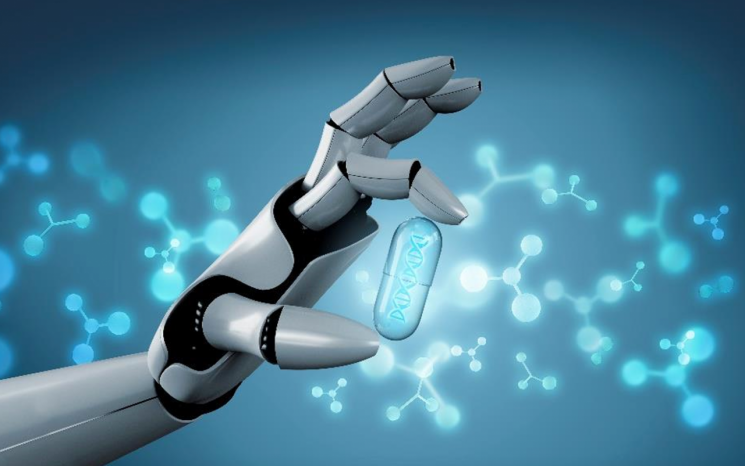
Recently, overseas, AI-driven drug candidates that have been discovered and developed have reached Phase 2 clinical trials, indicating rapid progress in AI drug development. Domestically, various pharmaceutical companies such as Daewoong Pharmaceutical, which has established its own AI drug development system called 'Daisy,' Yuhan Corporation, Hanmi Pharmaceutical, Samjin Pharmaceutical, and Dong Wha Pharmaceutical are actively incorporating AI into drug development through strengthening research and development (R&D) and collaborating with other AI specialized companies. Although significant time and costs have been invested in drug development, success rates have gradually declined, prompting the search for more efficient drug development methods. The Korea Pharmaceutical and Bio-Pharma Manufacturers Association (KPBMA) has played a role as a research hub planning and conducting digital convergence research, which is difficult for a single institution to pursue alone, through the AI Drug Convergence Research Institute. In addition, the K-MELLODDY project has been launched to increase success rates and securely protect data by involving pharmaceutical companies, research institutions, and hospitals together.
K-MELLODDY is a federated learning-based drug development acceleration project jointly promoted by the Ministry of Health and Welfare and the Ministry of Science and ICT. The Pharmaceutical Bio Association is the lead organization of the project, organizing the project team and proceeding with detailed task planning, calls for proposals, and selection procedures.
The advantage of K-MELLODDY lies in federated learning. Data security has recently emerged as the biggest issue in AI-based research. To enhance AI, it is necessary to continuously collect diverse data and train AI, but this process can cause problems such as privacy violations and ownership disputes. However, by utilizing federated learning technology, these issues can be avoided. In federated learning, data is processed and trained independently on devices of individual institutions rather than on a central server. Only the updated information is transmitted to the central server, which aggregates it to improve the model.
In other words, federated learning allows multiple institutions to improve the overall performance of AI models while maintaining data privacy and security without directly sharing the data they possess. Since the raw data is not directly shared, it remains secure, and with added technology, personal information protection is possible. Furthermore, it enables learning and validation by institution without excessive standardization, freeing it from responsibility or ownership issues.
K-MELLODDY envisions enabling pharmaceutical companies, hospitals, and research institutes to pursue common benefits without sharing sensitive data externally through federated learning technology. Especially in the field of drug development, where sharing sensitive data has been difficult due to intellectual property (IP) issues, this project is expected to play a crucial role in overcoming such challenges and maximizing the efficiency of drug research.
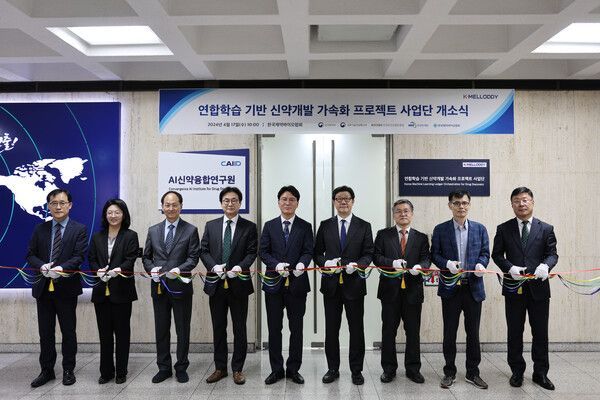 K-Melody Project Group Opening Ceremony
 Photo by Korea Pharmaceutical and Bio-Pharma Manufacturers Association
Particularly, the project will focus on developing absorption, distribution, metabolism, excretion, and toxicity (ADMET) prediction models, which are known to account for a significant portion of drug development R&D costs. ADMET refers to understanding how a drug acts inside the human body after administration, determining the appropriate drug concentration, and checking for risks, making it a key factor in the success or failure of drug development. According to the U.S. National Institutes of Health (NIH), ADMET-related costs account for approximately 22% of the total drug development R&D expenses. In Korea, since many drugs are developed up to Phase 1 clinical trials before technology transfer, ADMET-related costs often constitute the majority of development expenses.
A representative of the K-MELLODDY project team stated, “By adopting federated learning, pharmaceutical companies, research institutes, hospitals, and universities can train local models with their own data and integrate them centrally to create more accurate and reliable prediction models.” He added, "Through this project, we will connect data from various sources using federated learning techniques to build stronger prediction models."
© The Asia Business Daily(www.asiae.co.kr). All rights reserved.


















