Most Hospitals Do Not Return, Some Join Private Clinics
Government: "No Reconsideration from the Start"…Promoting Tertiary Hospitals Centered on Specialists
Recent Nursing Act Push Adds to Medical Community Opposition
The medical vacancy situation caused by the resignation of about 10,000 residents nationwide in protest against the government's plan to increase medical school quotas by 2,000 has reached six months as of the 20th. The residents simultaneously submitted their resignation letters on February 19 and left the hospitals the next day. In medical sites where interns and residents left, a large-scale medical gap emerged, with emergency and critical patients unable to receive prompt treatment, wandering between hospitals or waiting endlessly.
The government, which pressured residents to return by threatening them with 'license suspension,' soon came up with various inducements, but to no avail. Although the government extended the recruitment period for residents in the second half of the year and even conducted additional recruitment, the residents who left showed no intention of returning. Meanwhile, with the start of next year's admission schedule, the increase in medical school quotas for next year seems to be confirmed. Even medical school professors, who have been struggling with heavy workloads for half a year, are leaving hospitals one by one, and training hospitals are facing a crisis due to accumulated deficits. The passage of the Nursing Act, which legalizes Physician Assistant (PA) nurses to replace residents, is becoming visible, and with no change in the government's firm stance on increasing medical school quotas, it is expected that the conflict between the government and the medical community will find it even more difficult to reach a consensus.
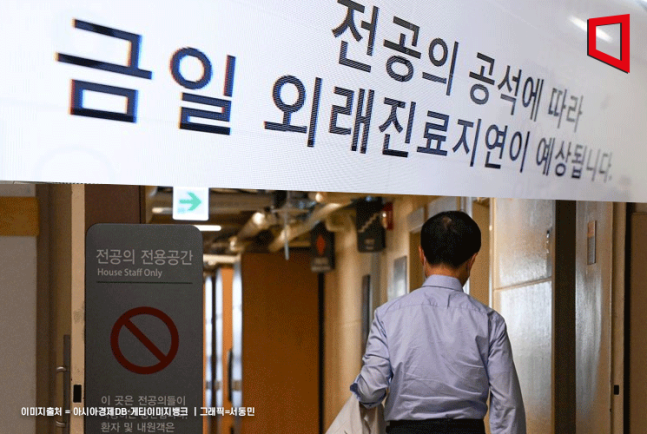
Residents Resign One After Another Following Announcement of 2,000 Quota Increase
The government and the Korean Medical Association (KMA) began meetings of the Medical Issues Consultative Body in January last year to discuss improvements in essential and regional medical care. This was in accordance with the 2020 medical-government agreement that 'medical school quota increases will be carried out through consultation between the government and the medical community.' The government and the medical community held a total of 27 meetings but ultimately failed to reach an agreement. On February 6 this year, the government held the Health and Medical Policy Deliberation Committee (HMPDC) at the Government Seoul Office and unilaterally announced an increase of 2,000 medical school admissions for the 2025 academic year.
Two weeks later, on February 19, about 10,000 residents submitted their resignation letters and left the clinical sites the next day, marking the start of the ongoing medical vacancy crisis. In late February, the government raised the health and medical disaster alert level to the highest crisis level, 'severe,' and formed the 'Central Disaster and Safety Countermeasures Headquarters for Medical Group Actions' to activate an emergency medical system. At the same time, the government promoted a pilot project for PA nurses to fill the gap left by the residents.
Along with the medical vacancy, the specialist training system also began to collapse. More than 90% of interns who passed the first half of the year did not finally register. The annual contracts and education for interns and residents, which operated like clockwork from March to February of the following year, became impossible. As a result, there are expected to be disruptions in the supply of military doctors and public health doctors after next year. Since intern training did not take place in the first half of this year, resident recruitment for the first half of next year is also impossible.
On March 20, the government allocated the increased 2,000 quotas to medical schools nationwide. At the end of March, major medical school professors submitted resignation letters demanding the withdrawal of the quota increase and the cancellation of administrative sanctions against residents. Although medical school professors did not carry out collective resignation, they have since reduced outpatient and surgical services through work stoppages and adjustments, citing accumulated physical limits. Many full-time and clinical faculty members, especially in regional medical schools, have personally resigned and left hospitals.
On April 1, just before the general election, President Yoon Suk-yeol directly delivered a live broadcast medical reform address explaining the government's position point by point. Three days later, Park Dan, Emergency Committee Chair of the Korean Intern and Resident Association, met privately with President Yoon at the Yongsan Presidential Office, raising hopes for a breakthrough in resolving the conflict. However, the talks yielded no results, and after the meeting, Chair Park said, "There is no future for Korean medicine." Since then, President Yoon has not directly communicated with the public, medical community, or media regarding the medical crisis.
On April 25, the government officially launched the Presidential Medical Reform Special Committee. However, the medical community insists that a different form of discussion is necessary and has not yet recommended members for the three seats allocated to them.
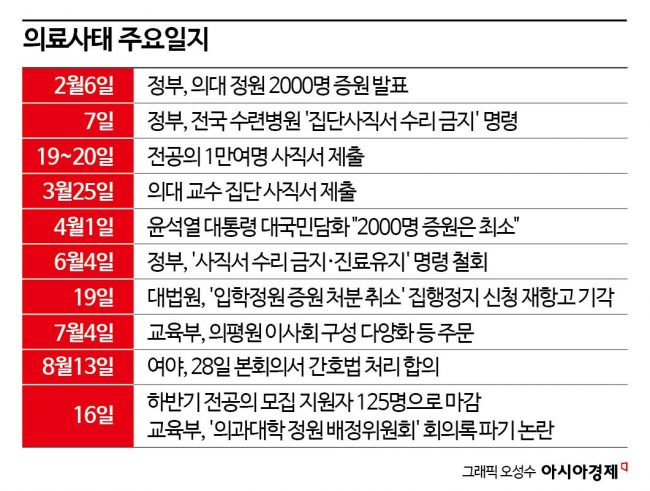
Legal disputes have continued since then. Medical school professors, residents, and medical students filed injunction applications with the courts to suspend the effect of the '2,000 medical school quota increase and allocation order' against the government. However, the injunction applications were dismissed or rejected by the Seoul High Court on May 16, and the Supreme Court ultimately did not accept them the following month. The government judged that the legal legitimacy of the 2,000 quota increase was secured and expected that "residents who have lost their justification will voluntarily return" (senior government official).
The medical community has stubbornly resisted, even coining the new term 'tangpyeong' (lying down and doing nothing). Residents who resigned ignored the government's second-half recruitment. Although the government said it would apply special training exceptions only to residents returning in September, according to the Ministry of Health and Welfare, only 125 applicants nationwide applied for the second-half resident recruitment, which closed on the 16th.
Medical students have also maintained solidarity with residents by refusing to take the medical licensing examination. A total of 364 candidates took the exam this year, of whom only 159 were fourth-year students. Medical students nationwide have collectively submitted leave of absence forms from the first semester and are avoiding classes. The government is trying to prevent their collective failure by using various loopholes such as curriculum changes, but if they do not return to classes by September, failure is inevitable. This will overlap with next year's new medical students, making normal medical school classes virtually impossible.
Worsening Management Leads to Bed Reduction... Resigned Residents Move to Private Clinics
Under the emergency medical system, training hospitals are facing a crisis. Yeouido St. Mary's Hospital is considering restructuring, including bed reduction and staff cuts due to financial difficulties. Chungnam National University Hospital and Sejong Chungnam National University Hospital have fallen into capital erosion. As the number of regional hospitals unable to endure the emergency situation and refusing new patients increases, cases of regional patients coming up to Seoul's 'Big 5' hospitals have recently increased. Critics point out that the government's medical reform, aimed at revitalizing regional medical care, is instead causing concentration of medical services in Seoul.
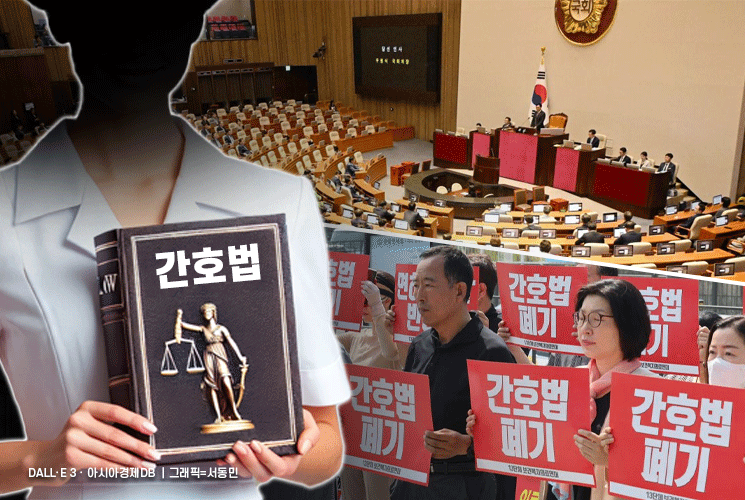
Meanwhile, the passage of the Nursing Act in the National Assembly is imminent. The ruling and opposition parties have agreed to hold a plenary session on the 28th to handle non-contentious livelihood bills. On the other hand, the KMA strongly opposes the passage of the Nursing Act without consultation, arguing that it will cause problems in distinguishing the scope of work among medical personnel, even mentioning a "regime overthrow movement" (KMA President Im Hyun-taek).
Controversy also arose around the Korea Institute of Medical Education and Evaluation (KIMEE), which evaluates and accredits medical education capabilities. When KIMEE announced it would strengthen evaluations of medical schools with increased quotas, the Ministry of Education recommended that KIMEE obtain prior review from the ministry when changing board composition or evaluation criteria, methods, and procedures. KIMEE argues that such recommendations undermine its independence and degrade the quality of medical education, but the Ministry of Education pressures that if KIMEE does not comply by March next year, its accreditation may be revoked.
Despite the worsening situation, the government refuses the medical community's demand to reconsider the medical school quota increase from scratch. The government plans to resolve the crisis through the first medical reform implementation plan to be announced next month. On the 16th, Minister of Health and Welfare Cho Kyu-hong said at a joint hearing of the Education and Health and Welfare Committees in the National Assembly, "The Medical Reform Special Committee will quickly discuss the expansion of medical school quotas and announce the first implementation plan as early as next month." The implementation plan will focus on four main areas: ▲ innovation of the medical workforce system ▲ reform of the medical delivery system ▲ concentrated compensation for severe and essential medical care ▲ enhancement of transparency in medical accident resolution and strengthening of safety nets.
However, the medical community holds that the government's measures cannot solve the current medical vacancy. They argue that if the medical delivery system is restructured to focus on severe and essential medical care at tertiary general hospitals, hospital profitability will inevitably be affected. They also claim that residents are unlikely to return under the medical workforce system innovation plan and that the safety net enhancement for medical accident resolution lacks effectiveness.
Meanwhile, some residents have begun to re-employ as general practitioners in hospitals and clinics. According to the Ministry of Health and Welfare, as of the 12th, 971 resigned residents have been employed in medical institutions, with 42% working in hospital-level or higher institutions and the rest in clinic-level institutions.
An official from a tertiary hospital said, "Once resigned residents (general practitioners) decide to work locally and become private practitioners, there is no chance they will return to training hospitals later. No matter how much the government tries to create specialist-centered or PA-centered hospitals, the cessation of specialist production starting next year means the medical vacancy will inevitably be prolonged."
© The Asia Business Daily(www.asiae.co.kr). All rights reserved.
![Clutching a Stolen Dior Bag, Saying "I Hate Being Poor but Real"... The Grotesque Con of a "Human Knockoff" [Slate]](https://cwcontent.asiae.co.kr/asiaresize/183/2026021902243444107_1771435474.jpg)


















