"Current Students at Gyodae Cannot Be Considered Public Institution Employees"
Case Applying 3-Year Disciplinary Statute of Limitations Instead of 10 Years
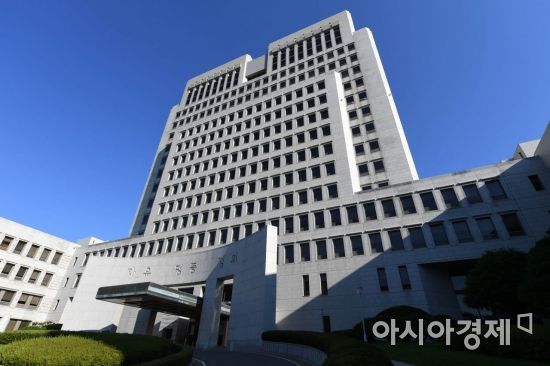
A Supreme Court ruling has been issued stating that the disciplinary action against an elementary school teacher, who created and shared an introduction material evaluating the appearance of new female students according to the tradition during their enrollment at Seoul National University of Education, should be canceled.
The trial focused on how many years of disciplinary statute of limitations apply when disciplining a person who graduated from a teacher's college and became a teacher based on reasons from their time at the teacher's college.
The Supreme Court held that a student enrolled at a teacher's college is not a "worker of a public institution" performing public institution duties but rather a person receiving certain services from a public institution. Therefore, the 10-year disciplinary statute of limitations for sexual harassment under the National Human Rights Commission Act does not apply, and instead, the 3-year disciplinary statute of limitations for violation of the duty to maintain dignity under the National Public Service Act should apply. In this case, since the request for disciplinary resolution was made after the statute of limitations had already expired, the disciplinary action was deemed illegal.
According to the legal community on the 19th, the Supreme Court's Third Division (Presiding Justice Oh Seok-jun) recently overturned the lower court ruling that dismissed the lawsuit filed by elementary school teacher Song against the Seoul Metropolitan Office of Education seeking cancellation of a reprimand and remanded the case to the Seoul High Court.
The court stated, "The lower court's judgment that deemed the disciplinary action lawful by considering the misconduct as sexual harassment under Article 2, Clause 3, Subparagraph (d) of the National Human Rights Commission Act contains an error in the legal interpretation regarding the subject of sexual harassment, which affected the judgment," explaining the reason for reversal and remand.
Article 2 (Definitions) Clause 3 of the National Human Rights Commission Act lists various types of discriminatory acts infringing on equality rights, defining "sexual harassment" in Subparagraph (d) as "sexual conduct or other demands related to work, employment, or other relationships by workers, users, or employees of public institutions using their position, causing sexual humiliation or disgust, or imposing employment disadvantages for refusing such conduct."
It also stipulates that "public institutions" include national agencies, local governments, schools established under Article 2 of the Elementary and Secondary Education Act and Article 2 of the Higher Education Act, and public-related organizations under Article 3-2, Paragraph 1 of the Public Officials Ethics Act.
Referring to these provisions of the National Human Rights Commission Act, the court premised that "for the misconduct in this case to constitute sexual harassment under Article 2, Clause 3, Subparagraph (d) of the Act, the plaintiff must have been a worker, user, or employee of a public institution at the time of the misconduct."
Quoting Supreme Court precedents, the court added, "To be considered a 'worker of a public institution' here, one must have maintained a certain relationship with the public institution for a considerable period and performed duties of the public institution."
The court stated, "However, the plaintiff was a second-year student in the Korean Language Education Department at the teacher's college at the time and was not performing duties of a public institution but was merely a person receiving certain services from the public institution based on contractual or legal grounds. Even considering the special nature of the teacher's college, it is difficult to regard the plaintiff as someone who maintained a considerable relationship with the public institution and performed its duties."
The court pointed out, "Therefore, if the misconduct does not constitute sexual harassment under Article 2, Clause 3, Subparagraph (d) of the National Human Rights Commission Act, the 3-year disciplinary statute of limitations under Article 83-2, Paragraph 1 of the National Public Service Act applies. Since the defendant's request for disciplinary resolution was made on March 2, 2020, more than three years after the misconduct occurred, the disciplinary action is illegal due to expiration of the statute of limitations."
In 2016, while enrolled as a second-year student in the Korean Language Education Department at Seoul National University of Education, Song created an "introduction material" evaluating the appearance of new female students for use at the "Male Meeting Ceremony," which involved male students from the same department and some alumni.
At that time, male students in the department were automatically enrolled in a soccer club within the department. Between late March and May each year, all enrolled students and male alumni who had graduated recently gathered for the "Male Meeting Ceremony" under the pretext of fostering camaraderie between seniors and juniors. The event involved playing soccer during the day and drinking alcohol on the porch of the student union building in the evening.
The third-year students led the event, and the second-year students prepared the introduction materials for the new students and provided them to the attending alumni.
In 2016, four students from the class of 2015, including Song, created the introduction materials for the class of 2016. One of the four asked a class of 2016 student to collect one photo from each 2016 student, labeling the photo files with names and student numbers, and to send them by lunch the next day, claiming it was necessary to prepare a list of new students to send to the supervising professor. The 2016 student then posted this request in a KakaoTalk group chat involving classmates and collected the photos.
Song and others used these photos of the 2016 female students to create the introduction materials, adding age, club affiliation, and humorous descriptions of the new students. For example, a student who drank well was labeled "Alcohol King," and a female student resembling a dinosaur was labeled "Dinosaur Face."
During the Male Meeting Ceremony, alumni circulated the materials, called male students one by one to introduce themselves, and asked them to name one "liked female." The alumni then evaluated the female students' appearances based on the introduction materials prepared by the second-year students and recorded the names and evaluations of the called female students in a sketchbook prepared separately. Seniors called this process "traffic control," under the pretext that male students should not overlap in their preferences.
However, on March 1, 2019, a post was uploaded on a university online community alleging that male students in the Korean Language Education Department evaluated the faces and bodies of female students during the Male Meeting Ceremony. On the same day, male students from the class of 2017 in the department issued an apology stating that alumni had used introduction materials to evaluate appearances until 2016 but that such practices had ceased from 2017 onward.
A few days later, on March 7, 2019, male students from the class of 2015, including Song, posted an apology acknowledging that they had named liked persons in front of others during the traffic control time, created the 2016 introduction booklet used at the Male Meeting Ceremony, and had neglected to stop the bad tradition, passing it on to juniors.
Two female students from the Korean Language Education Department filed a request on March 14, 2019, for an investigation into sexual harassment during the Male Meeting Ceremony at the sexual harassment and sexual violence counseling office established within the university's student culture center. From March 16 of the same year, various media outlets began reporting on the matter.
As the controversy spread, the Seoul Metropolitan Office of Education's audit office conducted an audit from June 13 to August 22, 2019, targeting graduates of Seoul National University of Education who had been appointed or passed the appointment exam as teachers.
Song, who had passed the 2019 Seoul Metropolitan Elementary School Teacher Appointment Exam and had been working as a teacher at an elementary school in Seoul since March 1, 2020, was also included in the audit.
The Seoul Metropolitan Office of Education's disciplinary committee requested disciplinary resolution from the General Disciplinary Committee for Educational Officials on March 2, 2020, alleging that Song violated Article 63 of the National Public Service Act, which requires maintaining dignity, by creating materials in 2016 that evaluated the appearance of new female students and allowing alumni to circulate them at the Male Meeting Ceremony as a medium for appearance evaluation and sexual harassment. Following the disciplinary resolution, Song received a minor disciplinary action of reprimand on November 27 of the same year.
Song filed a lawsuit challenging the disciplinary action. Since teachers disciplined for sexual misconduct cannot be appointed as principals or vice principals and may be unable to serve as homeroom teachers for a significant period, Song had reasons to dispute the legality of the disciplinary action despite it being a light reprimand.
However, the first and second instance courts found no problem with the disciplinary action taken by the education authorities against Song.
In court, Song admitted to creating the problematic materials but argued that no appearance evaluation, sexual harassment, or sexual objectification of female students occurred during the Male Meeting Ceremony, so the materials were not used as a medium for sexual harassment, and there was no ground for disciplinary action.
However, the court cited testimonies from related parties that the materials contained expressions evaluating female students' appearances, such as "Dinosaur Face," and that photos were obtained under false pretenses claiming they were needed for submission to the supervising professor, with only female students' photos used to create the materials. Based on this, the court concluded, "It can be reasonably recognized that appearance evaluations and sexual harassment remarks regarding new female students occurred using the booklet created by the plaintiff during the 2016 Male Meeting Ceremony."
Notably, a classmate who helped create the materials told male students from the class of 2017 during the handover of the Male Meeting Ceremony, "We now do the Male Meeting Ceremony. Until last year, we introduced only female new students in a somewhat dirty way as a new student profile," and "But since this has become a social issue recently, we now just make a simple introduction with photos for both male and female new students. Absolutely no scores or appearance evaluations." The court noted that these statements were made before the misconduct was publicly revealed through the media and found them credible.
Song also argued that disciplining him for actions committed as a university student before becoming a public official was unfair.
However, the court rejected this, citing Supreme Court precedent that "although acts committed before appointment as a national public official generally cannot be grounds for disciplinary action during employment except under Articles 78(2) and (3) of the National Public Service Act, if such acts damage the dignity or reputation of the public official after appointment, they can be grounds for disciplinary action under Article 78(1)3 of the Act."
Article 78(1)3 of the National Public Service Act stipulates that "any act damaging dignity or reputation regardless of whether it relates to official duties" is grounds for disciplinary action.
Finally, Song claimed that the disciplinary statute of limitations under the National Public Service Act is three years, and since the misconduct occurred in March 2016, the request for disciplinary resolution made on March 2, 2020, was after the three-year statute of limitations had passed, making it illegal.
At the time of Song's trial, Article 83-2(1) of the National Public Service Act stated that "requests for disciplinary resolution cannot be made after three years from the occurrence of the disciplinary cause (five years in cases under Article 78-2(1))."
However, the court noted that Article 52 of the Educational Officials Act provides that "if the disciplinary cause falls under any of the following, a request for disciplinary resolution can be made within ten years from the occurrence of the cause, notwithstanding Article 83-2(1) of the National Public Service Act," and that Subparagraph 4 of the same article enumerates "sexual harassment under Article 2, Clause 3, Subparagraph (d) of the National Human Rights Commission Act." Therefore, the court held that the 10-year disciplinary statute of limitations under Article 52(4) of the Educational Officials Act should apply, not the 3-year statute under the National Public Service Act.
The court stated, "Although the plaintiff was a student at the teacher's college at the time of the misconduct, at the time of the disciplinary action, he was an elementary school teacher and thus a worker of a school at various levels. The misconduct was committed from a senior's position against female students who are likely to work as fellow teachers in elementary schools in the same region in the future, constituting sexual conduct related to work and a discriminatory act infringing on equality rights based on gender."
However, the Supreme Court's judgment differed.
As stated earlier, the Supreme Court concluded that since a student enrolled at a teacher's college is not a worker or employee of a public institution, the National Human Rights Commission Act does not apply regarding the disciplinary statute of limitations. Instead, the 3-year disciplinary statute of limitations under the National Public Service Act applies, and since the request for disciplinary resolution was made after three years from the misconduct, it was illegal.
© The Asia Business Daily(www.asiae.co.kr). All rights reserved.

















