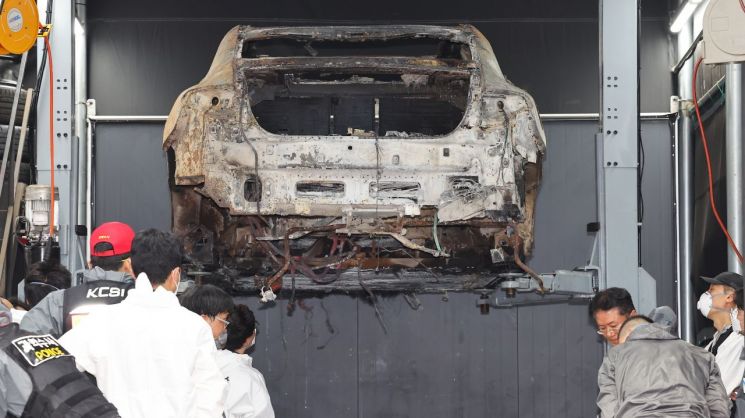
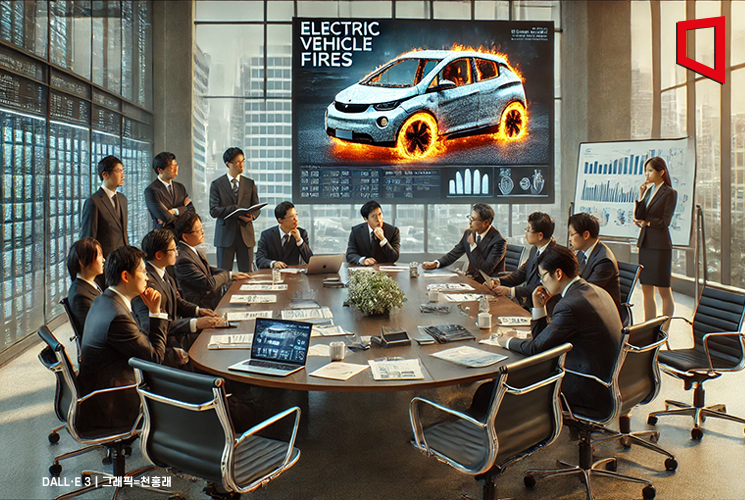
Following recent electric vehicle fires in apartments in Cheongna, Incheon, and a Tesla catching fire while parked in Yongin, Gyeonggi Province, issues surrounding the restructuring of the insurance system for electric vehicles are rapidly emerging. This has highlighted the need for the insurance industry to respond to new risks alongside the rapid growth of the electric vehicle market. As the distribution of electric vehicles expands, related fire incidents are also increasing, but it is pointed out that the existing insurance system, which mainly focuses on internal combustion engine vehicles, struggles to properly reflect the characteristics and risks of electric vehicles.
Repeated Electric Vehicle Fires Prompt Insurance Industry to 'Review Strategies'
According to the insurance industry on the 19th, as electric vehicle-related accidents have occurred consecutively, insurers have begun to reconsider their insurance policies related to electric vehicles. Samsung Fire & Marine Insurance announced during its earnings conference call on the 14th that there have been 360 fire reports related to electric vehicle fires in the Cheongna district, with estimated damages reaching 2.2 billion KRW.
According to a recent survey by the Korea Insurance Development Institute, the number of fire and explosion incidents involving electric vehicles over the past five years has been higher than that of internal combustion engine vehicles. Specifically, electric vehicles experienced 0.93 incidents per 10,000 vehicles, while non-electric vehicles had a lower rate of 0.90 incidents. Moreover, the damage amount per incident was significantly higher for electric vehicles. The average damage cost for electric vehicles was 13.14 million KRW, which is 1.9 times higher than the 6.93 million KRW for non-electric vehicles.
In this context, a Samsung Fire & Marine Insurance official stated, "Electric vehicles generally have a higher loss ratio, and we charge about 1.4 times the insurance premium compared to internal combustion engine vehicles," adding, "We plan to simultaneously pursue a strategy to increase the overall share of electric vehicle insurance through partnerships with electric vehicle manufacturers that have favorable loss ratios." This is interpreted as a strategy to achieve both risk management and market expansion goals simultaneously.
Other major non-life insurers are also revisiting their strategies related to electric vehicles. KB Insurance is currently reviewing various options to expand coverage specifically tailored for electric vehicles. This is a measure to prepare for potentially large losses caused by electric vehicle fires.
In the case of Hyundai Marine & Fire Insurance, last month they raised the liability coverage limit for all types of electric vehicles to 2 billion KRW when subscribing to special contracts, up from the previous limit of 1 billion KRW. A Hyundai Marine & Fire Insurance official said, "We recognize that the average damage amount in fire incidents involving electric vehicles is about twice as high as that of internal combustion engine vehicles," adding, "Just as we increased the liability coverage amount before the Cheongna electric vehicle fire incident, we plan to continue developing and improving special contracts to meet the demands of customers owning electric vehicles."
Discussion on Mandatory Liability Insurance for Charging Stations
However, some voices express concerns that if electric vehicle insurance premiums rise or subscription conditions become stricter, it could lead to reluctance in insurance enrollment and management for electric vehicles, increasing the burden on consumers.
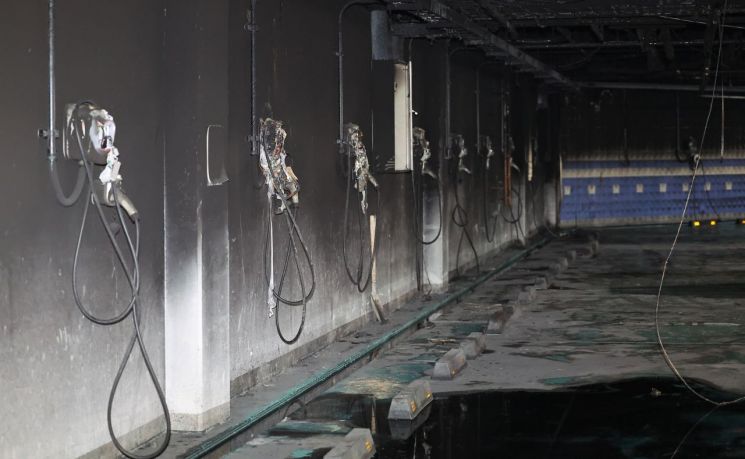
Additionally, opinions are emerging that responsibility and compensation issues related to electric vehicle fire accidents should not be limited solely to vehicle owners. There is a call to clarify the responsibilities of various parties such as charging station and parking lot management facilities, and fire safety equipment companies, and to introduce a mandatory insurance system for these entities. An insurance industry official said, "Especially for risk facilities that can cause harm to many people, mandatory insurance application should be considered," adding, "Currently, such institutional measures are insufficient."
Consequently, bills mandating insurance subscription for charging stations are gaining renewed attention. In June, Kim Young-jin, a member of the Democratic Party of Korea, introduced a partial amendment to the Electric Safety Management Act that mandates electric vehicle charging facility operators to subscribe to liability insurance. Last month, Lee Hun-ki, also from the Democratic Party, proposed an amendment to the Framework Act on Disaster and Safety Management to require owners or managers of electric vehicle charging facilities to subscribe to insurance to respond to fire accidents occurring at charging stations. The purpose is to establish institutional measures to prepare for fire or explosion accidents at charging stations.
Professor Chae Sang-mi of Ewha Womans University’s Business Administration Department explained, "As electric vehicle-related technology advances, the risk of fire will gradually decrease," but added, "For the time being, risk management by insurers and raising consumer safety awareness are necessary, and it is time to consider establishing an insurance system that reflects advanced technologies sufficiently, such as offering premium discounts for electric vehicles that incorporate fire prevention technologies."
© The Asia Business Daily(www.asiae.co.kr). All rights reserved.



















