Differences Over Cheongwadae Location and City-County Authority
Urgent Need to Build Consensus Among Provincial Residents
On the 18th, North Gyeongsang Province (Gyeongbuk) unveiled the special administrative integration bill for Daegu-Gyeongbuk, as the legislative proposal for the integration is reaching a broad consensus.
Since June, immediately after the integration discussions began, Gyeongbuk has made continuous efforts with Daegu City to draft a joint special administrative integration bill.
Initially, Daegu City's bill consisted of 213 articles, while Gyeongbuk's bill had 310 articles. Through ongoing working-level consultations, both parties have meticulously reviewed the bills to date.
Through these efforts, the two local governments have strived to include as many balanced and effective special provisions as possible. As of August, Gyeongbuk's bill consists of six chapters and 272 articles.
Although key issues such as the location of government offices, jurisdiction, local legislative authority, and city-county powers still require consensus, there is already significant agreement on the overall structure, content, and most of the special provisions intended through integration.
However, there are differences in the points emphasized by Daegu City and Gyeongbuk.
Daegu City focuses on the location of government offices and adjustment of jurisdictions based on the transfer of various powers and special provisions. In contrast, Gyeongbuk's special bill emphasizes strengthening local autonomy through integration, enhancing fiscal guarantees and autonomy, strengthening city-county autonomy, and maintaining the current status of the integrated government offices.
Gyeongbuk plans to use administrative integration as an opportunity to secure significant central government powers.
The bill includes provisions for the phased transfer of central administrative agencies' powers?excluding essential national affairs such as diplomacy, national defense, and judiciary?to the special city, cities, counties, and districts.
Gyeongbuk sees this unprecedented metropolitan-level administrative integration as a golden opportunity to advance the stagnant local autonomy system, which has been hampered by centralization, and to usher in a true 'era of local governance.'
Metropolitan governments in Busan-Gyeongnam, Honam, and Chungcheong regions are already closely monitoring the Daegu-Gyeongbuk integration, which carries the significant responsibility of opening a new era of substantive local autonomy.
This is also the main reason why bold transfer of central powers and securing real fiscal autonomy through the special law are essential.
From a fiscal perspective, the aim is to secure autonomy by guaranteeing financial support above the current level. Integrating the financial resources of both regions through administrative integration will achieve economies of scale, and a unified administrative system will provide greater bargaining power with the central government to secure higher levels of financial support.
Moreover, securing fiscal autonomy is essential to implement tailored policies that reflect the opinions of local residents.
Additionally, city and county powers must be further strengthened. The position is that metropolitan-level administrative integration should not reduce the powers of cities and counties. Instead, the plan is to transfer additional central administrative agency powers to cities and counties and further strengthen their autonomy through integration.
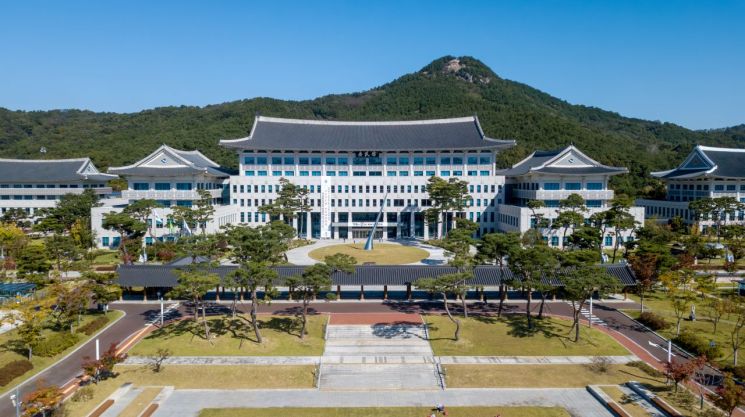
Gyeongbuk's firm principle is to maintain the current locations of government offices in Daegu and Andong. In particular, determining the jurisdiction of government offices without forming a consensus among residents or collecting opinions from the relevant cities and counties is seen as contrary to the fundamental principle of strengthening city-county autonomy.
To maximize the discovery and inclusion of development strategies and special provisions that align with these basic directions, Gyeongbuk has been conducting six specialized studies simultaneously while focusing on concretizing the special bill. Specifically, the Gyeongbuk bill includes 249 diverse special provisions, such as power transfers, ordinance delegation, regulatory improvements, simplification of licensing procedures, support for public facility installation, and fostering of regional specialized industries.
The Gyeongbuk special bill stipulates that "the special city's government offices shall remain in the current locations of Daegu City and Andong City, Gyeongbuk," thereby explicitly stating the intention to maintain the status quo.
Unlike Daegu City, which designated separate offices in Daegu, Andong, and Pohang and divided their jurisdictions, Gyeongbuk did not designate separate jurisdictions for each office.
This reflects concerns that the core of administrative integration?strengthening city-county autonomy?could be undermined by setting jurisdictions for each office.
Furthermore, Gyeongbuk maintains that the issue of office locations, which is a point of contention with Daegu City, should be approached cautiously and with broad public consensus, including local residents, from a long-term perspective.
The special bill prepared by Gyeongbuk also includes provisions for four deputy mayors in the special city, including two vice-ministerial-level national officials, and maintains both the Daegu Fire Headquarters and Gyeongbuk Fire Headquarters, while upgrading the rank of the Gyeongbuk Fire Chief from Fire Commissioner to Senior Fire Commissioner.
Given the size, jurisdiction, and importance of handling major disasters, the Gyeongbuk Fire Chief has long held the rank of Fire Commissioner. This move also considers that Daegu City's Fire Chief was only upgraded from Deputy Fire Commissioner to Fire Commissioner this year, after 43 years.
After integration, the special city will also have the authority to directly recommend the declaration of a special disaster area to the President.
Currently, such declarations require deliberation by the Central Safety Management Committee and a recommendation from the Minister of the Interior and Safety before presidential approval and proclamation. The special provisions are expected to enhance the region's disaster response capabilities and enable faster support.
The Gyeongbuk special bill also includes expanded delegation of ordinance affairs to strengthen local legislative authority and special provisions to enhance the capabilities of local councils. The number of affairs previously regulated by Presidential Decree that can now be determined by ordinance will increase significantly, making this a core element in strengthening council-centered local legislative authority.
To this end, the bill includes special provisions for policy research personnel to strengthen the legislative capacity of local councils.
In the area of strengthening autonomy, which Gyeongbuk is most focused on, the bill includes comprehensive provisions for power transfer and the transfer of special local administrative agencies.
The Daegu-Gyeongbuk Special City Support Committee, under the Prime Minister, must establish a plan to phase in the transfer of central administrative agency powers?excluding essential national affairs such as diplomacy, defense, and judiciary. This plan will include the special city as well as cities, counties, and districts as targets for power transfer.
The affairs of special local administrative agencies previously established in Daegu City and Gyeongbuk will also be transferred. Affairs closely related to residents' lives, such as environment, small and medium-sized enterprises, and employment and labor, will be transferred to the special city, along with related organizations, budgets, and personnel for smooth operation.
By receiving the transfer of central government powers, the special city will be able to carry out administration tailored to residents' needs, greatly improving their quality of life.
In the fiscal field, the focus is on fiscal guarantees and strengthening autonomy.
Article 3 of the special law comprehensively stipulates the state's responsibility for administrative integration. This provision guarantees the administrative and fiscal benefits previously enjoyed by Daegu Metropolitan City and Gyeongbuk, while also requiring additional support such as the transfer of national tax revenue to ensure the successful settlement and achievement of the special city's goals.
First, Gyeongbuk will ensure that the method of allocating grants is applied more favorably to the special city, guaranteeing at least the current level of support.
In the area of taxation, the bill promotes the transfer of real estate capital gains tax to the local level. It stipulates that the real estate capital gains tax collected in the special city will be attributed to the local government.
Gyeongbuk also includes the transfer of a portion of corporate tax revenue. The collection of corporate tax from local business sites is justified based on the principle of fair tax burden.
By collecting taxes based on the economic value generated by local businesses, it is expected that resources needed for education, welfare, infrastructure, and other regional services can be secured.
Above all, the emphasis is on strengthening tax autonomy.
The special city will be able to set tax rates for 11 local taxes, including acquisition tax and local resource facility tax, which were previously regulated by law, through its own ordinances. In addition, the amounts of acquisition tax, registration and license tax, property tax, and local resource facility tax can be increased or decreased by up to 50% through special city ordinances.
To ensure stable fiscal resources and balanced regional development following integration, the issuance of the (tentative) Daegu-Gyeongbuk Integrated Lottery will be possible. A portion of the local consumption tax is allocated to metropolitan and provincial governments based on regional consumption indices. To secure resources after integration, Daegu City's consumption index, which was previously lower than Gyeongbuk's, will be raised from 200 to 300.
To meet the fiscal needs arising from integration, the (tentative) Metropolitan Integration Grant and Metropolitan Integration Education Grant will be newly established and provided for 20 years.
Additionally, a separate account will be established within the Regional Balanced Development Special Account to secure funds for expanding balanced development projects and implementing national subsidy projects.
The authority of the Chief of the Korea Forest Service to designate and lift restrictions on mountain area conversion and temporary use restriction areas will be transferred to the special mayor.
Gyeongbuk is a representative forest region with a forest area of 1,333 hectares and a forest rate of 70.07%. By strengthening local autonomy over mountain area conversion, the local community can more effectively balance environmental protection and development.
In particular, this is expected to accelerate Gyeongbuk's plans for Baekdudaegan and Nakdongjeongmaek forest development and tourism projects.
The authority to designate smart agriculture promotion zones will also be granted to the special mayor. With the enforcement of the "Smart Agriculture Promotion and Support Act" on July 26, 17 licensing procedures will be simplified for designated smart agriculture zones, and special provisions under the "Public Property and Goods Management Act" will also apply.
As a result, the lease period for administrative and general property for young tenant farmers can be extended in 10-year increments without limit, greatly improving the stability of agricultural management.
The bill also grants the special mayor the authority to approve and report farmland conversion and to designate or lift agricultural promotion zones.
Previously, approval or consultation from the Minister of Agriculture, Food and Rural Affairs was required for farmland conversion exceeding certain sizes (over 3 hectares in agricultural promotion zones, over 30 hectares outside).
Until now, the review process for farmland conversion was complex and time-consuming, but the special provisions will allow detailed matters such as approval, reporting, and revocation of farmland conversion to be determined by ordinance and adjusted according to local characteristics and needs, enabling faster approval procedures.
Additionally, the special mayor will have the authority to nurture and support specialized manpower in the fisheries food industry, support and foster fisheries food clusters, designate and change marine healing zones, and designate deep-sea water intake areas.
This will enable a leading role in the development and utilization of fisheries and marine resources throughout the East Sea Rim region.
Diverse investment attraction special provisions to attract large and mid-sized companies are also included in the bill.
When the special mayor designates and announces a "Global Future Zone," 13 special zones, including regulation-free zones and free economic zones, will be designated at once.
Eleven additional special provisions will apply, such as reduction of development charges for special zone development projects and tax benefits for resident companies and workers. The best investment conditions are expected to be created in major areas such as the new airport, airport redevelopment sites, ports, and administrative complex cities.
Especially in newly designed investment promotion zones, companies will have the opportunity to lease national and public property for up to 100 years.
Companies with annual sales of over 500 billion KRW relocating to Daegu-Gyeongbuk Special City will benefit from special provisions for business succession deductions.
National taxes will be exempted or reduced for five years, and local taxes will be exempted or reduced for up to 15 years. These tax benefits are expected to greatly aid in attracting companies.
Various fiscal incentives have also been introduced. In particular, the support ratio for local investment promotion subsidies and domestic return investment subsidies will be increased by an additional 5 percentage points over the current ratio. When foreigners newly establish or expand business sites in the special city, the current maximum cash support limit will apply, and the special mayor will be granted authority to provide entry convenience and designate separate maximum stay periods for foreign workers.
The bill also includes various special provisions to foster advanced industries. The government will support R&D and test field construction for advanced new industries such as AI, big data, future mobility, hydrogen industry and SMR, robotics, and drones, and exempt preliminary feasibility studies for these projects.
Special provisions for licensing and permits for the creation and operation of the Andong Bio National Industrial Complex, as well as procedures and regulatory special provisions to vitalize the hemp industry, have also been granted.
To move away from a central ministry-centered approach and activate locally-led specialized advanced industries and technology R&D, the government will establish a dedicated science and technology innovation agency, create a comprehensive R&D grant in the balanced development account, and gradually transfer R&D planning authority.
Additionally, to establish a financial foundation for fostering regional new industries linked to national R&D, special provisions for the management, supervision, and budget authority transfer of large-scale research equipment worth over 50 billion KRW, such as proton accelerators, have been included.
For development projects approved by the special mayor through a comprehensive plan, permits and approvals required by 44 laws?including the Building Act, Public Property and Goods Management Act, State Property Act, and the Baekdudaegan Protection Act?will be deemed granted. This will greatly simplify the procedures for large-scale development projects.
Additionally, companies investing in or moving into the Global Future Zone or development project zones will receive tax reductions on corporate tax, income tax, customs duties, acquisition tax, registration and license tax, and property tax, and support will be provided for the smooth implementation of various development projects.
Although the authority to lift greenbelt restrictions was expanded from 300,000 sqm to 1,000,000 sqm last year, the special provisions will transfer the authority to lift restrictions over 1,000,000 sqm to the special mayor. As a result, all greenbelt (development restriction zone) lifting authority will be granted to the special mayor.
The bill also includes special provisions for promoting transportation and port SOC (social overhead capital) projects within the special city's jurisdiction. The authority to allocate resources from the Special Account for Transportation Facilities will be transferred to the special mayor, enabling the direct use of special account resources for region-led transportation SOC projects.
When the designation of transportation and logistics hubs is requested within the jurisdiction of Daegu-Gyeongbuk Integrated New Airport and ports, the government is required to give it priority. This will enable the new airport to be developed as the country's second air logistics hub and create an international-scale cargo terminal.
Additionally, with the transfer of approval and management authority for national industrial complex development plans held by central ministries to the special mayor, it is expected that customized development and operation of national industrial complexes tailored to the region will become possible.
In newly created industrial complexes in the special city, infrastructure such as roads and railways connecting airports and ports can be installed entirely with national funds. This is intended to strengthen logistics and transportation infrastructure for industrial complexes and promote corporate attraction and economic revitalization.
Furthermore, the special mayor will be granted the authority to designate parts of new industrial complexes as Opportunity Development Zones without relying on central ministry authority. This is expected to promote customized development strategies tailored to regional characteristics and enhance the self-reliance and competitiveness of the local economy.
Additionally, the plan is to develop the Daegu-Gyeongbuk Administrative Complex City centered around the new Gyeongbuk Provincial Government Town, with 11 related special provisions.
This will enable the establishment of general hospitals, gifted and international schools, and infrastructure suitable for an administrative complex city, as well as the relocation of administrative agencies and affiliated public institutions, and the construction of an administrative complex community convention center, fostering the city into a larger administrative complex.
Through transportation infrastructure projects such as UAM (urban air mobility), BRT (bus rapid transit), and circular trams linked to the new airport, the aim is to develop a smart city with a population of 100,000, leading the development of the northern region.
There are also special provisions for environmental planning and environmental impact assessment. The authority to consult on environmental impact assessments will be transferred from central ministries to the special mayor. In addition, the authority for small-scale environmental impact assessments will also be granted to the special mayor.
With the special mayor taking the lead in environmental impact assessments, it will be possible to pursue rational projects tailored to local characteristics, and local environmental management and development projects such as river dredging are expected to be carried out more effectively.
To nurture outstanding local talent and create a global educational environment, the special mayor will be granted the authority to establish and operate specialized high schools, gifted schools, and autonomous schools.
In addition, the authority to establish, guide, and supervise universities will be transferred, and matters concerning university enrollment quotas (excluding medical and education colleges) will be delegated from enforcement decrees to ordinances, securing university operational autonomy and fostering talent needed by local companies.
In particular, for specialized majors at local universities linked to regional strategic industries, an exception will be applied to allow special admissions for local talent to be recruited at the city and county level, rather than the metropolitan level.
The focus will be on actively recruiting local talent in specific fields, nurturing talent tailored to those fields, and creating synergy between university specialization and regional industry growth, thereby enhancing the efficiency of local talent development and job creation.
To create a global cultural hub, the bill also provides the basis for supporting global cultural brand projects such as "Global Culture City," which brands the region's AI-based cultural content industry.
This is expected to accelerate not only the establishment of K-Culture Graduate Schools and AI video industry clusters as the foundation of the cultural industry, but also the attraction of international cultural infrastructure to promote international cultural and artistic exchanges.
Special provisions for the designation and development of tourism complexes and tourism special zones will promote the branding of regionally distinctive tourism industries and systematically support the local tourism industry by creating local tourism promotion and development funds.
The bill also includes a basis for national funding to expand infrastructure for night tourism cities, develop the night tourism industry, and support festivals and nightscape content that can be enjoyed at night.
Gyeongbuk's efforts to solve local issues through the special law are also evident. As a special provision under the Electric Utility Act, electricity produced by nuclear power plants can be supplied directly to companies building hydrogen plants in the "Nuclear Hydrogen National Industrial Complex."
Gyeongbuk will also gain the authority to utilize and manage national forests on Ulleungdo and its affiliated islands, which could not be used at all until now, and various regulatory special provisions will apply to Ulleung County.
This is expected to provide an opportunity to develop Ulleung County into a world-class economic and tourism island.
Lee Cheolwoo, Governor of Gyeongbuk, emphasized, "The administrative integration of Daegu-Gyeongbuk will be an unprecedented model to resolve the imbalance of the Seoul metropolitan area-centric system and lead the sustainability of Korea through multipolar balanced development," adding, "Administrative integration is a matter of survival and the future for Daegu-Gyeongbuk. We will do our best to gather the will of the residents and ensure the integration process shows a more developed future than now."
Meanwhile, Gyeongbuk has proposed forming a joint promotion team with experts and local resident representatives and announced that it will strive to realize integration through building consensus among residents via various forums and discussions.
© The Asia Business Daily(www.asiae.co.kr). All rights reserved.

















