Patient "Long-term infection neglected due to incorrect administration of treatment"
Court "Patient at fault for refusing implant removal"
A patient infected with a 'super bacteria' as a side effect of rhinoplasty surgery filed a damages lawsuit claiming that the hospital's delayed administration of treatment caused loss of smell, but the court dismissed the case.
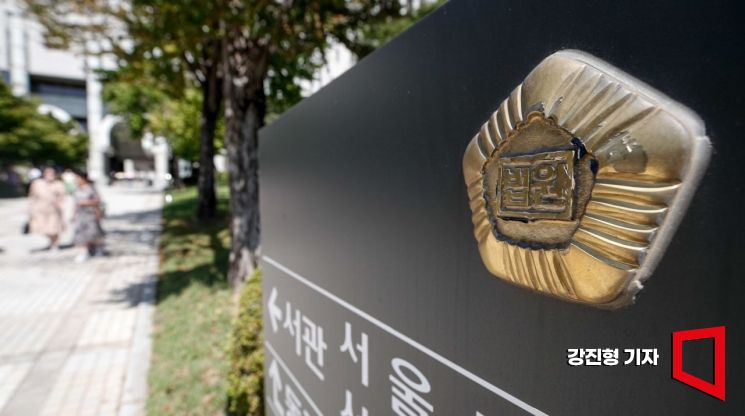
According to Yonhap News on the 16th, "The Seoul Central District Court Civil Division 39 (Judge Kang Shin-young) ruled against plaintiff A's lawsuit demanding 200 million won in compensation from B University Hospital and the attending physician."
According to Yonhap News, at the end of November 2015, A visited the emergency room of B Hospital due to inflammation inside the nose and discharge symptoms. The diagnosis a few days later was 'postoperative infection.' A had undergone rhinoplasty once in 2006 and had a revision surgery to replace the implant at another hospital in November 2013, but the area was infected. A large amount of bacteria, including MRSA (methicillin-resistant Staphylococcus aureus), known as 'super bacteria,' which cannot be treated with common antibiotics, was detected in A. The attending physician advised A that removal of the nasal implant was essential for complete recovery, but A refused.
Afterward, A repeatedly visited the plastic surgery department and emergency room of B Hospital due to persistent symptoms. Each time, the medical staff recommended surgery, stating that treatment was impossible without removing the nasal implant, but A continued to refuse. A wanted to be hospitalized for injection treatment without surgery, but the hospital said hospitalization was difficult and arranged for injections to be administered on an outpatient basis.
Eventually, A accepted surgery two months after the diagnosis, in February of the following year, and underwent implant removal surgery in late March, about a month later. Along with this, A received the antibiotic vancomycin to treat MRSA. However, from May of the same year, A complained of olfactory abnormalities, which progressively worsened, ultimately resulting in a diagnosis of permanent loss of smell.
A stated, "The hospital should have administered vancomycin immediately upon confirmation of MRSA infection but instead only gave other antibiotics and neglected treatment for over 105 days," adding, "As a result, prolonged MRSA infection led to residual bacteria even after implant removal surgery, causing loss of smell." However, the court ruled that A's loss of smell was not due to medical negligence.
The court explained, "According to the medical institution's appraisal, the failure to use vancomycin immediately cannot be considered inappropriate medical practice," adding, "In the chronic purulent condition following previous surgery, blood flow does not reach the implant, so infection was unlikely to improve with antibiotic treatment alone." The court further stated, "Expecting vancomycin administration for A, who refused the fundamental treatment of implant removal, arbitrarily chose treatment methods, and irregularly visited the hospital, is inappropriate considering the drug's characteristics and the risk of resistant bacteria emergence," concluding, "It is difficult to find medical negligence on the hospital's part such as treatment delay."
Additionally, the court said, "Even if delayed administration of vancomycin were considered medical negligence, it cannot be recognized as causally related to the loss of smell," adding, "Anatomically, the infected area and the olfactory nerve distribution are considerably distant, and it is difficult to definitively state that MRSA was the cause of the infection."
© The Asia Business Daily(www.asiae.co.kr). All rights reserved.

















