USA Legalizes Sports Gambling by State in 2018
US University Research Team Presents Data-Driven Findings
For Every $1 Bet, Stock Accounts Lose $2
"Financial Crisis for Vulnerable Households... Authorities Must Act"
As the sports gambling market in the United States has rapidly grown since legalization, it has been confirmed that more people are withdrawing money from their stock accounts to place bets on sports gambling. Research has shown that this phenomenon frequently occurs in financially vulnerable households.
Bloomberg recently reported, citing a paper titled "The Impact of Sports Gambling on Vulnerable Populations" published last month by Professor Scott R. Baker of Northwestern University and others, that gamblers are selling stocks to engage in sports gambling. The research team analyzed that this phenomenon has occurred since online sports gambling was legalized in most U.S. states in 2018.
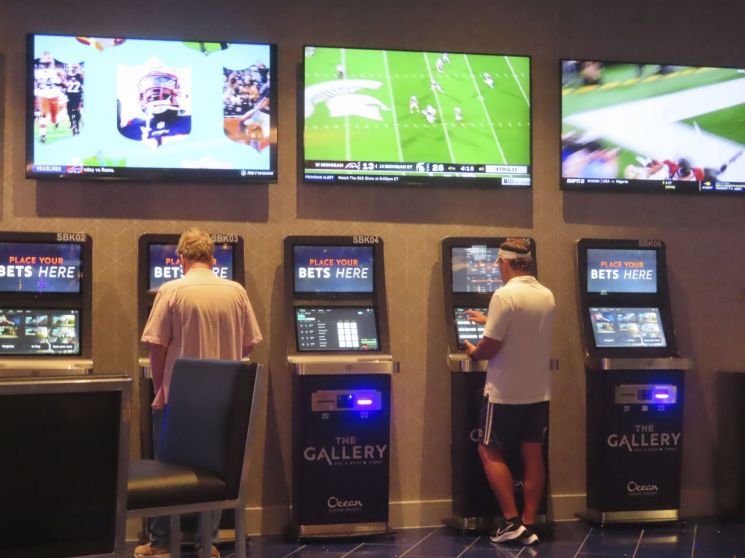
Since 2018, U.S. states have begun deciding to legalize sports gambling. Until then, only four states, including Nevada, where Las Vegas is located, allowed sports gambling. However, in May 2018, the U.S. Supreme Court ruled that the decision on legalization should be left to state governments, effectively permitting legalization. Since then, most U.S. states have legalized and opened up sports gambling.
Based on data from U.S. users from 2010 to September of last year, the research team found that for every dollar spent on recreational activities including sports gambling, the net investment amount in financial assets including stocks decreased by two dollars. They expressed concerns that this leads not only to increased gambling activities but also to increased credit card usage, lack of available credit, reduced investment funds, and increased lottery purchases.
The research team analyzed that this phenomenon is most severe in financially vulnerable households. They stated, "While sports gambling provides a new source of revenue for state governments, it suggests that it causes financial crises for local residents, especially vulnerable households," and emphasized the need to regulate gambling advertisements and provide support for safe investment opportunities to mitigate the adverse effects on financially vulnerable groups.
However, proponents of sports gambling argue that it should be viewed as an entertainment element and that comparing it to investment activities like stocks is fundamentally wrong. David Forman, Vice President of the American Gaming Association (AGA), criticized the study, saying, "Consumers perceived spending on sports as an entertainment element differently," and that the impact of gambling on household finances was exaggerated.
Nevertheless, the research team rebutted that, given the speculative nature of stock investment itself?exemplified by online brokerage Robinhood, which was criticized for fueling a stock speculation frenzy?there is a monetary reward associated with risk-taking, making the comparison between sports gambling and stock trading reasonable. During the COVID-19 period, the stock frenzy driven by Robinhood eventually prompted regulatory intervention.
Jason Cotter, a professor at Brigham Young University and one of the authors, told Bloomberg, "This (sports gambling) is not just the rise of a harmless and fun entertainment industry," and reiterated, "Especially financially vulnerable households are paying a real cost, and policymakers need to take this into account."
Meanwhile, according to global market research firm Statista, the size of the U.S. online sports gambling market is expected to reach $14.3 billion (approximately 19.42 trillion KRW) this year. This market is projected to grow at an annual rate exceeding 10% over the next five years, expanding to $23.8 billion by 2029. The number of online sports gambling users is also predicted to reach 54.7 million by 2029.
© The Asia Business Daily(www.asiae.co.kr). All rights reserved.

















