Celltrion Shareholders, 'Opposition to Merger' Prevails
Over 70% Oppose When Major Shareholders' Stakes Combined
68% of Pharmaceutical Shareholders Support
Celltrion Shareholders Voice "Dissatisfaction with Merger Ratio"
Celltrion Group announced on the 16th that based on the review results from the 'Phase 1 Special Committee for Merger Consideration,' the boards of directors of both Celltrion and Celltrion Pharm have "ultimately concluded not to pursue the merger at this time."
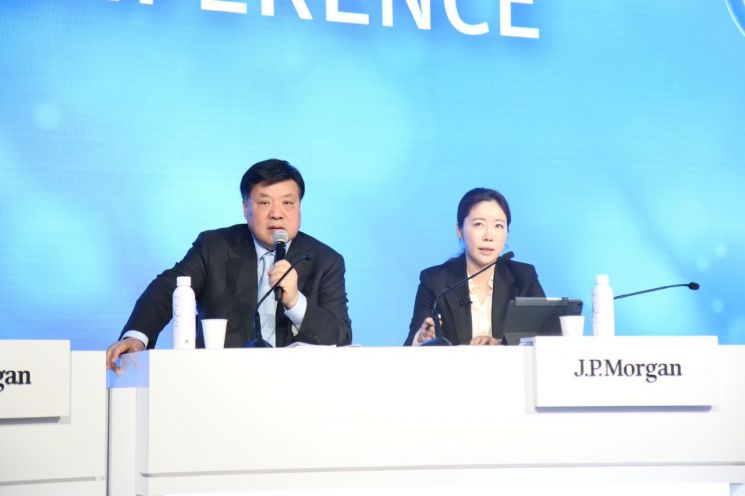 Seo Jung-jin, Chairman of Celltrion Group (left), is conducting a Q&A session at the JP Morgan Healthcare Conference (JPMHC) held in San Francisco, California, USA.
 [Photo by Celltrion]
Following the merger of Celltrion and Celltrion Healthcare completed earlier this year, Celltrion Group recently sought shareholders' opinions regarding the 'Phase 2 merger,' which would include Celltrion Pharm. From the 31st of last month to the 14th of this month, a shareholder survey was conducted targeting general shareholders, while independent external agencies conducted interviews with institutional investors to gather shareholder feedback. External evaluations by accounting firms and internal assessments involving global consulting firms were also carried out.
In the shareholder survey, Celltrion shareholders showed opposition, whereas Celltrion Pharm shareholders showed a majority in favor. Among the Celltrion shareholders who responded to the survey, 8.7% supported, 36.2% opposed, and 55.1% abstained. Considering that the group had previously indicated it would follow the majority opinion of shareholders, when combining the opposition shares held by major shareholders such as Chairman Seo Jung-jin (3.81%) and Celltrion Holdings (21.96%), a total of 70.4% opposed the merger. Furthermore, if abstentions are also considered as not supporting the merger, the opposition rate could rise to as much as 96%.
Among the shareholders who opposed, 58% cited dissatisfaction with the merger ratio as their reason. Twenty-one percent stated that since Celltrion Pharm is already a subsidiary of Celltrion, there is insufficient practical benefit to the merger. Additionally, these shareholders identified the primary preconditions for pursuing the merger as either an increase in Celltrion's stock price or a reduction in the merger ratio between the two companies.
On the other hand, Celltrion Pharm shareholders showed strong support, with 67.7% in favor, 9.8% opposed, and 22.6% abstaining. Supporters cited reasons such as the potential to grow into a comprehensive biopharmaceutical research company and the expected synergy in new drug development as grounds for their approval.
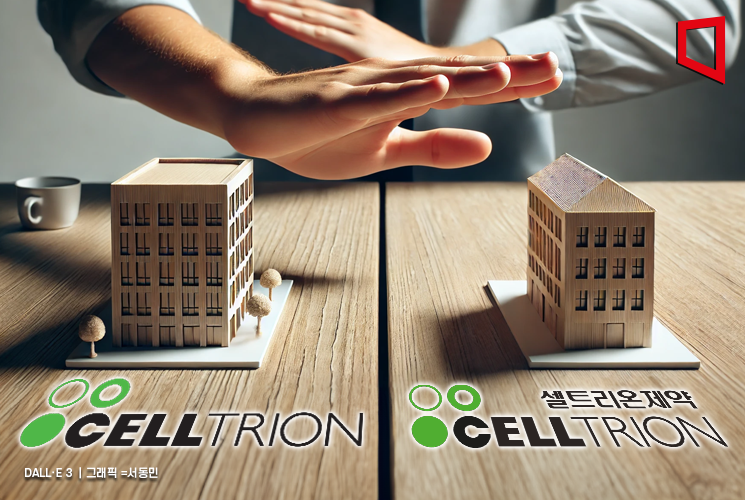
The special committees of both companies also comprehensively reviewed the feasibility of pursuing the merger by dividing the evaluation into five categories: merger synergy, financial and non-financial risk factors, funding considerations, business viability, and shareholder opinions, based on external and internal assessments. Particular emphasis was placed on assessing the impact of proceeding with the merger at this time on each factor and whether it would conflict with the interests of shareholders of both companies, conducting an independent and objective review.
Specifically, the external evaluation by the accounting firm concluded that although Celltrion Pharm holds growth potential in antibody drug sales, contract manufacturing (CMO), and antibody-drug conjugate (ADC) development, its performance has not yet materialized. It was concluded that the appropriateness of the stock price could be explained once these growth plans are concretized and communicated to the market.
Regarding the anticipated financial risks of pursuing the merger, it was assessed that the extinction of 21.71 million shares (54.8%, approximately KRW 1.6847 trillion) of Celltrion Pharm stock held by Celltrion would limit the use of future growth funds and slightly deteriorate the financial indicators of the merged entity. In the analysis of non-financial risks, while some risks decrease due to the resolution of internal transactions, organizational management risks may increase somewhat due to the absorption of the merged entity's sales organization.
Regarding funding, considering the overwhelming opposition and abstention from Celltrion shareholders, it was projected that cash outflows due to the exercise of dissenting shareholders' appraisal rights could significantly exceed the levels seen in other companies and the prior merger of Celltrion and Celltrion Healthcare. This could severely impact financial soundness due to the required financing and associated financial costs.
Regarding merger synergy, it was analyzed that positive synergy effects could be generated through strengthened research and development (R&D) from the fusion of bio and chemical technologies between the two companies, enhanced supply stability through internalization of prefilled syringe (PFS) manufacturing facilities, portfolio strengthening via expansion of the CMO business, cost reduction, and production efficiency improvements.
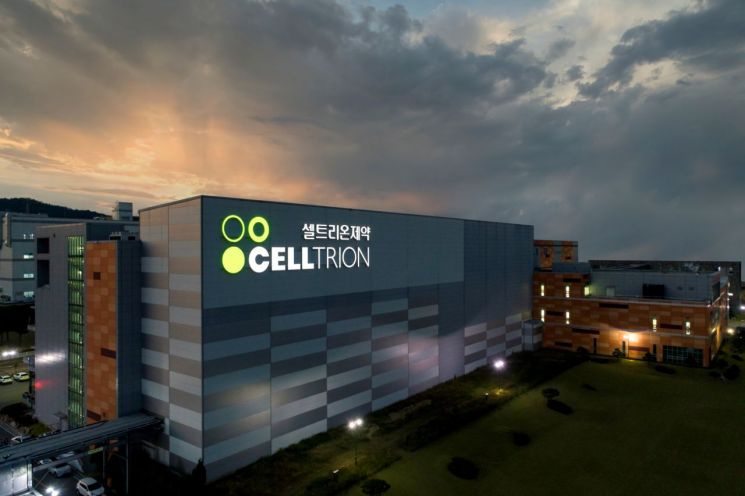
Based on the results of shareholder opinion collection and the special committee's review, the Celltrion board decided not to pursue the merger with Celltrion Pharm at this time, considering the opposition of the majority of shareholders and various other factors, even though there could be synergy from the merger. The Celltrion Pharm board also concluded that although the special committee judged that the merger would contribute to growth through multiple mid- to long-term business synergies and risk diversification, the decision by the Celltrion board not to proceed makes the merger difficult at this time. Furthermore, Celltrion Pharm plans to focus on securing growth drivers currently underway to equip itself with capabilities that reflect its corporate value as soon as possible.
Lee Jae-sik, chairman of the Celltrion special committee responsible for reviewing the merger consideration, stated, “We proposed the establishment of the special committee because an objective and independent review was necessary to determine whether the merger decision truly aligns with shareholders' interests.” He added, “Experts from various fields participating in the special committee submitted conclusions derived from in-depth analysis to the board, and this decision-making process will serve as a highly rational and transparent exemplary case from the perspectives of ESG (environmental, social, and governance) management and shareholder value enhancement.”
A Celltrion Group official said, “Since the boards of both companies have decided not to pursue the merger at this time, both companies will now focus on their core businesses to drive growth and create synergy within the group.” The official added, “As integration that benefits shareholders can be reviewed anytime if shareholders desire, we will continue to listen to shareholders' opinions and prioritize enhancing shareholder value while focusing on growth.”
© The Asia Business Daily(www.asiae.co.kr). All rights reserved.
![Clutching a Stolen Dior Bag, Saying "I Hate Being Poor but Real"... The Grotesque Con of a "Human Knockoff" [Slate]](https://cwcontent.asiae.co.kr/asiaresize/183/2026021902243444107_1771435474.jpg)


















