Expectations for Improved Traffic Services, Including Reduced Signal Waiting Times
With the completion of the 2023 Intelligent Transportation System (ITS) enhancement and expansion project, which Ulsan City has been implementing since November last year, improvements in traffic services such as reduced signal waiting times are expected.
This project was carried out to introduce a real-time signal control system following the conversion of the Sinbok Rotary to a flat intersection and to expand the infrastructure to respond to future transportation environment changes, such as autonomous driving and connected vehicles (connected cars).
A total project cost of 2.714 billion KRW (1.084 billion KRW from the national government and 1.606 billion KRW from the city) was invested, and the project was completed at the end of July this year after an eight-month period.
The main components of the project include the installation of 14 surveillance cameras (CCTV) at major traffic points, 120 locations providing traffic signal remaining time (CVIB), 10 intelligent (smart) intersections, and 17 vehicle detection systems (VDS), all aimed at further advancing Ulsan's transportation system.
In particular, at the Okhyeon Intersection in Mugeo-dong, a CCTV equipped with artificial intelligence (AI) technology was installed, enabling real-time signal control according to traffic volume.
As a result, during rush hours, the signal waiting time in each direction has been reduced by about 10 to 30 seconds, receiving a positive response from drivers.
An Ulsan City official stated, "We will do our best to expand AI-based traffic systems so that Ulsan can become a world-class future-oriented transportation city."
Since the establishment of the Traffic Management Center in 2005, Ulsan City has invested a total of 47.8 billion KRW over the past 20 years to enhance and expand the intelligent transportation system (ITS), making Ulsan a representative future-oriented transportation city in Korea.
This year, in order to provide more user-friendly services that citizens can directly experience, outdated ITS equipment is being replaced, and the accumulated advanced traffic data is being analyzed using artificial intelligence.
In addition, the systematic ITS of the Ulsan Traffic Management Center has become a model for other local governments, attracting visits not only from domestic regions such as Gyeonggi Province, Goyang City, and Gumi, but also from Tianjin, China.
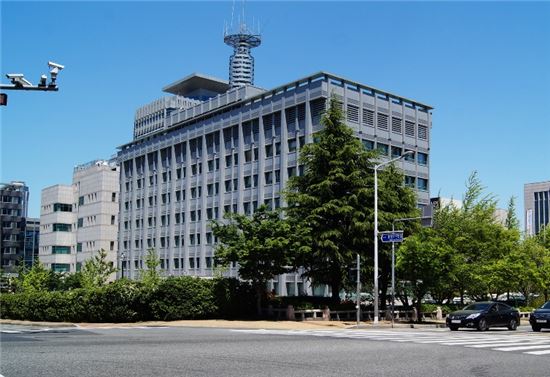 Ulsan City Hall.
© The Asia Business Daily(www.asiae.co.kr). All rights reserved.
















