Produces More Than When Heated to 60 Degrees
It has been claimed that a large amount of microplastics are released when disposable PET bottles freeze and then thaw.
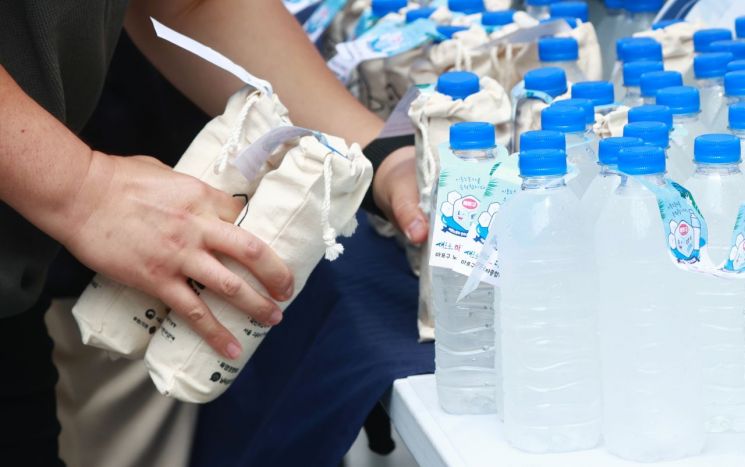
Virginia Tech in the United States and Zhejiang University in China published research results in the international journal "Journal of Hazardous Materials" last February, showing that more microplastics and other harmful substances are released when disposable PET bottles are frozen below zero degrees Celsius and then thawed, compared to heating them to 60 degrees Celsius.
The researchers conducted experiments by filling plastic containers with a thickness of 2.2 mm with purified water and dividing them into groups for ▲ repeated freezing and thawing ▲ heating ▲ chlorine disinfection ▲ no treatment. In the containers subjected to repeated freezing and thawing, 70 to 220 microplastic particles were detected per day; in the heated containers, 70 to 130 particles; in the chlorine-disinfected containers, 60 to 160 particles; and in the untreated containers, 3 to 66 particles were detected.
The researchers pointed out, "Microplastics can pose potential health risks such as cytotoxicity and oxidative stress," and emphasized the need to raise awareness about the practice of freezing water in plastic bottles and drinking it.
Professor Ahn Yoon-joo of the Department of Environmental Health Science at Konkuk University also appeared on a recent radio program and said, "When frozen, a kind of crack forms inside the bottled water, and as it thaws, microplastics fall out. There are also reports that carbonated water releases even more." In response to the question, "Where do microplastics accumulate in the body and how dangerous are they?" she said, "Initially, microplastics were detected in human feces and donated cadavers. Recently, microplastics have even been detected in human blood. Since blood circulates throughout the entire body, it means microplastics can travel anywhere inside the body."
Professor Dokgo Seok of the Department of Civil and Environmental Engineering at Dankook University also stated at a recent forum hosted by the Drinking Water Network and the Korean Society of Environmental Engineers, "Many consumers freeze bottled water (mineral water) during the summer, which can result in the ingestion of large amounts of microplastics," and added, "Research on mineral water distributed in Korea should be conducted to prepare relevant countermeasures."
© The Asia Business Daily(www.asiae.co.kr). All rights reserved.

















