"Unfair Support by Inserting LS Global" Recognized
Only Domestic Copper Transaction Fine Part Canceled
18.922 Billion KRW Out of 25.961 Billion KRW
7-Year Statute of Limitations for Fine Does Not Apply
The Supreme Court has finalized a ruling to cancel approximately 18.9 billion KRW of fines imposed by the Fair Trade Commission (FTC) on LS affiliates, who were found to have inserted LS Global into the trading process of copper cathode (the raw material for electrical wire refined from copper ore) and thereby granted so-called 'pass-through fees' to LS affiliates.
While the FTC's judgment that the actions of these LS affiliates constitute 'unfair transaction support' to affiliates under the Fair Trade Act is not problematic, the fines related to domestic copper cathode transactions were deemed unlawful due to errors in calculating the 'normal price,' which served as the basis for the FTC's fine assessment.
Although the FTC's order to pay the fines for this part was canceled due to calculation errors, the Supreme Court acknowledged that the actions of the LS affiliates were illegal, the FTC's corrective orders were lawful, and the fines were justified. Therefore, the FTC is expected to reassess and reimpose fines for the violations. According to the Supreme Court ruling, when fines are canceled, the seven-year statute of limitations for administrative actions under the Fair Trade Act does not apply.
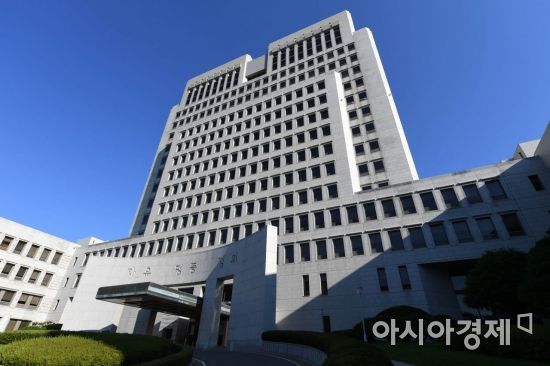
According to the legal community on the 14th, the Supreme Court's 2nd Division (Presiding Justice Lee Dong-won) dismissed the appeals of LS MnM (formerly LS Nikko Copper Refinery), LS, LS Global, and LS Cable & System against the FTC in a lawsuit seeking cancellation of corrective orders and fine payment orders, thereby upholding the lower court's partial ruling in favor of the plaintiffs.
In December 2005, the LS Group established LS Global under the pretext of mediating domestic and international non-ferrous metal transactions. At the time of establishment, LS Global's capital was 1 billion KRW, with LS holding 51% of the shares and 12 members of the controlling family, including Koo Eun-hee, eldest daughter of Koo Ja-yeop, chairman of LS Cable & System, holding the remaining 49%.
In 2018, the FTC found that LS Group affiliates had unfairly supported LS Global, violating the Fair Trade Act, and issued corrective orders to cease such acts immediately and refrain from future occurrences. The FTC imposed fines totaling 25.961 billion KRW: 10.364 billion KRW on LS Nikko Copper Refinery, 11.148 billion KRW on LS, 1.416 billion KRW on LS Global, and 3.033 billion KRW on LS Cable & System.
The FTC judged that LS Group had supported over 20 billion KRW worth of work by inserting LS Global, which had no substantial role, into the copper cathode trading stage, the main transaction item of the group's cable affiliates, thereby granting so-called 'pass-through fees.' The FTC also found that LS Cable & System paid pass-through fees by purchasing imported copper cathode from overseas manufacturers through LS Global.
After receiving fines totaling approximately 25.9 billion KRW for unfairly supporting affiliates with pass-through fees for over 10 years, LS Group affiliates filed lawsuits seeking cancellation of the FTC's corrective orders and fine payment orders.
Previously, the Seoul High Court ruled that the plaintiffs' actions violated the pre-amendment Fair Trade Act's provisions on 'unfair support to affiliates' or the 2013 amended Fair Trade Act's provisions on 'unfair additional transaction stages,' deeming them illegal. Therefore, the FTC's corrective orders regarding both domestic and imported copper cathode transactions were lawful. However, while the fine portion related to imported copper cathode transactions (about 7 billion KRW) was upheld, the court canceled the 18.922 billion KRW fine imposed on domestic copper cathode transactions due to issues with the calculation of the 'normal price' basis.
The Supreme Court found no problem with the lower court's judgment and dismissed both the plaintiffs' and the FTC's appeals.
The court noted, "Before LS Global was established, LS Nikko Copper Refinery directly sold the copper cathode it produced to demanders such as LS Cable & System. After LS Global's establishment, domestic copper cathode transactions were conducted by LS Nikko Copper Refinery selling to LS Global, which then supplied and resold the copper cathode," adding, "This transaction form continued from December 2005, when LS Global was established, until August 2018, when the case's disposition was made."
It further stated, "LS Global purchased copper cathode from LS Nikko Copper Refinery at a discount of up to 12 USD per ton compared to LS Nikko Copper Refinery's original selling price, and when selling the copper cathode, LS Global sold it at about 1 USD per ton lower than LS Nikko Copper Refinery's selling price. The total transaction profit LS Global earned from domestic copper cathode transactions from 2006 to June 2017 was approximately 15.6 billion KRW."
The court also said, "Until the end of 2005, LS Cable & System directly purchased imported copper cathode from original suppliers, but from January 1, 2006, to December 31, 2016, it procured copper cathode through LS Global, paying LS Global a certain amount as a brokerage fee. LS Global's transaction profit from these imported copper cathode transactions from 2006 to 2016 amounted to about 8.732 billion KRW."
Regarding the FTC's disposition, the court stated, "The defendant (FTC) found that in the domestic copper cathode transactions, LS Nikko Copper Refinery unfairly supported LS Global by providing excessive economic benefits through transactions involving LS Global, which had no substantial role. Similarly, in the imported copper cathode transactions, LS Cable & System unfairly supported LS Global by providing excessive economic benefits through transactions involving LS Global, which had no substantial role."
The Supreme Court agreed with the lower court's finding that the FTC's calculation of the 'normal price' related to domestic copper cathode transactions was incorrect.
The court first cited Supreme Court precedents, stating, "'Normal price' refers to the transaction price that would have been formed between independent parties without special relationships under similar conditions in terms of timing, type, scale, duration, and credit status, reflecting the same economic benefits exchanged between the supporting party and the supported party. The normal price is a crucial standard for calculating the violation amount, which forms the basis for fine assessment. If the defendant cannot find an identical actual case for the transaction and must estimate the normal price based on similar cases, it should not lightly estimate the normal price by retrospectively judging the best price expected at the time of the transaction or a better price than the transaction price. Instead, it must first select a similar case suitable for comparison and then reasonably adjust for differences in transaction conditions that may affect the price between the case and the transaction before estimating the normal price."
It added, "The burden of proof that the normal price was reasonably calculated through such a process lies with the defendant asserting the legality of the disposition."
The court found no problem with the lower court's judgment that the FTC's normal price calculation was incorrect in this case.
The court explained, "According to the lower court's reasoning, the defendant calculated the normal price of the domestic copper cathode transaction by comparing the direct transaction price between LS Global and LS Cable & System and the transaction price of similar quantities between LS Nikko Copper Refinery and non-affiliated companies, then deducting distribution margins from the lower of the two prices to determine the final normal price."
It continued, "The lower court judged that the transaction volume is a significant factor in determining copper cathode prices, and the similar cases selected by the defendant involved transaction volumes between LS Global and individual companies within the four companies, which differ substantially in scale from the integrated transaction volume between LS Nikko Copper Refinery and LS Global in the domestic copper cathode transaction. Therefore, the normal price calculated based on the selected similar cases was not reasonably derived."
Considering the legal principles on normal price calculation and the records, the court found the lower court's judgment reasonable and rejected the appeals, stating there was no error in violating the rules of logic and experience, exceeding the limits of free evaluation of evidence, or misunderstanding the law on normal price.
Although a significant portion of the fines imposed by the FTC was canceled due to errors in the fine calculation process, the Supreme Court recognized that the plaintiff companies violated the Fair Trade Act by unfairly supporting affiliates. Accordingly, the FTC is expected to reassess and reimpose fines in line with the Supreme Court's ruling.
Article 80, Paragraph 4 of the Fair Trade Act stipulates that "The Fair Trade Commission may not order corrective measures or impose fines under this Act if seven years have passed since the termination of the violation," setting a seven-year statute of limitations for fine imposition.
However, Paragraph 6 of the same article provides an exception, stating, "Paragraphs 4 and 5 do not apply in cases where corrective measures or fine imposition orders are canceled by court rulings and new dispositions are made according to the reasons for such rulings."
Meanwhile, the LS controlling family and affiliate CEOs are also undergoing criminal trials related to this case. In June 2020, the Fair Trade Investigation Division of the Seoul Central District Prosecutors' Office (then Chief Prosecutor Kim Min-hyung) indicted the late Koo Ja-hong, then chairman of LS Nikko Copper Refinery (founding chairman of LS Group), Koo Ja-yeop, chairman of LS Cable & System, Koo Ja-eun, chairman of LS, Do Seok-gu, CEO of LS Nikko Copper Refinery, and Myung No-hyun, CEO of LS Cable & System, without detention for violating the Fair Trade Act by allocating work to LS Global. The prosecution against Chairman Koo Ja-hong was dismissed by the court following his death in February 2022.
© The Asia Business Daily(www.asiae.co.kr). All rights reserved.

















