October 25 Gwangbokjeol... Removed from Public Holidays
Significance Reduced Since Minjindang Took Power in 2000
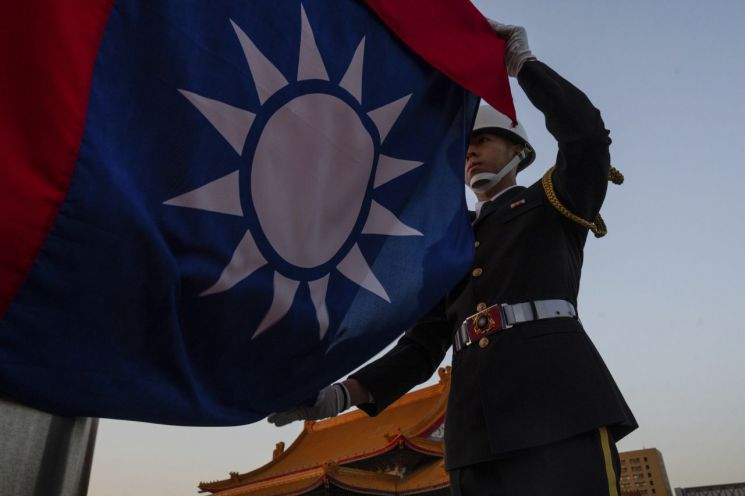
Among the Asian countries that gained independence after World War II, South Korea and Taiwan commemorate their independence days under the name 'Gwangbokjeol (光復節).' However, unlike other countries, Taiwan's Gwangbokjeol is neither an official national holiday nor a legal public holiday. Since 2000, the government's official commemorative events have been significantly reduced. Some media outlets even disparage it as the 'Kuomintang Occupation Day.' Some politicians have gone as far as to make radical claims that the term 'Taiwan Gwangbokjeol' should be removed from textbooks altogether.
October 25 'Taiwan Gwangbokjeol' Different from Ours... Only Simple Commemorative Ceremonies Held
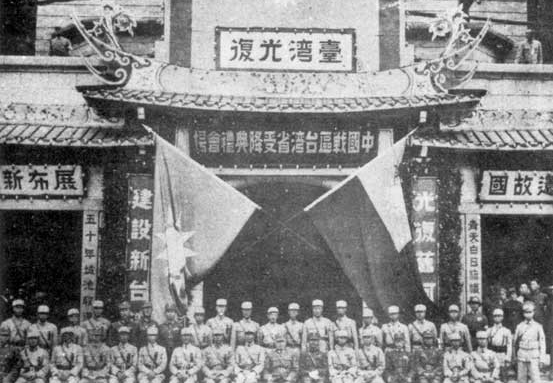 A photo commemorating the transfer of Taiwan's governance from the defeated Japanese Empire to the military administration dispatched by the Kuomintang on October 25, 1945. Since then, Taiwan has celebrated October 25 as Restoration Day every year until the legal holiday was abolished in 2000.
According to local Taiwanese media such as United Daily News on the 14th, President Lai Ching-te of Taiwan delivered a speech in Taiwanese rather than Chinese at the Democratic Progressive Party (DPP) annual meeting on the 21st of last month, emphasizing, "Taiwanese people must understand Taiwan's unique history and culture. Our history is written by Taiwanese, not the defunct Republic of China (Taiwan) or the hostile People's Republic of China (China)."
This statement has sparked controversy over the term 'Taiwan Gwangbokjeol,' which appears in Taiwanese textbooks as the day commemorating independence from Japanese rule. Centered around the DPP, which denies historical ties between China and Taiwan, and some figures in Taiwanese politics, there is a strong argument that the term 'Taiwan Gwangbokjeol' should not be taught to children.
Unlike South Korea, Taiwan's Gwangbokjeol falls on October 25. This day marks October 25, 1945, when, after Japan's defeat, the Chinese Kuomintang military forces dispatched to Taiwan took over governance of Taiwan. However, Taiwan has currently excluded Gwangbokjeol from national holidays and legal public holidays, drastically reduced official government commemorations, and it has become a day when even private citizens rarely display the national flag.
Excluded from Public Holidays Since DPP Took Power in 2000... "Day Kuomintang Occupied Taiwan"
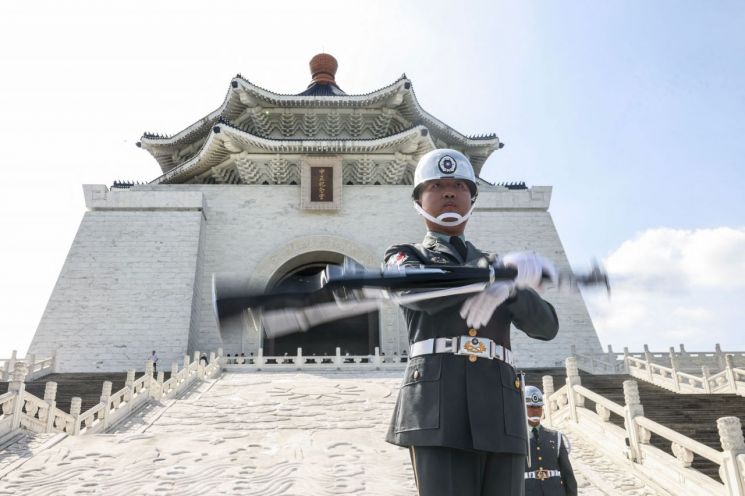
Gwangbokjeol was removed from the list of public holidays in Taiwan starting in 2000, after President Chen Shui-bian of the then-ruling DPP took office. Since the DPP, which claims that Taiwan's history is separate from China's, came to power, not only Gwangbokjeol but also the Double Ten Day (October 10), which commemorates the founding of the Republic of China and is celebrated in China, have seen their commemorative events drastically reduced.
Some Taiwanese media also argue that the term 'Taiwan Gwangbokjeol' itself is incorrect. Storm Media, a Taiwanese outlet, stated, "Taiwan is not a Chinese nation but a separate country founded on the history of six million indigenous people who lived here before and one million immigrants who fled oppression in China." It pointed out, "After the Kuomintang regime was defeated in the Chinese Civil War, they forcibly occupied Taiwan but did not have the right to represent Taiwan." October 25 is not Taiwan's Gwangbokjeol but the day Taiwan was forcibly occupied by the Kuomintang.
Especially with President Lai, who was a very hardline pro-independence politician within the DPP, now leading the government, there is speculation that Taiwan may eventually declare independence as a separate island nation in Asia, distinct from China.
On the 9th, at his first attendance at a military generals' promotion ceremony since taking office, President Lai declared, "Taiwan and China are not subordinate to each other, and sovereignty cannot be infringed upon or merged," reaffirming his strong will for independence by stating, "The future of Taiwan will be decided only by the 23.5 million Taiwanese."
© The Asia Business Daily(www.asiae.co.kr). All rights reserved.



















