Celltrion announced on the 14th that it has obtained Investigational New Drug (IND) approval from the U.S. Food and Drug Administration (FDA) for the global Phase 3 clinical trial of CT-P55, a biosimilar under development for Cosentyx.
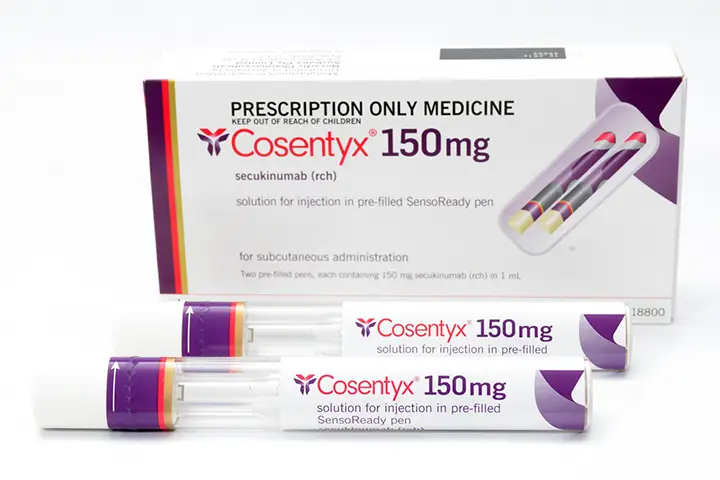
This global clinical trial will be conducted as a comparative study to demonstrate the equivalence in efficacy and safety between the original drug and CT-P55 in a total of 375 patients with plaque psoriasis. CT-P55 received IND approval for Phase 1 from the Pharmaceuticals and Medical Devices Agency (PMDA) in Japan last December and is currently undergoing clinical trials.
Cosentyx, an autoimmune disease treatment, is an interleukin (IL)-17A inhibitor used for treating ankylosing spondylitis, psoriatic arthritis, and moderate to severe plaque psoriasis. IL-17A, a pro-inflammatory cytokine, causes various inflammatory diseases, and Cosentyx works by directly blocking it. It was first approved by the U.S. FDA in January 2015 and was also approved in Korea in September of the same year. It is a blockbuster drug that generated global sales of $4.98 billion (approximately 7 trillion KRW) last year. Its substance patents are expected to expire sequentially in the U.S. in 2029 and Europe in 2030.
Celltrion continues to expand its portfolio in autoimmune diseases, where it shows strengths. In addition to the tumor necrosis factor (TNF) inhibitor class drugs such as Remsima, Zimzenta, and Uplima, which have shown strong performance, Celltrion is strengthening its portfolio of IL inhibitor class drugs by adding the Stelar biosimilar (CT-P43), an IL-12/23 inhibitor, and recently Cosentyx.
Celltrion is also expected to develop IL-4 inhibitors such as Dupixent. Dupixent is a drug used for treating atopic dermatitis and asthma, and it recorded blockbuster sales of €10.715 billion (approximately 15.86 trillion KRW) last year. In the autoimmune disease field, Celltrion plans to continue developing biosimilars targeting CD-20, CD-38, and integrin α4β7 (LPAM)-1, among others. Through this, the company aims to continuously expand its diverse portfolio in the autoimmune disease treatment area and strengthen its market competitiveness.
Additionally, Celltrion plans to increase its biosimilar product lineup to a total of 11 by 2025 and complete a portfolio of 22 biosimilars by 2030 through its 'Third Wave' strategy, continuing the growth of its biosimilar business.
A Celltrion official stated, “Celltrion has built a solid portfolio in the autoimmune disease treatment area, from TNF-α inhibitors to interleukin inhibitors, and we will do our best to supply products that meet patient needs. We will proceed smoothly with the Phase 3 clinical procedures of pipelines including CT-P55 and continue to accelerate growth in the biosimilar business sector.”
© The Asia Business Daily(www.asiae.co.kr). All rights reserved.

















