US Consumers Cutting Spending for Cost-Effectiveness
199-Dollar British 'Nothing Phone' Gains Popularity
Potential Price Reduction Pressure on Low-Cost Brands
Apple is delaying the popularization of its artificial intelligence (AI) services, drawing attention to the reasons behind this decision. Analysts interpret this move as related to the rising popularity of mid-range, cost-effective phones in the U.S. amid the shadow of an economic recession.

According to the IT industry on the 14th, Apple’s AI service, ‘Apple Intelligence,’ will not be included in the iPhone 16 set to launch next month, but is expected to be gradually introduced through an operating system (iOS) update starting in October. Furthermore, the premium AI features of Apple are projected to become paid services no earlier than 2027. This indicates that while large-scale investment is necessary for AI technology development, it will take several years to generate stable revenue from AI.
This situation appears to be closely linked to the U.S. economic conditions. KOTRA recently published an overseas market report stating that American consumers are increasingly cutting back on spending and showing a preference for cost-effective mid-range smartphones. According to the report, a survey conducted by the global financial services firm Wells Fargo on over 3,400 American adults nationwide found that about two-thirds (67%) of respondents reduced their spending for economic reasons. Only 35% of respondents said they were saving or investing, while 62% reported having almost no disposable funds.
KOTRA explained, "Downtrading behavior among U.S. consumers in the smartphone market has been observed." Downtrading refers to consumers shifting their purchases from high-quality premium products to lower-priced products from sub-brands amid high inflation and economic uncertainty.
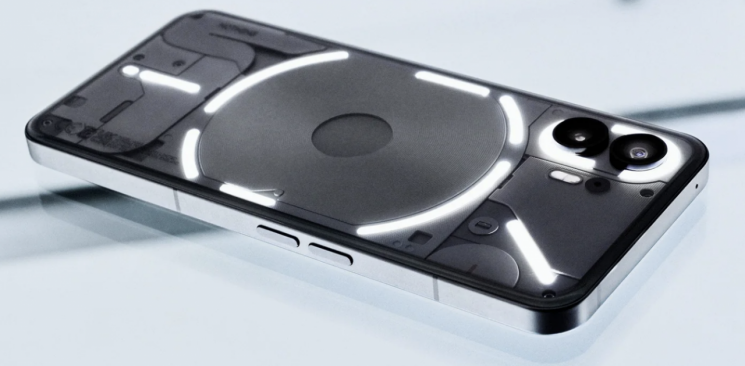
The UK-based CMF’s ‘Nothing Phone’ is a representative example. This $199 (approximately 270,000 KRW) smartphone, first introduced to the U.S. market at the end of last year, became so popular that it sold out. It received positive responses due to its affordable price, sleek design, and performance that is not significantly inferior to premium products.
CMF is building its own ecosystem by launching digital devices such as a smartwatch ($69) and wireless earphones ($49). Even combined, these three products cost just over $300, about one-third the price of an iPhone 15 Pro 128GB model. Apple has also hinted at the possibility of supporting Apple Intelligence in the budget model iPhone SE4, scheduled for release next year.
New AI form factors beyond smartphones are also being released one after another. The U.S. startup Rabbit’s pocket-sized AI device ‘R1,’ priced at $199, focuses on AI personal assistant functions such as reservations and orders, moving away from entertainment features like social media or video viewing. The U.S. startup Humain unveiled the ‘AI Pin’ last year, a new concept form factor that operates without a display, instead using voice, touch, and camera.
KOTRA forecasted, "Although premium models may still dominate, low-cost emerging brands will act as a pressure factor to enhance price-to-performance and quality across the entire market."
© The Asia Business Daily(www.asiae.co.kr). All rights reserved.
![Clutching a Stolen Dior Bag, Saying "I Hate Being Poor but Real"... The Grotesque Con of a "Human Knockoff" [Slate]](https://cwcontent.asiae.co.kr/asiaresize/183/2026021902243444107_1771435474.jpg)












