Currency Hedge ETFs Ignored Amid Yen Strength
The aftermath of the unwinding of the 'Yen Carry Trade,' which shook global stock markets last week, is being observed across various markets. Global hedge funds are withdrawing their aggressive investment positions in the Japanese stock market. Exchange-traded funds (ETFs) that invested in the Tokyo Stock Exchange while hedging yen volatility have recorded historic outflows.
According to Bloomberg and others on the 12th (local time), global investment bank Goldman Sachs stated in a memo sent to clients last Friday that "the long/short equity hedge funds we manage reduced their overall exposure to Japan from 5.6% to 4.8% last week, and the leverage of the entire portfolio was lowered by nearly 1 percentage point to 188.2%." This is interpreted as a risk management move amid increased volatility in stock markets worldwide, including the Tokyo Stock Exchange.
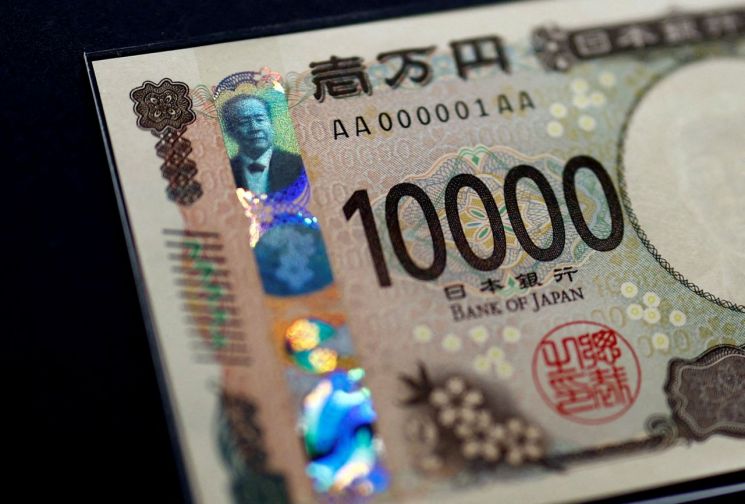
The background to the recent rollercoaster market conditions worldwide is attributed to the large-scale unwinding of yen carry trade assets, which involved borrowing low-interest yen to invest in high-interest currency assets, following the Bank of Japan (BOJ)'s rate hike last month. According to data from the U.S. Commodity Futures Trading Commission (CFTC) and the London Stock Exchange Group (LSEG), as of the 6th, institutional investors including hedge funds reduced their net short positions in the yen to 24,158 contracts, down to about one-third from 70,000 contracts the previous week. This is the smallest net short position since February 2023, indicating that investors are stepping away from betting on yen depreciation.
Karl Shamoto, chief market strategist at financial payment company ColPay, analyzed, "Last week saw the largest 'yen short squeeze' in 17 years," adding, "Investors, including leveraged funds, unwound their yen short bets at the fastest pace since August 2007." He explained that the sharp rise in the yen's value forced yen short sellers to buy back yen to cover losses, which further amplified the yen's appreciation. Charles Schwab reported that the yen appreciated by 14% against the dollar from July 10 to August 5.
Hedge funds were not the only ones hurt by the yen's sharp rise. WisdomTree's ETF (ticker symbol DXY), which invests in Japanese stocks while hedging yen volatility, saw outflows exceeding $400 million (approximately 550 billion KRW) last week. This is the largest weekly outflow since 2018. Todd Sohn, an ETF strategist at Strategas, commented, "Selling pressure increased as the Japanese stock market fell sharply," adding, "If the yen continues to strengthen, yen hedging becomes less meaningful, reducing the appeal of DXJ."
Since early this month, concerns about a U.S. economic recession have surfaced, and mixed economic indicators have poured in, making it uncertain how much the Federal Reserve (Fed) will cut interest rates at the upcoming Federal Open Market Committee (FOMC) meeting in September, which is also fueling market anxiety. According to the Chicago Mercantile Exchange (CME) FedWatch, the federal funds (FF) futures market currently reflects a 50% probability each for a 0.25 percentage point and a 0.5 percentage point rate cut by the Fed in September.
Richard Lightburn, Chief Investment Officer at hedge fund MKP Asset Management, said, "A 50-50 outlook on the Fed's rate cut means uncertainty is at its highest," adding, "Volatility will be significant as the market does not know what will happen next." Sophia Drosos, economist at Point72 Asset Management, noted, "Such sudden increases in market volatility dampen investor sentiment," and "Investors will be reluctant to take on large risks, which could act as a headwind for the market."
© The Asia Business Daily(www.asiae.co.kr). All rights reserved.

















