Last year, the global youth unemployment rate hit its lowest point in 15 years, but concerns remain high regarding job quality and regional and gender inequalities. More than 20% of young people worldwide were identified as NEET (Not in Education, Employment, or Training), meaning they were neither working nor willing to work.
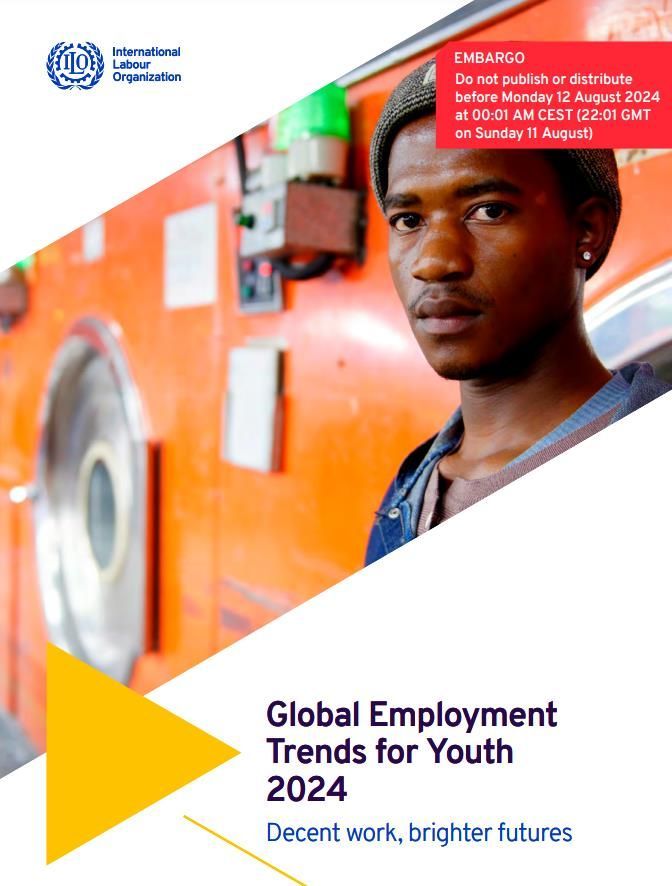
According to the '2024 Youth Employment Trends Report' published by the International Labour Organization (ILO) on the 12th (local time), the youth unemployment rate for those aged 15-24 was estimated at 13% last year, with 64.9 million unemployed youth. This is the lowest unemployment rate in 15 years, 0.8 percentage points lower than in 2019 (13.8%), just before the COVID-19 pandemic. The ILO forecasts that the youth unemployment rate will drop to 12.8% next year, with youth employment expected to continue increasing over the next two years.
However, the report pointed out disparities by region and gender inequality. Although the global average youth unemployment rate has decreased, regions such as the Arab states, East Asia, Southeast Asia, and the Pacific saw higher unemployment rates last year compared to 2019. The report particularly noted that emerging and developing countries have limited access to decent job opportunities.
Additionally, the report highlighted that 20.4% of young people worldwide are in a NEET status, neither employed nor receiving education or training. Two-thirds of this group were women.
The report interpreted that while youth employment is improving, opportunities to obtain quality jobs remain insufficient, especially for young women, who are not adequately provided with employment or education participation opportunities. It also explained that the labor market recovery after COVID-19 has been skewed toward young men.
Last year, the youth unemployment rate was nearly the same for men (12.9%) and women (13%), whereas in 2019, the unemployment rate was higher for men.
Job quality is also a concern. More than half of young workers worldwide were employed in non-regular jobs last year. Among youth in low-income countries, three out of four worked in self-employment or temporary jobs.
The ILO recommended, "International cooperation, public-private partnerships, and development financing should be used to address regional job inequalities. Each country should increase investments aimed at creating jobs for young women and strengthen programs that support youth participation in the labor market."
© The Asia Business Daily(www.asiae.co.kr). All rights reserved.

















