Accepted Supreme Prosecutors' Office Request for Legal Judgment
"Decision Within Statutory Deadline"... Possibility of Prolonged Situation
The extradition of Kwon Do-hyung, who caused significant damage to the cryptocurrency market due to the Terra and Luna crash, to South Korea has been temporarily postponed. Both South Korea and the United States have requested his extradition, but as legal disputes continue over the authority to transfer Kwon's custody, the controversy over his extradition country is expected to be prolonged.
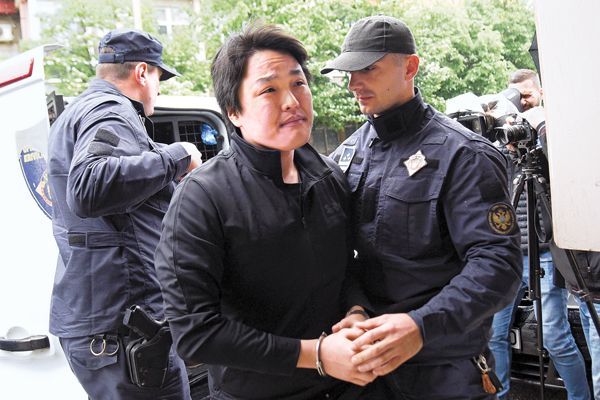
On the 8th (local time), the Supreme Court of Montenegro announced that it would suspend Kwon's extradition until a ruling on the legality of his extradition to South Korea, requested by the Montenegro Prosecutor General's Office on the 2nd, is made.
The Supreme Court of Montenegro explained, "We will suspend the enforcement of decisions by the High Court and the Court of Appeal until the Supreme Court makes a decision on the Prosecutor General's request for a legality judgment," adding, "This is expected to be completed within the statutory period."
Earlier, the Montenegro Court of Appeal confirmed the High Court's ruling on the 1st to extradite Kwon to South Korea. However, the Prosecutor General's Office requested the Supreme Court on the 2nd to review the legality, claiming that the Court of Appeal and the High Court violated the International Criminal Judicial Cooperation Act. The Supreme Court accepted this and temporarily suspended Kwon's extradition to South Korea on the same day, with a final decision expected in early September.
Kwon caused losses exceeding 50 trillion won to investors worldwide and fled South Korea in April 2022. He was arrested and detained in Montenegro last March on charges of possessing a forged passport. Both the South Korean and U.S. prosecutors, who have been investigating Kwon, requested his extradition from the Montenegro Court of Appeal, which currently holds custody of him. Since then, disputes over whether the authority to decide on his extradition lies with the court or the Minister of Justice have continued, causing the extradition decision to fluctuate for over a year.
The Court of Appeal issued a final ruling to extradite Kwon to South Korea in March. However, on April 5th, the Supreme Court accepted the Prosecutor General's objection that the authority to decide on the extradition country lies with the Minister of Justice, not the court, nullifying the decision and returning the case to square one. Subsequently, Kwon again obtained extradition rulings from the High Court and the Court of Appeal, but ultimately his fate was left to the Supreme Court's judgment once more. If the Supreme Court accepts the Prosecutor General's request again and invalidates the ruling, Kwon will have to undergo the extradition process from the beginning. In this case, conflicting rulings between lower and higher courts may be repeated, potentially prolonging the extradition issue further. Conversely, if the Supreme Court dismisses the Prosecutor General's request for a legality judgment, Kwon's extradition to South Korea will be finalized.
© The Asia Business Daily(www.asiae.co.kr). All rights reserved.

















