It's Good to Drink Water Regularly Even If You Don't Feel Thirsty
Carry a Parasol and Hat When Going Out
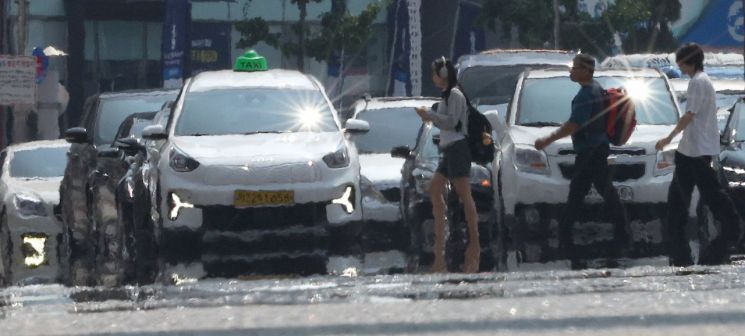
Amid the ongoing sweltering heat, it has been revealed that more than 2,000 people have visited emergency rooms this year due to heatstroke and heat exhaustion.
According to the heat-related illness statistics from the Korea Disease Control and Prevention Agency (KDCA) on the 8th, 88 cases of heat-related illnesses were reported on the 7th. Since the heat illness emergency room surveillance system was activated on May 20, the cumulative number of heat-related illness patients this year has reached 2,004.
This is similar to the 2,005 cases recorded during the same period last year. The KDCA operates a surveillance system that collects data on heat-related illness patients visiting emergency rooms through 507 emergency medical institutions nationwide.
As the peak of this summer’s heatwave continues, the number of heat-related illness cases has remained high since the latter part of last week. On the 1st, one week ago, 117 cases were reported; on the 2nd, 82 cases; on the 3rd, 183 cases; on the 4th and 5th, 119 cases each; and on the 6th, 90 people visited emergency rooms due to heat-related illnesses. From the 1st to the 7th of this month, 798 cases were reported, accounting for 39.8% of all heat-related illness cases this year.
There have also been 12 deaths due to heat-related illnesses this month. Among the heat-related illness fatalities this year, 63.2% occurred within the past week.
Of the cumulative heat-related illness patients this year, 77.6% are male and 22.4% female. By age group, seniors aged 65 and older account for 31.8%, with 228 people (11.4%) aged 80 and above. By occupation, the highest numbers were among simple labor workers (20.9%), unemployed excluding homeless individuals (14.2%), and skilled agricultural, forestry, and fishery workers (9.2%). Most cases occurred during daytime hours, but there were also many cases from 7 PM to midnight (7.5%), midnight to 6 AM (1.9%), and 6 AM to 10 AM (10.2%), indicating occurrences from dusk until the following morning.
Regarding locations, outdoor areas such as workplaces (29.4%) and fields (15.5%) accounted for 78.7% of cases, while indoor locations such as workplaces (8.1%) and homes (6.9%) made up 21.3%. By illness type, heat exhaustion was the most common at 54.1%, followed by heatstroke (22.5%), heat cramps (13.4%), and heat syncope (8.6%).
Heat exhaustion is a condition caused by excessive sweating leading to inadequate supply of fluids and salts, resulting in exhaustion. Heatstroke occurs when the nervous system that regulates body temperature fails due to heat exposure. Heat cramps happen when excessive sweating causes a deficiency of salts, potassium, and magnesium in the body, leading to muscle cramps. Heat syncope causes fainting due to elevated body temperature and insufficient blood flow to the brain.
The KDCA recommends drinking water regularly even if you do not feel thirsty and taking frequent showers to prevent heat-related illnesses. It is advisable to wear loose and light-colored clothing. When going outdoors, use parasols and hats to block sunlight. It is best to avoid outdoor work or exercise between noon and 5 PM and stay in cool places.
© The Asia Business Daily(www.asiae.co.kr). All rights reserved.
![Clutching a Stolen Dior Bag, Saying "I Hate Being Poor but Real"... The Grotesque Con of a "Human Knockoff" [Slate]](https://cwcontent.asiae.co.kr/asiaresize/183/2026021902243444107_1771435474.jpg)
















