Partial Remand and Reversal of Fair Trade Commission's 495 Million KRW Fine Cancellation
Violation of Franchise Business Act Including Contract Renewal Refusal and Memorandum Demand
The Supreme Court has ruled that BBQ's refusal to renew contracts with franchisees who formed a council and its acceptance of humiliating written pledges constitute prohibited "disadvantageous acts based on franchisee association activities" under the Franchise Business Act.
Previously, the Seoul High Court ruled that it was not sufficiently proven that BBQ's refusal to renew contracts or acceptance of written pledges was due to the franchisees' membership in the council, and ordered the cancellation of the Fair Trade Commission's corrective order and fine imposition. However, this decision was overturned by the Supreme Court.
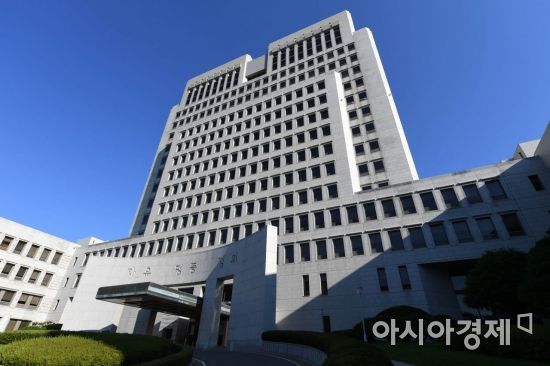
According to the legal community on the 8th, the Supreme Court's 3rd Division (Presiding Justice Oh Seok-jun) overturned the lower court's ruling that partially ruled in favor of the plaintiff in the appeal against the corrective order filed by Genesis BBQ Co., Ltd. against the Fair Trade Commission, and remanded the case to the Seoul High Court.
The court stated, "The lower court's judgment on the disadvantageous acts was erroneous in its interpretation and application of Article 14-2, Paragraph 5 of the Franchise Business Act, and failed to conduct necessary hearings, which affected the judgment," as the reason for the remand.
Article 14-2, Paragraph 5 of the Franchise Business Act stipulates, "The franchisor shall not disadvantage franchisees due to the formation, membership, or activities of franchisee associations, nor conclude franchise contracts on the condition of joining or not joining such associations."
In December 2018, BBQ sent written notices refusing contract renewals to franchisees A and B, and in November 2019 to franchisees C and D. The stated reasons for refusal were differences in corporate management policies and franchise operation methods, and non-acceptance of generally applied franchise contract terms or business policies.
These franchisees were co-chairs and vice-chairs of the "National BBQ Franchisee Council," established in November 2018.
The council held an inauguration ceremony in January 2019 and continuously requested negotiations with BBQ regarding transaction conditions until September of the same year, but BBQ did not respond to the negotiations.
On December 7, 2018, when the contract termination date arrived, BBQ sent written notices refusing contract renewals to A and B, and on November 15, 2019, to C and D.
After refusing contract renewals for the franchises operated by A and B, BBQ obtained contract termination deferment requests or written pledges from them.
The contract termination deferment request included a pledge stating, "I will not engage in acts that damage the reputation of the headquarters or the BBQ brand, such as defaming the headquarters or inciting other franchisees," which was drafted by a BBQ employee and signed by the two franchisees.
Additionally, the written pledges obtained by BBQ contained content reflecting on franchisee association activities, promising to cease future activities, and accepting disciplinary measures from BBQ headquarters if violated.
BBQ also deferred contract termination for some of these franchisees for six months to one year on the condition that they submit the contract termination deferment requests or written pledges, but eventually, after repeatedly requesting the pledges, the franchisees had to give up contract renewal. There were cases where franchisees gave up contract renewal after signing the pledges.
Furthermore, BBQ forced franchisees to purchase a large quantity of promotional leaflets from a specific company and warned that failure to order the mandatory quantity would result in disadvantages. It was also found that the company included contract clauses allowing termination without prior notice.
The Fair Trade Commission found that BBQ ▲ restricted franchisees to purchase promotional leaflets only from a specific company (restriction on trading partners), ▲ forced franchisees to purchase promotional leaflets exceeding the necessary amount for business management (forced purchase), ▲ set or changed contract clauses related to immediate termination of franchise contracts to the detriment of franchisees beyond the reasons stipulated in the enforcement decree of the Franchise Business Act (unfair contract clause setting or changing), ▲ refused contract renewals or obtained contract termination deferment requests and written pledges from some franchisees due to their association activities (disadvantageous acts based on franchisee association activities), and ▲ concluded franchise contracts on the condition of joining a specific franchisee association (conditional franchise contract conclusion based on association membership). The commission imposed corrective orders and a fine of 1.76 billion KRW. BBQ filed a lawsuit in objection.
The Seoul High Court previously ruled that there was no problem with the parts related to promotional leaflets in the Fair Trade Commission's corrective order and fine imposition against BBQ.
In court, BBQ argued, "The production of promotional leaflets was done upon franchisees' orders and was never forced. With prior written approval, franchisees could produce leaflets through companies other than the designated one," and "The leaflet production procedure guided by BBQ was actually beneficial to franchisees."
BBQ also contended, "The production and distribution of leaflets were ultimately to increase each franchisee's sales, and franchisees were encouraged, not forced, to purchase leaflets."
However, the court did not accept these claims.
The court cited that BBQ included a clause in the franchise contract obligating franchisees to participate in advertising and promotional activities, requiring distribution of leaflets in quantities exceeding the number of households in each franchise's business area at the franchisee's expense, and that failure to comply was grounds for contract termination. It also noted that nearly 1,000 certified mail warnings were sent to franchisees who did not order the mandatory leaflet quantities, threatening suspension of logistics supply, refusal of contract renewal, and contract termination.
On the other hand, the court found that the Fair Trade Commission's judgment that BBQ's refusal to renew contracts and acceptance of written pledges from executives who led the council constituted "disadvantageous acts based on franchisee association activities" was incorrect.
The court reasoned that these franchisees had operated BBQ franchises for 12 to 15 years, exceeding the 10-year period during which franchisees can exercise the right to request contract renewal, and that the authority to decide contract renewal rests primarily with BBQ.
Article 13, Paragraph 2 of the Franchise Business Act states, "The franchisee's right to request contract renewal may only be exercised within the total franchise contract period, including the initial contract period, not exceeding 10 years."
The court cited Supreme Court precedents, stating, "In franchise contracts, which are continuous contractual relationships, if the period for exercising the right to request contract renewal under the Franchise Business Act has passed, and there is no separate agreement on renewal or extension of the contract period, or the agreed period for exercising the right to request renewal has also passed, the parties must newly agree on renewal. In such cases, the franchisor has the freedom to decide whether to accept the franchisee's renewal request."
It added, "The refusal to renew contracts for the four franchisees, including A, occurred after more than 10 years from the date of their franchise contracts. In this case, the franchisor, as the plaintiff, has the freedom to decide whether to accept the franchisees' renewal requests, and therefore, refusal of renewal is not illegal unless there are special circumstances."
The court further stated, "Therefore, the plaintiff's abstract reasons for refusing renewal cannot be deemed illegal or conclusively attributed to franchisee association membership."
Accordingly, the court ordered the cancellation of the Fair Trade Commission's corrective order and fine imposition related to "disadvantageous acts based on association activities." This corresponded to 495 million KRW of the 1.76 billion KRW fine imposed by the commission.
However, the Supreme Court's judgment differed.
The court stated, "The series of acts, including refusal to renew contracts and obtaining contract termination deferment requests and written pledges from executives of the franchisee association, were carried out with the purpose of suppressing the activities of the franchisee association, and overall constitute disadvantageous acts prohibited under Article 14-2, Paragraph 5 of the Franchise Business Act."
The court pointed out, "From around 2019, when the franchisee association was formally launched and actively operating, until around September 2020, 12 out of 21 franchises operated by the association's executives were closed, and the plaintiff refused contract renewals for all co-chairs and vice-chairs of the association, which is an extremely unusual situation."
It added, "The fact that franchisees wrote and submitted contract termination deferment requests or written pledges stating they would reflect on inciting other franchisees and association activities and follow the plaintiff's policies itself shows that they suffered disadvantages such as restrictions on association activities or effectively gave up association activities."
With the Supreme Court overturning even the part where BBQ had uniquely won, the Fair Trade Commission's corrective order and fine were effectively recognized as lawful.
The National BBQ Franchisee Council once had about 400 participants but eventually disbanded as most executives closed their franchises.
© The Asia Business Daily(www.asiae.co.kr). All rights reserved.

















