Big Tech Haven Silicon Valley Location Passed in Council Vote
Industry Tense...Proposing Lawmaker Says "Not Normative"
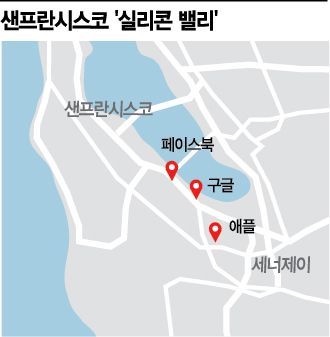
The California State Legislature in the United States is expected to soon pass a stringent artificial intelligence (AI) regulation bill. California is home to Silicon Valley, known as the haven for big tech, putting the AI industry on high alert.
According to the Wall Street Journal (WSJ) on the 7th (local time), the California State Assembly, which begins its session this week, plans to vote on the "Safety and Security Innovation Act for Advanced AI Systems" (bill number SB 1047). Since the bill was passed bipartisanly in the California State Senate last May, its enactment is expected to proceed smoothly.
The main points of SB 1047 are twofold.
First, it prohibits developers of large-scale AI models from supporting cyberattacks that could cause damages of at least $500 million or developing models with lethal capabilities such as creating biological or nuclear weapons. Additionally, developers must regularly report safety test results and implement a "kill switch" that allows humans to shut down the AI when control becomes difficult.
The bill applies to AI models that cost over $100 million to train, and companies operating in California are subject to the law regardless of their location.
AI industry leaders such as OpenAI, Meta Platforms, Alphabet, and Microsoft (MS), which are competitively releasing AI open-source models, have expressed opposition. This is because it is uncertain what purposes companies or individuals using these AI open-source models might have in developing AI.
Annie Midha, a partner at Andreessen Horowitz, told WSJ, "This bill will prevent tech companies from releasing their AI models to the public, which will crush the startup ecosystem that relies on openness."
There are also concerns that broad regulations could cause missed opportunities in investment, technological advancement, and other areas while AI is still in its infancy.
SB 1047 was introduced by Democratic Assemblymember Scott Wiener. Regarding industry concerns, Wiener dismissed them, saying, "This bill simply codifies safety standards that the industry has set for itself into law," and that it is not overly prescriptive.
AI-related regulatory bills have recently been introduced in several U.S. states. According to the Transparency Coalition, about 400 AI-related bills are currently pending in state legislatures across the United States.
Among them, California is regarded as the most proactive in AI regulation. Approximately 30 bills are being discussed at various stages in the legislature, including measures to classify AI-generated images as child pornography.
Colorado and Utah became the first U.S. states to pass AI regulation bills. However, their scope is narrower than California's SB 1047.
© The Asia Business Daily(www.asiae.co.kr). All rights reserved.
!["The Woman Who Threw Herself into the Water Clutching a Stolen Dior Bag"...A Grotesque Success Story That Shakes the Korean Psyche [Slate]](https://cwcontent.asiae.co.kr/asiaresize/183/2026021902243444107_1771435474.jpg)
















