Extracting Only Gold from Electronic Waste
Refining It into Gold Bars for Sale
One of the oldest companies in the world, the UK's Royal Mint, has opened the world's first factory to extract large amounts of gold from electronic devices and recycle it into gold bars.
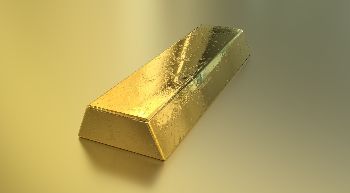
The Royal Mint, a British coin manufacturer and the world's largest gold bar producer, plans to produce gold bars by recycling gold from discarded electronic devices rather than mining new gold from gold mines.
On the 7th (local time), the British BBC reported that the Royal Mint officially started operating a gold extraction plant established in the Wales region. The plant is equipped with special processing equipment and devices capable of extracting gold from discarded electronic products, and when operating at full capacity, it can recycle 4,000 tons of electronic waste annually.
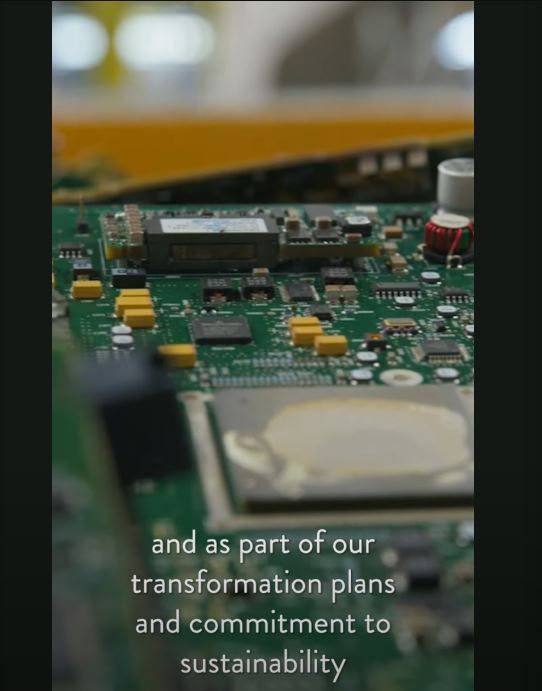 A certain amount of gold is contained within the circuit boards of electronic devices.
 [Image source=Royal Mint YouTube]
Typically, electronic products and communication equipment contain small amounts of gold. Gold is highly conductive, making it ideal for electronic devices powered by electricity, and it does not oxidize in the air, allowing long-term use. The circuit boards of smartphones, computers, TVs, and other electronic devices we buy and discard all contain gold without exception.
The problem is that as the production of electronic devices increases, the amount of discarded circuit boards as waste has also surged. The cost of gold mining is rising, but paradoxically, more gold contained in circuit boards is being permanently discarded.
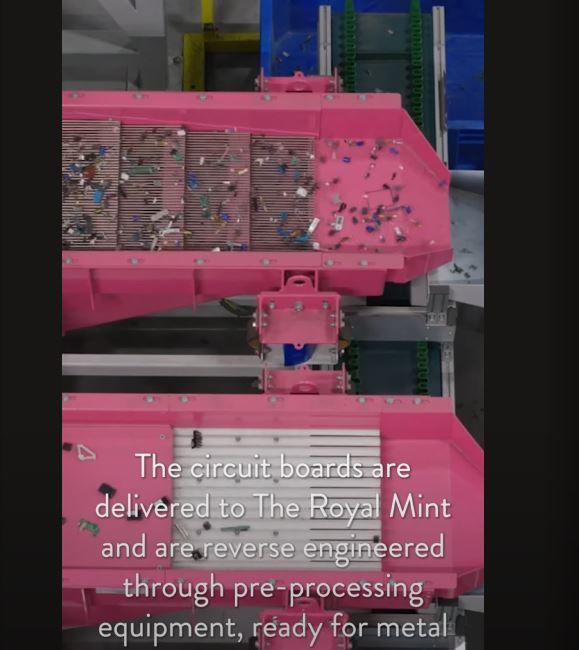
For this reason, the Royal Mint has been researching technology to extract gold from electronic devices for several years. The newly established plant can extract only gold from semiconductors or circuit boards. When electronic waste enters the plant, it is first heated, then components such as coils, capacitors, pins, and transistor arrays are finely cut and filtered.
Next, only the waste containing gold among the components is separately stored and placed into a special chemical solution. The solution undergoes a chemical reaction, causing only the gold to leach out from the metal in powder form. This powder is then heated again in a furnace to form gold ingots.
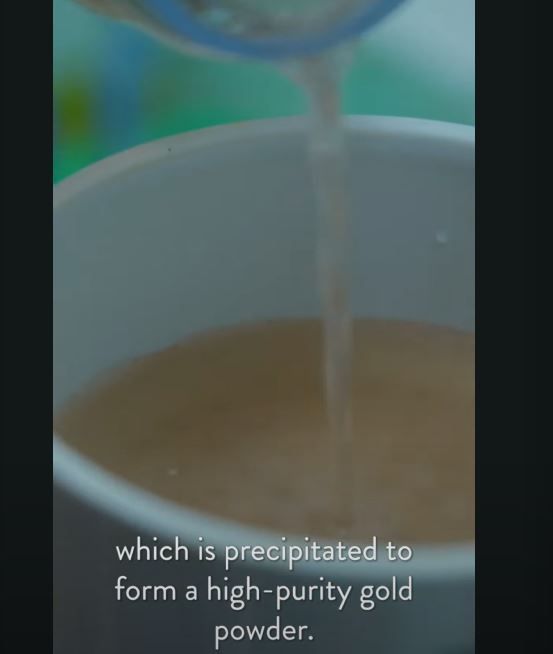 An impurity solution infused with gold. After reprocessing and filtering the solution, powdered gold is obtained. [Image source=Royal Mint YouTube]
Processes to extract gold from waste existed before, but the problem was that they consumed too much energy during processing, making profitability low. However, the new gold extraction method using a chemical solution consumes very little energy, making it suitable for large-scale processing.
According to the BBC, the Royal Mint plans to melt 4,000 tons of electronic waste annually to produce a total of 450 kg of gold. In terms of value, this corresponds to an annual income of 27 million pounds (approximately 47.1 billion KRW).
Additionally, the Royal Mint is reportedly seeking ways to recycle other valuable metals used in semiconductors and circuit boards, such as aluminum, copper, tin, and steel, beyond just gold extraction.
© The Asia Business Daily(www.asiae.co.kr). All rights reserved.
![Clutching a Stolen Dior Bag, Saying "I Hate Being Poor but Real"... The Grotesque Con of a "Human Knockoff" [Slate]](https://cwcontent.asiae.co.kr/asiaresize/183/2026021902243444107_1771435474.jpg)


















