Following Secondary Battery and Bio-Specialized Complexes, Challenge for Hydrogen Specialized Complex Designation in Second Half of This Year
Goal to Attract 70 Hydrogen and Fuel Cell Companies and Achieve 1 Trillion Won in Sales by 2030
Mayor Lee: "We Will Make Every Effort for Hydrogen Specialized Complex Designation to Complete the Future New Industry Map"
Pohang City, following its designation as a national strategic industrial cluster for secondary batteries and bio-specialized complexes, is now aiming to establish the nation’s first hydrogen-specialized complex in the second half of this year.
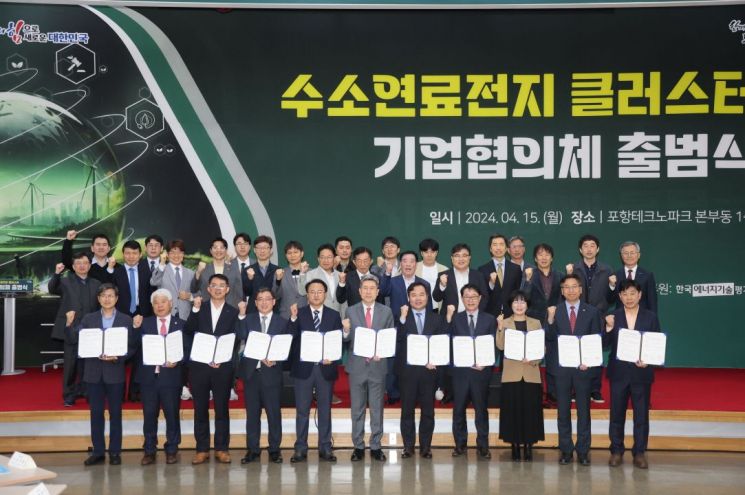
The hydrogen-specialized complex is designated by the Minister of Trade, Industry and Energy in accordance with the Hydrogen Economy Promotion and Hydrogen Safety Management Act, with the goal of clustering hydrogen businesses and support facilities. Earlier in June, a public contest was held for local governments.
Immediately after passing the preliminary feasibility study for the hydrogen fuel cell cluster project last year, Pohang City began developing a strategy for the hydrogen-specialized complex and started preparing its application for designation.
Subsequently, the city established the vision of “Becoming a Global Leader in the Hydrogen Fuel Cell Industry,” and identified three main objectives?establishing a sustainable foundation, strengthening innovation capabilities, and creating a global ecosystem?along with 25 specific action items to achieve this vision.
Pohang City has applied for the designation of a “hydrogen fuel cell specialized complex” covering approximately 280,000 square meters within the Pohang Blue Valley National Industrial Complex in Nam-gu. The designation is expected to be finalized in November after deliberation and resolution by the Hydrogen Economy Committee chaired by the Prime Minister.
If designated as a hydrogen-specialized complex, priority government funding will be allocated for exclusive infrastructure, R&D, tax benefits, and technology development within the complex. Incentives such as subsidies will also be provided to support corporate relocation and attraction, talent development, and more.
The city aims to establish a hydrogen economy belt along the East Coast, targeting the attraction of 70 companies in the hydrogen value chain, achieving KRW 1 trillion in sales, and creating 1,000 youth jobs by 2030, thereby leading the transition to a hydrogen economy.
Mayor Lee Kangdeok stated, “Pohang is advancing as a hub city for the hydrogen industry through the establishment of the hydrogen fuel cell cluster,” and added, “We will focus all administrative resources to complete a new industrial map that will secure Pohang’s future industries until the designation of the hydrogen-specialized complex is finalized.”
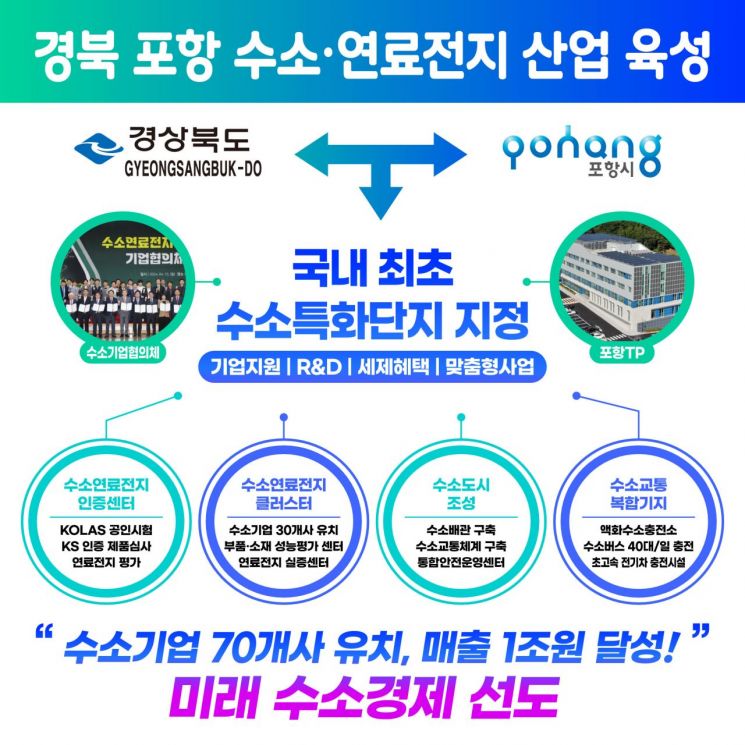
The city is currently conducting a feasibility study and establishing a master plan for the hydrogen fuel cell cluster, and is pursuing changes to the Pohang Blue Valley National Industrial Complex plan to provide customized sites for businesses.
In addition, the city is accelerating the construction of hydrogen pipelines connecting POSCO and the cluster, supporting subsidies for hydrogen vehicle purchases, and building hydrogen charging infrastructure to promote the spread of eco-friendly green mobility.
© The Asia Business Daily(www.asiae.co.kr). All rights reserved.


















