Large Profits for Kopi and Rupper Predicting Recession
Hedge Funds Investing in Ncarry Suffer Losses
On the 5th, despite the global stock markets plummeting, major foreign media reported on the 6th (local time) that some investors earned enormous profits amounting to billions of won.
A representative investor is Greg Coffida, an Australian hedge fund star nicknamed the "Wizard of Oz." Coffida, former Chief Investment Officer (CIO) of Moore Capital, founded Kukos World Capital in 2018. According to multiple sources, Kukos World Capital manages about $8 billion (approximately 11 trillion won) and earned hundreds of millions of dollars from the recent stock market crash. This was because they had prepared in advance for the possibility of a global economic recession and increased volatility.
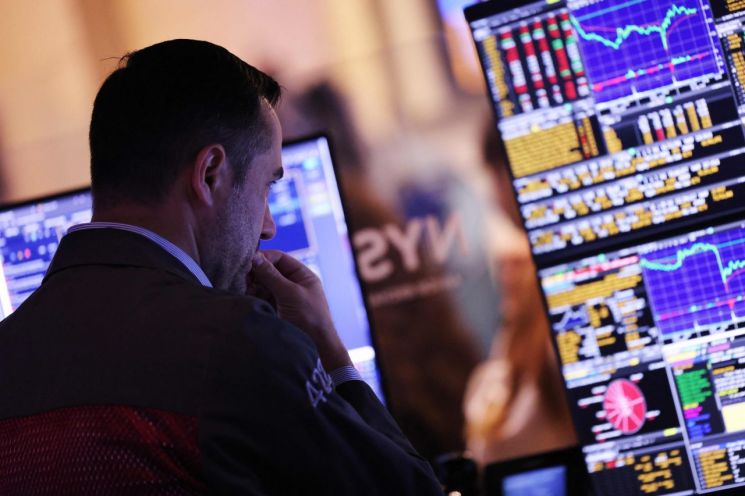
The Nikkei 225, the representative stock index of the Japanese stock market, fell 12.4% on the 5th, marking the steepest decline since Black Monday in 1987. The Chicago Board Options Exchange (CBOE) Volatility Index (VIX), known as the "fear index," soared to its highest level since the start of the COVID-19 pandemic. This was triggered by the Bank of Japan (BOJ) suddenly raising interest rates, concerns about the U.S. economy potentially slowing down faster than expected, and worries about a tech stock bubble.
The UK investment firm Ruffer also gained significantly from this stock market crash. Ruffer manages assets exceeding $27 billion (approximately 37 trillion won) and has repeatedly warned about market downturns. Foreign media reported that Ruffer made considerable profits in recent weeks through yen purchase positions, which surged against the dollar, and so-called safe assets like gold.
On the other hand, large hedge funds are estimated to have suffered heavy losses in this crash. They had to unwind yen carry trades as the yen strengthened and the market plunged. Matthew Brett Bailey, investment manager of the Gifford Japan equity team, said, "For a while, the idea spread that borrowing money in yen with almost no interest to invest in desired assets would yield returns greater than the borrowing costs. That return is certainly not sustainable forever. Those engaging in such trades felt discomfort as the yen strengthened."
The world's largest hedge fund, Bridgewater Associates, has promoted Japan as a market for portfolio diversification.
Warren Buffett's Berkshire Hathaway is also a representative investor in Japanese companies. Berkshire Hathaway has continuously increased its stakes in Japan's five major trading companies. However, Buffett revealed in his shareholder letter that as of the end of last year, unrealized gains amounted to $8 billion.
© The Asia Business Daily(www.asiae.co.kr). All rights reserved.
![Clutching a Stolen Dior Bag, Saying "I Hate Being Poor but Real"... The Grotesque Con of a "Human Knockoff" [Slate]](https://cwcontent.asiae.co.kr/asiaresize/183/2026021902243444107_1771435474.jpg)
















