The Palestinian armed faction Hamas has elected Yahya Sinwar (62), the Gaza Strip leader who led the surprise attack on Israel on October 7 last year, as its new top political leader.
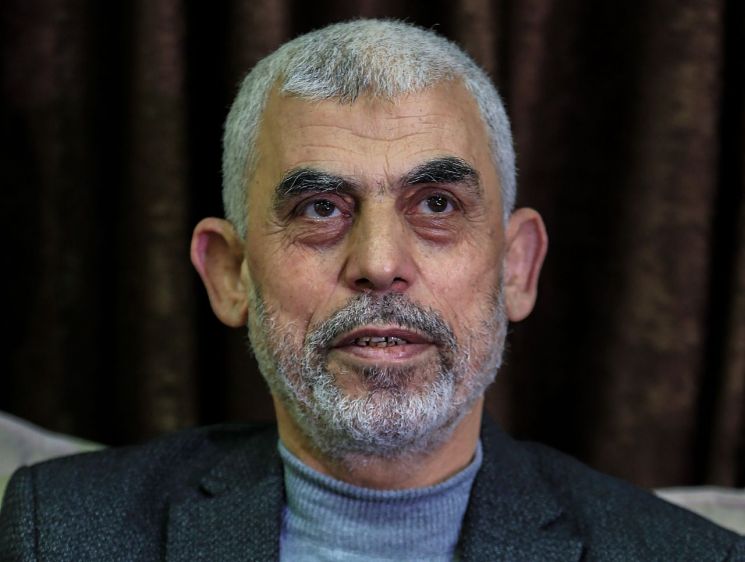
On the 6th (local time), Hamas announced in a Telegram statement that "Leader Yahya Sinwar has succeeded martyr Ismail Haniyeh as the head of the political bureau." This announcement came six days after Haniyeh was assassinated in Iran on the 31st of last month. Amid expectations of retaliatory attacks by Iran and Hezbollah against Israel, it is analyzed that Hamas, a member of the pro-Iranian armed faction 'Axis of Resistance,' quickly reorganized itself.
The term of office for the head of the political bureau, who oversees Hamas's diplomatic activities and foreign policy, is four years and is renewable. Sinwar, born in Khan Yunis in the southern Gaza Strip, joined Hamas in the 1980s. He was imprisoned in Israel for over 20 years on charges of kidnapping and killing Israeli soldiers and was released in a prisoner exchange in 2011.
Since 2017, Sinwar has led Hamas's Gaza Strip organization. He was the architect of the so-called 'Al-Aqsa Flood' large-scale attack operation on October 7 last year, in which Hamas launched a surprise attack on Israel, killing about 1,200 people and kidnapping over 250. At that time, Israel announced it would eliminate Sinwar in retaliation for the attack and even placed a bounty on him. The New York Times (NYT) reported that Sinwar was known to be hiding in underground tunnels in the area to avoid Israeli assassination attempts.
With the election of the hardliner Sinwar as Hamas's political bureau chief, attention is focused on the potential impact on future Gaza Strip ceasefire negotiations and the movements of the pro-Iranian 'Axis of Resistance.' Osama Hamdan, a Hamas official, told the NYT that Sinwar was elected unanimously. Regarding the impact of this decision on future ceasefire negotiations, he said, "It is too early," but added, "Negotiations will proceed under Sinwar's supervision." Those involved in the ceasefire talks assessed that no ceasefire can be achieved without Sinwar's approval.
Palestinian political analyst Fuad Qubasi, close to Hamas, described Sinwar's election as "symbolic," explaining that it shows the current public opinion within Hamas agrees with his hardline approach. The NYT analyzed, "Even before the October 7 surprise attack, Sinwar had more influence within the organization as Hamas's Gaza Strip leader than Haniyeh in some respects," adding, "While Haniyeh played the diplomatic face abroad, Sinwar controlled the field in Gaza and maintained close ties with the military organization." AFP news agency evaluated this as "Hamas sending a strong message to the occupier (Israel) that it will continue on the path of resistance."
The position of deputy head of the political bureau, the third-ranking member of Hamas and second in the political bureau, has remained vacant since Israel assassinated Saleh al-Arouri in Beirut in January.
© The Asia Business Daily(www.asiae.co.kr). All rights reserved.

















