Nikkei Up 10.23% on 10.23... Asian Stock Markets Rebound
Concerns Over US Recession Seen as Overstated
Safe-Haven US Treasury Demand Falls... Treasury Yields Rise
The three major indices of the U.S. New York stock market were on an upward trend in early trading on the 6th (local time). The market, which had fallen by around 3% the previous day due to recession concerns triggered by employment data and the unwinding of the yen carry trade, is attempting a slight rebound. Some analysts suggest that the recession fears are exaggerated, and with Asian markets including Japan overcoming the 'Black Monday' crash and rising on the day, investor sentiment appears to have partially improved.
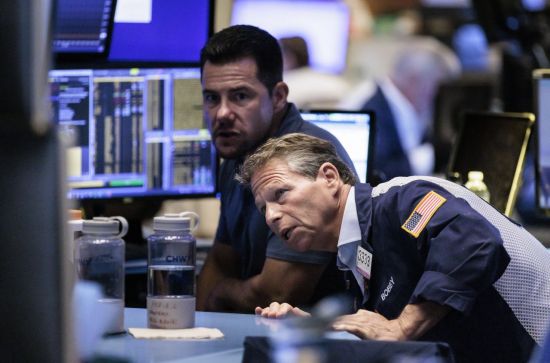
As of 9:58 a.m. at the New York Stock Exchange (NYSE) on the day, the Dow Jones Industrial Average was up 0.8% from the previous close, standing at 39,012.06. The S&P 500, which focuses on large-cap stocks, rose 0.97% to 5,236.38, and the tech-heavy Nasdaq index was trading 0.72% higher at 16,316.24.
By individual stocks, ride-sharing company Uber jumped 5.47% after reporting quarterly earnings that exceeded expectations. Yum China Holdings, which operates Pizza Hut and Taco Bell in China, and data analytics firm Palantir Technologies also rose 9.53% and 7.8%, respectively, on strong earnings. Nvidia, the leading AI stock that plunged more than 6% the previous day, was up 2.64%.
The New York stock market plunged sharply the previous day. The Dow fell 2.6% from the previous trading day, while the S&P 500 and Nasdaq dropped 3% and 3.43%, respectively. Both the Dow and S&P 500 recorded their largest daily declines since September 2022. This was due to the contraction in U.S. manufacturing activity reported in July and the rise in last month's U.S. unemployment rate to 4.3%, which fueled recession fears. Additionally, the Bank of Japan's (BOJ) interest rate hike triggered the unwinding of the yen carry trade, accelerating capital outflows. Concerns over an AI bubble also worsened investor sentiment. Although improved U.S. service sector economic indicators somewhat eased recession fears, the market only managed to reduce losses.
Quincy Crosby, Global Chief Strategist at LPL Financial, said, "Since the strong rally last fall, stock prices, investor sentiment, and investor (buy) positioning have expanded," adding, "The market is now experiencing a correction of this bullish phase." He further analyzed, "This phenomenon is particularly pronounced in the yen and the yen carry trade."
Wall Street considers the unwinding of the yen carry trade a major cause of the recent global stock market crash. Among global investors, the yen carry trade, which involves borrowing low-interest Japanese yen to invest in overseas assets, had been popular. However, after the BOJ raised its short-term policy rate from 0-0.1% to 0.25% last month, yen funds have been returning home. According to JP Morgan, about 50-60% of the yen carry trade has been unwound, and further unwinding may continue.
Ed Yardeni, a veteran Wall Street investor and head of Yardeni Research, also linked the recent stock sell-off to the unwinding of the yen carry trade, stating that "it is more likely to be a technical market deviation rather than leading to a recession."
Some analysts argue that the market's recession fears are exaggerated.
Austan Goolsbee, President of the Federal Reserve Bank of Chicago, said in an interview with CNBC the previous day, "Although employment figures came in weaker than expected, it does not yet look like a recession," emphasizing, "There are some indicators to watch, such as rising household delinquency rates, but economic growth remains fairly stable." He added, "If the situation worsens, we will fix it," attempting to calm market anxiety.
Yardeni also assessed, "The labor market is still in good shape," and "The U.S. economy is still growing, and the service sector is functioning well."
Meanwhile, the Japanese Nikkei 225 index rose 10.23% on the day, and Asian markets succeeded in rebounding.
However, some experts predict that volatility in the stock market may continue for some time.
Case Runner, Co-Chief Investment Officer (CIO) at Truist, said, "It is too early to say the bottom has come," and predicted, "Damage has occurred, and it is likely to take time to recover."
Demand for safe-haven U.S. Treasury bonds is decreasing, causing bond yields to rise. The yield on the U.S. 2-year Treasury note, sensitive to monetary policy, is currently up 4 basis points (1bp=0.01 percentage points) from the previous trading day at 3.93%, while the yield on the 10-year U.S. Treasury note, a global bond yield benchmark, is trading around 3.82%, up 4 basis points from the previous day.
International oil prices are moving sideways amid concerns over supply reductions due to the possibility of a full-scale war between Israel and Iran, coupled with demand reduction prospects from a U.S. recession. West Texas Intermediate (WTI) crude oil is trading at $72.95 per barrel, up $0.01 (0.01%) from the previous day, while Brent crude, the global oil price benchmark, is trading at $76.39 per barrel, up $0.09 (0.12%).
© The Asia Business Daily(www.asiae.co.kr). All rights reserved.

















