Gu Kyung-bae Criticizes K-Commerce Merger Plan: New Platform Launches but Product Planning to Promotion All Fall on Sellers
Ku Young-bae, CEO of Qoo10, is pushing forward with the ‘K-Commerce’ merger plan during the voluntary restructuring support (ARS) period for Tmon and Wemakeprice (Timep). This plan is expected to effectively shift the responsibility onto the victims. K-Commerce is a voluntary rehabilitation plan proposed by CEO Ku to merge Timep and convert sellers' unpaid receivables into convertible bonds (CBs), allowing them to participate as shareholders. Although the likelihood of this plan materializing is low, even if it proceeds as planned by CEO Ku, sellers who are forced onto this platform will have to seek compensation for their damages on their own without much support.
On the 7th, CEO Ku told Asia Economy that the K-Commerce merger plan is "(K-Commerce) a platform where sellers participate as shareholders, creating a structure where platform growth aligns with enhancing sellers' profits." His plan involves merging Timep into K-Commerce, reducing Qoo10’s 100% stake in Timep to zero, and placing his 38% stake in Qoo10 into a blind trust within the merged entity. Additionally, sellers who have not received payments would be able to convert part of their claims into CBs, becoming shareholders of the merged company.
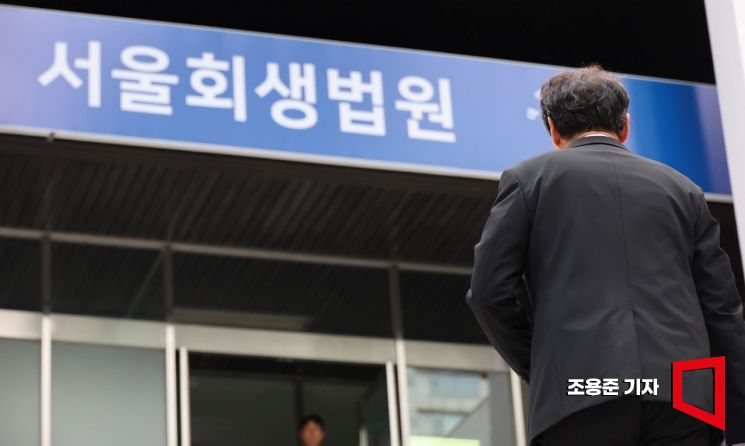 Ryu Kwang-jin, CEO of TMON, is attending a hearing held at the Seoul Bankruptcy Court in Seocho-gu, Seoul on the 2nd. The court plans to review the reasons for the rehabilitation applications of TMON and WEMAKEPRICE, their debt status, and funding plans. Photo by Jo Yong-jun jun21@
The problem is that even if sellers agree to reduce their unpaid damages slightly, compensating for losses through this platform will be entirely the sellers’ own responsibility. CEO Ku argued, "If there are thousands of such sellers, meaning owners who plan and sell products, they are the core competitiveness and this will help overcome the brand power and capital strength of Coupang, AliExpress, and Amazon." However, industry insiders pointed out that "for sellers to recover unpaid amounts, the merged platform needs to be activated, which means the victimized sellers themselves must actively plan and sell products."
Moreover, since the problem was exacerbated by large-scale promotions, even if such a platform emerges, it will be difficult for the merged entity to support sales by issuing coupons or similar measures. Regarding this, CEO Ku explained, "Promotions will basically be led by sellers, and the platform will focus on efficiently disseminating these and communicating with customers who are likely to purchase," adding, "We will actively utilize AI as well." Ultimately, everything from planning products to promoting them to ensure good sales is the sellers’ responsibility.
Considering that up to 60,000 sellers have not received settlement payments from Timep, it will be structurally difficult for victimized sellers to hold decision-making power even if they become shareholders. This is why the industry criticizes the plan as an attempt to dilute the responsibility of the existing management and shift it to a collective responsibility. The goal appears to be merely to keep Timep running to secure cash flow.
Nevertheless, CEO Ku’s plan is expected to proceed separately from the sale preparations being made by each Timep company. CEO Ku stated, "During the ARS period, there is a procedure where each company’s CEO must first try to find self-rescue plans, so some time is needed," adding, "It is also necessary to fill in and concretize the details of K-Commerce."
© The Asia Business Daily(www.asiae.co.kr). All rights reserved.

















