The Supreme Court has ruled that it is not illegal to apply the juvenile law's mitigation provisions to a 17-year-old boy charged with 11 counts, including special theft and attempted special theft over 48 incidents, as well as fraud.
Article 60, Paragraph 2 of the Juvenile Act states that "when it is deemed appropriate in light of the characteristics of the juvenile, the sentence may be mitigated," and since it does not mandate mitigation but rather provides it as a discretionary reason, whether to mitigate the sentence for a juvenile is at the court's discretion.
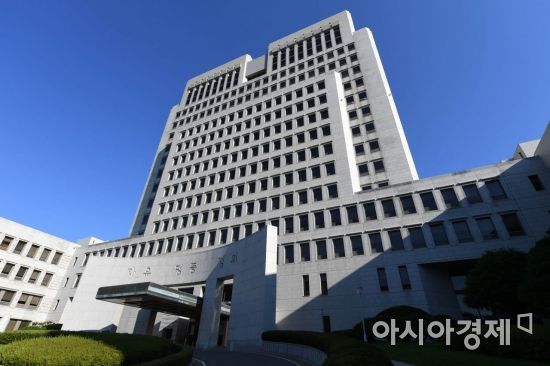
According to the legal community on the 6th, the Supreme Court's First Division (Presiding Justice Seo Kyunghwan) finalized the appellate ruling on November 11 last month in the case of Lee (19), who was charged with 11 counts including special theft. The original court sentenced Lee to 3 years imprisonment (long term), 2 years imprisonment (short term), and a fine of 300,000 KRW.
Article 60, Paragraph 1 of the Juvenile Act (Indeterminate Sentences) states, "When a juvenile commits a crime punishable by imprisonment for a fixed term of 2 years or more, the court shall determine the long and short terms within the range of the sentence. However, the long term shall not exceed 10 years, and the short term shall not exceed 5 years."
The court stated, "Mitigation of sentences under Article 60, Paragraph 2 of the Juvenile Act is not mandatory but discretionary, belonging to the court's free discretion. Therefore, the original court's failure to mitigate the sentence under this provision for the defendant, who qualifies as a juvenile under the Juvenile Act, is not erroneous," and added, "Thus, the claim that the original ruling was flawed due to insufficient consideration of mitigation reasons under the Juvenile Act, factual errors, or legal misinterpretation is rejected," dismissing Lee's appeal.
Lee is accused of repeatedly, 48 times from June to October 2022, mostly in the early morning, roaming underground parking lots in Seo-gu, Incheon, opening unlocked car doors and stealing wallets and other valuables worth approximately 37 million KRW, either successfully or attempted.
He is also charged with stealing parked cars or motorcycles and driving them, driving while his license was suspended, causing a traffic accident and injuring a female passenger, and fleeing the scene.
Additionally, Lee is accused of purchasing two mobile phones with found credit cards, taking taxis without cash or cards to pay the fare, damaging a monitor worth about 350,000 KRW, and assaulting a man in his 40s.
The prosecution indicted Lee on 11 charges including hit-and-run injury under the Act on Aggravated Punishment of Specific Crimes, special theft, attempted special theft, fraud, violation of the Specialized Credit Finance Business Act, violation of the Road Traffic Act (failure to take measures after an accident), property damage, illegal use of a vehicle, assault, embezzlement of lost property, and unlicensed driving under the Road Traffic Act.
The first-instance court found Lee guilty of most charges and sentenced him to 3 years imprisonment (long term), 2 years imprisonment (short term), and a fine of 300,000 KRW.
At the first trial on December 2023, Lee had already been subject to the 10th protective disposition (long-term juvenile detention) by the Incheon Family Court on March 7 of the same year for similar offenses. The court noted that although Lee reached settlements with some victims and some victims expressed no desire for punishment, given the nature of his crimes, a heavy sentence was unavoidable.
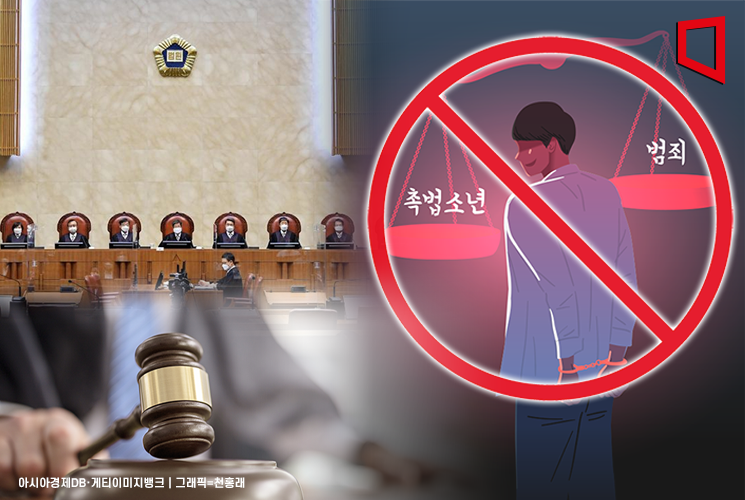
The court pointed out, "The defendant admits to all the offenses in this case and shows belated remorse. However, he repeatedly committed crimes without much sense of guilt, and considering the number of offenses, their nature, the number of victims, and the amount of damage, his culpability is quite serious. Moreover, most of the damages have not been restored."
It added, "Even considering the favorable circumstances mentioned earlier, severe punishment commensurate with the defendant's culpability is inevitable," explaining the sentencing rationale.
Lee appealed, claiming the first-instance sentence was too harsh, but the second-instance court also found no problem with the first court's judgment.
The court stated, "Considering various sentencing factors revealed during the original sentencing process, the statutory sentencing range, and the range of punishment, the original sentencing decision does not exceed the reasonable limits of discretion."
It further noted, "The reasons for the claim of excessive sentencing appear to have been sufficiently considered by the original court when determining the sentence, and there are no new circumstances or changes in conditions that would favorably affect the defendant's sentencing at this stage."
During the second trial, additional settlements with victims and expressions of no desire for punishment were made, but the court judged, "Considering the nature and extent of each offense, the overall content and severity of the defendant's crimes, the number of offenses, total number of victims, and amount of damage, these do not constitute new circumstances or significant changes warranting sentence modification."
Lee appealed again, but the Supreme Court's decision was the same.
The court dismissed Lee's appeal arguing that the second-instance court erred by not applying juvenile law mitigation, stating that such mitigation is discretionary and falls within the court's free discretion.
Regarding the appeal claim that "the second-instance sentencing violated the principle of proportionality between crime and punishment or the essential content of the principle of responsibility," the court rejected it, explaining that appeals based on excessive sentencing under the Criminal Procedure Act are only allowed in cases where the death penalty, life imprisonment, or imprisonment of 10 years or more is imposed.
© The Asia Business Daily(www.asiae.co.kr). All rights reserved.


















