July Global Food Price Index 120.8p
Cereal Price Index Down 4%
Global food prices fell for the first time in five months. While prices of oils and fats, meat, and sugar rose, prices of grains and dairy products declined.
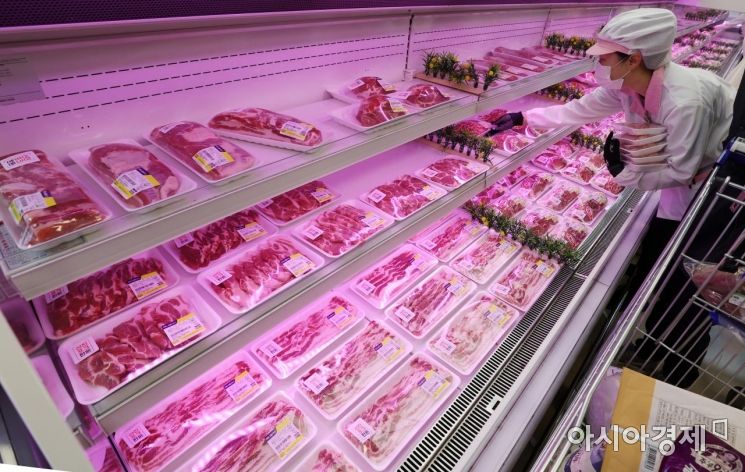 On the 25th, the meat sales counter at a large supermarket in Seoul. Photo by Hyunmin Kim kimhyun81@
According to the Ministry of Agriculture, Food and Rural Affairs on the 3rd, the Food and Agriculture Organization (FAO) of the United Nations announced that the global food price index for July was 120.8 points (p), down 0.2% from the previous month.
The global food price index has been declining for seven consecutive months since July last year (124.6p). However, it showed a rising trend for three consecutive months from 117.4 in February this year to 119.0 in March, 119.3 in April, and 120.6 in May, maintained the same level in June as in May, and then returned to a downward trend.
The FAO surveys international price trends for 95 items across 24 categories and publishes monthly food price indices for five commodity groups (grains, oils and fats, meat, dairy products, sugar). The index uses the average value from 2014 to 2016 as 100; values above this indicate an increase, and values below indicate a decrease.
By commodity group, the grain price index last month was 110.8p, down 3.8% from the previous month, influenced by increased wheat supply as the winter wheat harvest progressed in the Northern Hemisphere. A large spring wheat harvest was also expected in Canada and the United States, leading to a continued decline in international wheat prices. Weaker international demand and intensified export competition also contributed to the wheat price decline.
Corn export prices also fell due to faster-than-usual harvest progress in Argentina and Brazil, and better-than-average crop conditions in the United States. International rice prices declined due to sluggish trading activity.
The oils and fats index rose 2.4% from the previous month to 135.0p. Palm oil prices increased as production growth in Indonesia, a major producer, was smaller than expected, while international demand remained high.
International soybean oil prices continued to rise, supported by steady demand from the biofuel sector in the Americas. Prices of sunflower oil and rapeseed oil increased due to poor crop outlooks in major producing countries.
The meat price index rose 1.2% from the previous month to 119.5p. Beef prices increased as international import demand rose coinciding with a reduction in slaughter volumes in the Oceania region.
International poultry prices increased due to strong import demand from the Middle East and North Africa, combined with supply concerns caused by livestock diseases such as avian influenza.
Conversely, pork prices declined. Oversupply occurred as demand for Western European pork decreased, and factors such as China initiating an anti-dumping investigation on European Union (EU) pork and outbreaks of African Swine Fever (ASF) contributed to reduced trade and price declines.
Dairy product prices were 127.7p, down 0.1% from the previous month. Despite seasonal supply reductions in Oceania affecting milk powder, import demand was low in Western Europe due to a summer market lull, leading to price decreases.
On the other hand, butter prices rose as strong domestic demand in Western Europe, inventory shortages, and seasonal declines in milk production reduced export availability. Cheese prices increased due to active domestic demand in Western Europe.
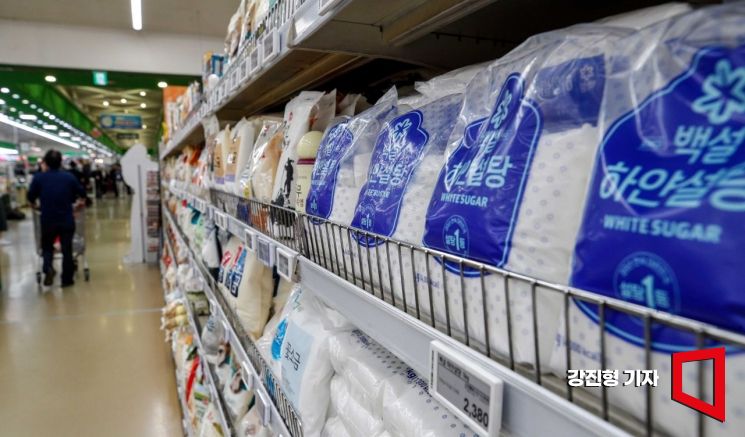
The sugar price index, which has experienced large fluctuations, rose 0.7% from the previous month to 120.2p. Despite improved weather conditions in India and Thailand, international sugar prices increased as Brazil’s production in the first half of July fell short of expectations. Additionally, ongoing dry weather in Brazil raised concerns about reduced output, and rising ethanol prices also contributed to the sugar price increase.
The government is conducting discount events at major large retailers to stabilize pork prices during the summer vacation season when demand is high. On-site technical support is also being provided to minimize heat damage to pig and chicken farms.
Furthermore, to ease the management burden on food companies and stabilize consumer prices amid rising international prices of some food raw materials, the government is applying tariff quotas on food raw materials such as raw sugar, sugar, and sunflower oil. The government plans to continue closely communicating with the industry and monitoring market conditions going forward.
© The Asia Business Daily(www.asiae.co.kr). All rights reserved.


















