Abolition of Comprehensive Real Estate Tax for Primary Residences and Easing of Financial Investment Tax
Exploring Change as a Pragmatic Party 'Possibility'
Two-Track Strategy: Aggressive Rental Struggle and Flexible Policies
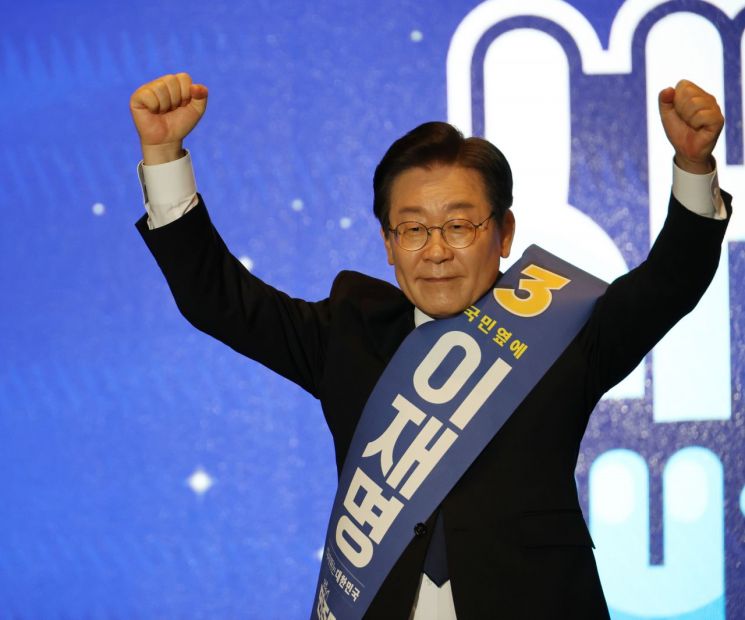
Lee Jae-myung, the Democratic Party of Korea's candidate for party leader, has attracted extraordinary attention by mentioning the easing of comprehensive real estate tax (종부세) and financial investment tax (금투세). As Lee, who has been strongly progressive by advocating for basic income, actively presented agendas that were previously taboo within the party, curiosity about the background and intentions grew both inside and outside the party.
What is the policy line of Lee, which even the ruling camp evaluated as a "surprising transformation"?
Lee Jae-myung's Transformation That Surprised Everyone
At the event where he declared his candidacy for party leader on the 10th of last month, Lee said, "I think the comprehensive real estate tax has played a significant role, but it has also unnecessarily created excessive conflict and resistance," adding, "I think it is time for a fundamental review." Regarding the financial investment tax, he mentioned, "Since it is fundamentally linked to the securities transaction tax, it is not easy to decide carelessly, but I think we need to consider the timing issue." Although cautious, he hinted at a full review of the comprehensive real estate tax and the possibility of postponing the financial investment tax.
Afterwards, Lee began to increase his mentions of the comprehensive real estate tax and financial investment tax during the party leader candidate debates. The interesting point is that the agenda, which was initially mentioned only as something to consider, became more concrete with specific alternatives over time. On the 18th of last month, during a television debate, Lee said, "Whether it is the comprehensive real estate tax or the financial investment tax, it is not right to insist on protecting them unconditionally as if they were sacred and inviolable agendas," adding, "We need to approach them from a practical perspective and correct any mistakes." Regarding the comprehensive real estate tax, he said, "If the price of the house you actually live in rises and you feel doubly penalized, it would be unfair," and added, "There is a need for correction." About the financial investment tax, he stated, "Since the government wants it, a temporary postponement of the implementation timing may be necessary, and I have a stance to discuss it."
In the debate held on the 22nd of last month on KBS, Lee said about the comprehensive real estate tax, "Let's acknowledge the reality that there is resistance because taxation is a means to secure national revenue, not a means to punish individuals," and "We should significantly ease it for one household with one actual residence." This drew great attention as he mentioned the punitive nature of the comprehensive real estate tax. Regarding the financial investment tax, he said, "We need to consider raising the exemption threshold," and proposed, "Currently, one must earn 50 million KRW annually for five years, totaling 250 million KRW, to be subject to the tax, but let's raise it to about 100 million KRW annually, exempting those who earn about 500 million KRW over five years." In the JTBC debate on the 30th, Lee actively expressed his position on the comprehensive real estate tax, saying, "Is it necessary to endure resistance for one household with one actual residence?" and "The comprehensive real estate tax imposed on them last year was only 90 billion KRW; is there a need to be politically pressured by the comprehensive real estate tax?"
How Should This Be Viewed?
Former lawmaker Yoo Seung-min expressed surprise on social media regarding Lee's proposal to raise the exemption limit for the financial investment tax, saying, "A person who advocates for a basic society with astronomical budgets for basic income, basic housing, and basic finance suddenly talks about tax cuts," and "I even have the illusion that Lee has transformed into a neoliberal tax cut advocate." He also pointedly said, "I hope the Democratic Party organizes its internal positions as it has turned around like this."
What was Lee's intention in moving this way?
Explanations from inside and outside the party suggest that Lee aims to lead a shift in the Democratic Party's policy line through this party convention. Since he is neither a presidential candidate nor the party leader yet, he intends to reveal his convictions and lead internal discussions. A camp official explained, "As Lee runs for party leader, he can concretely express his thoughts on policy vision and discourse, so he talked about these points this time," adding, "We need to gather opinions on controversial points, and this is the starting point. Through future policy meetings, compromises or conclusions will be reached." Regarding the internal opposition raising identity issues, the official responded, "I don't know if ideologically going that way is productive." On whether these agendas will be pursued after the convention, the official said, "Although the Democratic Party is in opposition, it believes it must act responsibly in policy and governance, so (Lee) has presented responsible policy agendas," indicating a willingness to push forward.
The opposition camp expects that laws such as the financial investment tax will eventually be included in the year-end supplementary revenue bills, and that Lee's intentions and the Democratic Party's consensus will be reflected in some form.
There is also an interpretation that presenting the comprehensive real estate tax, which faces strong resistance within the camp, is part of a plan related to the upcoming local elections. The idea is to settle the comprehensive real estate tax agenda early, which could be a negative factor in key local elections such as the Seoul mayoral or district chief elections, and to dispel the negative image of the comprehensive real estate tax early.
Raising awareness of party line issues at a party convention decided by party members' votes is not common. Since Lee already has solid support within the Democratic Party, some analysts suggest this could lead to expanding his base. Yoo Chang-oh, a political commentator and author of "Political Civil War," explained, "In cases like party conventions, consolidating the support base is important, but since Lee's support base is solid, he is aiming for the next step, which is expanding to the center." Because his internal support is firm, Lee can make choices different from traditional political norms.
Yoo explained, "Since Lee carries judicial risks, he needs to accelerate the presidential schedule and strongly push political drives. He appears to be tough on political issues but more flexible on policy matters." Politically, it is difficult to target the centrist electorate, so he is preparing for the presidential election by seeking policy points of contact with the center.
Yoo believes Lee's choice could lead to a shift in the Democratic Party's policy line. He said, "Since 2010, the Democratic Party has pursued a social democratic model emphasizing the welfare state, but historically, this is somewhat outdated," adding, "While former President Moon Jae-in was closer to an ideological type, Lee is more pragmatic and is pushing for a change in the trend." This means he aims to transform the Democratic Party, which was biased toward progressive ideology, into a centrist and pragmatic party.
However, the key question is whether this transformation will be sustained. Choi Byung-chun, director of the New Growth Economy Research Institute, said, "It was politically wise for Lee to raise the agenda on the comprehensive real estate tax and financial investment tax," but added, "Whether this change will lead to a shift in the Democratic Party's official stance remains to be seen." It remains to be seen whether Lee will show the political will to overcome opposition from the progressive camp regarding the comprehensive real estate tax after the party convention.
© The Asia Business Daily(www.asiae.co.kr). All rights reserved.

















