The Supreme Court has ruled that 'Nanum-ui Jip' in Gwangju, Gyeonggi Province, a support facility for comfort women victims, must return donations to donors because the donations were not used for the intended purposes when they were collected.
The Supreme Court's 2nd Division (Presiding Justice Kwon Young-jun) overturned the lower court's ruling that dismissed the donation refund claim filed by donor Mr. Lee against the social welfare corporation Jogye Order of Korean Buddhism Nanum-ui Jip, and remanded the case to the Seoul Central District Court.
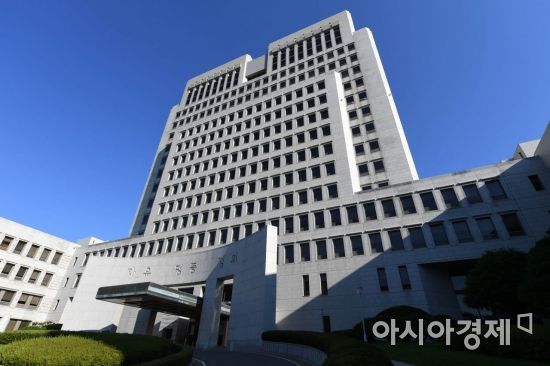
The court stated, "The purpose of the donation contract in this case was incorporated into the contract content rather than remaining a mere motive, and that purpose constitutes an important part of the contract content. There exists a discrepancy between the purpose of the donation contract as indicated by the defendant and recognized by the plaintiff and the actual use of the donations to an extent that can be evaluated as a mistake. Had the plaintiff not fallen into such a mistake, the donation contract would not have been concluded, and this holds true from the perspective of an average donor."
It further explained, "It is difficult to accept the lower court's judgment rejecting the claim to cancel the donation contract based on mistake," as the reason for overturning and remanding the case.
Nanum-ui Jip categorized its donation accounts on its website as follows: ▲ donations for the grandmothers' living expenses, welfare, and testimony activities ▲ donations for the Japanese military comfort women history museum ▲ donations for the establishment of the International Peace and Human Rights Center, each with separate donation accounts.
Mr. Lee made monthly donations of 50,000 KRW from August 2017 to April 2020 to the account related to 'donations for the grandmothers' living expenses, welfare, and testimony activities.'
However, in May 2020, some employees of Nanum-ui Jip revealed that "most of the huge donations collected under the pretext of supporting comfort women victims were reserved by the corporation and not properly used for the victims, who had to pay for medical expenses out of their own pockets," and related media reports flooded the public.
In response, 23 donors including Mr. Lee filed a lawsuit against Nanum-ui Jip demanding the return of their donations.
In court, Mr. Lee and others argued that they made a 'donation with burden' on the condition that the donations be used for the specified purposes, but Nanum-ui Jip had no intention of using the funds as such and collected donations under false pretenses.
They claimed, alternatively, cancellation of the donation contract due to mistake and restitution of unjust enrichment, or contract rescission and restitution of unjust enrichment based on the premise of donation with burden. Additionally, they sought damages for illegal acts based on fraud or infringement of self-determination rights (choice rights) as a secondary claim.
The first-instance court dismissed the claims of Mr. Lee and others, siding with Nanum-ui Jip.
The court first held that "it is difficult to regard the donation contract in this case as a donation with burden." A donation with burden is established when the donee is burdened with a legal obligation, but the court found it difficult to see the regular donation contracts and payments by Mr. Lee and others as imposing such a legal obligation on Nanum-ui Jip.
Moreover, the court concluded that Nanum-ui Jip did not deceive or mislead the donors when concluding the donation contracts, nor did it commit any illegal acts.
Five of the donors, including Mr. Lee, appealed the first-instance loss, but the second-instance court upheld the same judgment. The other four donors did not appeal the second-instance loss, making the ruling final, but Mr. Lee appealed to the Supreme Court.
In the Supreme Court appeal, the issue was whether the purpose of a donation contract for a specific purpose constitutes an important part of the contract content under Article 109 of the Civil Act.
Article 109(1) of the Civil Act (Declaration of Intention Due to Mistake) states, "A declaration of intention may be canceled if there is a mistake in an important part of the content of a legal act. However, it cannot be canceled if the mistake is due to the declarant's gross negligence."
The court premised, "The plaintiff appeared to have recognized, based on the defendant's donation guidance, that the donations had been used, are currently being used, and will continue to be used for activities related to comfort women victims. The plaintiff's recognition was not merely a prediction or expectation of future events but also included an understanding of the current circumstances forming the basis of such prediction or expectation."
Furthermore, the court stated, "The fact that most of the donations collected by the defendant were reserved by the corporation for the construction of a specific building does not align with the donation purposes stated by the defendant at the time of collection and the plaintiff's resulting recognition. There exists a discrepancy between the purpose of the donation contract as indicated by the defendant and recognized by the plaintiff and the actual use of the donations to an extent that can be evaluated as a mistake. Had the plaintiff not fallen into such a mistake, the donation contract would not have been concluded, and this holds true from the perspective of an average donor." This was the reason for overturning the lower court's ruling that had rejected the cancellation of the contract due to mistake.
© The Asia Business Daily(www.asiae.co.kr). All rights reserved.

















