Eight Key Initiatives for Rural-Specific Care Services to Address Gaps in Rural Childcare
Three Priority Tasks: Emergency Care, Mobile Outreach Programs, and More
Gumi City in North Gyeongsang Province has officially launched efforts to establish the "Rural Care Station" as a leading national model to address the care service gap in rural areas.
This project aims to build infrastructure for childbirth and child-rearing and to spread a family-friendly culture, with the goal of transforming Gumi into a "city that is good for giving birth and raising children." The focus is on resolving the severe care service challenges faced in rural areas.
In June, Gumi City conducted on-site meetings and surveys with parents in rural areas. The results showed that care services during school vacations (45%) and the establishment of care centers and study rooms (28%) were the most urgent needs.
Based on these findings, the city has identified eight key tasks for "rural-specialized care services" to provide emergency care and expand infrastructure.
In particular, Mueul-myeon, which has a shortage of care infrastructure compared to the number of children, has been designated as the pilot village. Starting this summer vacation, the city plans to prioritize the operation of the 365 Care Daycare Center, rural-specialized care-sharing programs, and a mobile toy library service.
First, Seonju Public Daycare Center in Seonsan-eup will be designated as a 365 Care Daycare Center from August, offering hourly childcare services for rural families in need of emergency care during weekday evenings (6 p.m. to midnight) and on weekends and holidays (9 a.m. to 6 p.m.).
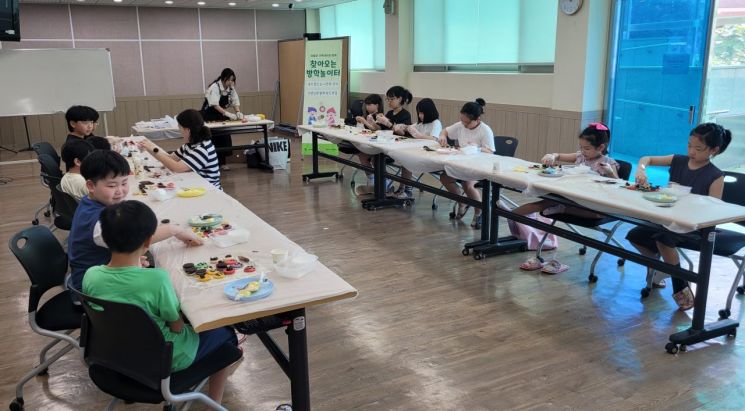
Additionally, the rural-specialized care-sharing program "Visiting Vacation Playground," where guardians and children can participate together, will be held every Tuesday and Thursday from July 25 to August 13 at the Mueul Cultural Welfare Center. Additional programs will be introduced based on satisfaction and demand surveys.
Furthermore, for families with infants and toddlers in Mueul-myeon who have difficulty visiting the toy library, a mobile delivery service will be operated. After registering on the website and reserving toys, deliveries will be made once a week to designated locations.
After a pilot operation until September, the service will be expanded to all towns and townships starting in October. The membership fee is 20,000 won, but it is free for vulnerable groups and families with multiple children.
Based on the results of the pilot project, Gumi City plans to identify shortcomings and improvements, and provide rural-specialized care programs through caregiver training and linking local resources to address emergency care needs.
In the long term, the city plans to establish township administrative welfare centers as so-called "Rural Care Stations" and introduce transportation support measures to address school and academy commuting issues for students in rural areas.
Mayor Kim Jangho stated, "In order to create a rural area where children are happy, not only the efforts of local governments but also administrative and financial support from the central government is essential, such as designating township-level areas in urban-rural complex cities facing severe risk of extinction as population decline areas, similar to basic local governments (cities, counties, districts) in depopulated regions."
© The Asia Business Daily(www.asiae.co.kr). All rights reserved.
![Clutching a Stolen Dior Bag, Saying "I Hate Being Poor but Real"... The Grotesque Con of a "Human Knockoff" [Slate]](https://cwcontent.asiae.co.kr/asiaresize/183/2026021902243444107_1771435474.jpg)
















