National Finance Center 'Assessment of Recent Sharp Decline in Dollar-Yen Exchange Rate'
US Interest Rate Cut Expectations and Japanese Market Intervention Combined
"Yen Strength Excessive... Limited Room for Exchange Rate Rebound"
As the yen-dollar exchange rate has been falling day by day this month, raising speculation that the era of 'super yen depreciation' may be over, there is an assessment that the current yen strength is somewhat excessive. It is forecasted that the yen-dollar exchange rate is unlikely to rebound significantly (yen weakening) and will hover around the 150-154 yen level for the time being.
According to the International Finance Center's "Assessment of the Recent Sharp Decline in the Dollar-Yen Exchange Rate" on the 31st, the yen-dollar exchange rate reached an intraday high of 161.95 yen on the 3rd, marking the highest level in 38 years, but fell to 151.94 yen on the 25th, the lowest level in over two months, just three weeks later. The yen showed a significant appreciation, dropping more than 10 yen from its peak.
This month, the yen's appreciation against the US dollar was 4.5%, the highest among major global currencies. As of the 29th, the appreciation against the US dollar was limited to 1% for the Eurozone, 1.4% for Switzerland, and 1.7% for the UK.
Exchange rate volatility also showed the highest level among major advanced country currencies. As of the 29th, the one-month implied volatility was 13.80% for Brazil, 13.40% for Mexico, and 10.80% for Japan.
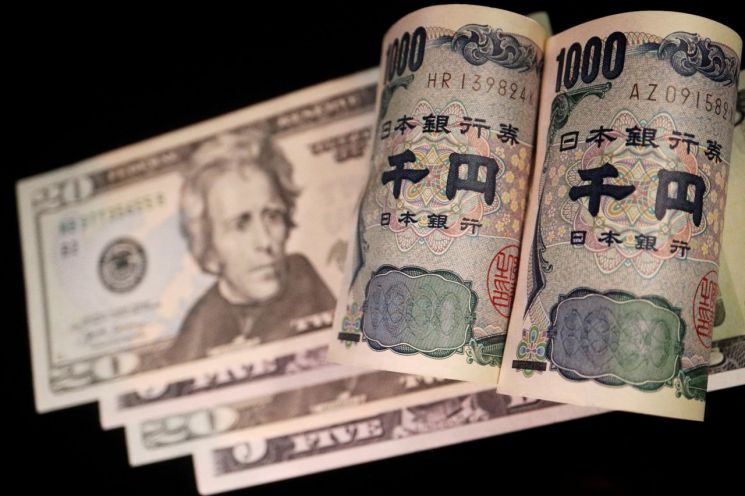
US Interest Rate Cut Expectations Rise Alongside Japanese Market Intervention... Political Factors Also Influence
The recent yen strength is attributed to expectations of a US Federal Reserve (Fed) interest rate cut and large-scale yen buying, presumed to be due to intervention by Japanese foreign exchange authorities. The US Consumer Price Index (CPI) inflation rate announced on the 11th fell more than market expectations, increasing expectations for a Fed rate cut in September and strengthening weak-dollar pressure. Subsequently, on the 11th and 12th, a large-scale US dollar selling, presumed to be Japanese foreign exchange intervention, was observed, and the yen-dollar exchange rate plunged, weakening yen selling sentiment.
Meanwhile, from mid-month, amid a correction in US big tech stocks, a reversal of the yen depreciation that had been in line with US stock rises this year has been underway. Additionally, the unwinding of yen carry trade positions, political factors such as US presidential candidate Donald Trump's stance against yen depreciation, and pressure from the Japanese Liberal Democratic Party's secretary-general for interest rate hikes have combined to influence yen strength.
Lee Sang-won, Deputy Senior Researcher at the International Finance Center who authored the report, stated, "Since July, several strengthening factors have overlapped in a short period, causing the yen's appreciation to be somewhat excessive." He added, "However, considering the direction of changes in overall conditions, such as the low likelihood of the US-Japan interest rate differential, which has narrowed to its tightest in 14 months, widening again, it is expected that the yen will find it difficult to resume a significant depreciation."
Lee explained, "This means that the yen is unlikely to show large strength or weakness. It is expected to remain around the 150-154 yen level for the time being."
© The Asia Business Daily(www.asiae.co.kr). All rights reserved.
![Clutching a Stolen Dior Bag, Saying "I Hate Being Poor but Real"... The Grotesque Con of a "Human Knockoff" [Slate]](https://cwcontent.asiae.co.kr/asiaresize/183/2026021902243444107_1771435474.jpg)










