National Gugak Center Busan Branch to Present Traditional Korean Mask Dance with Satire and Humor as Closing Performance at Almagro International Classical Theatre Festival on July 27-28, Receiving Great Response
The National Gugak Center in Busan presented Korean Talchum, which was inscribed as a UNESCO Intangible Cultural Heritage in 2022, as the closing performance of the Almagro International Classical Theatre Festival in Spain on July 27 and 28 at 9 p.m., at the invitation of the Korean Cultural Center in Spain (Director: Shin Jaekwang) and the Almagro International Classical Theatre Festival Foundation.
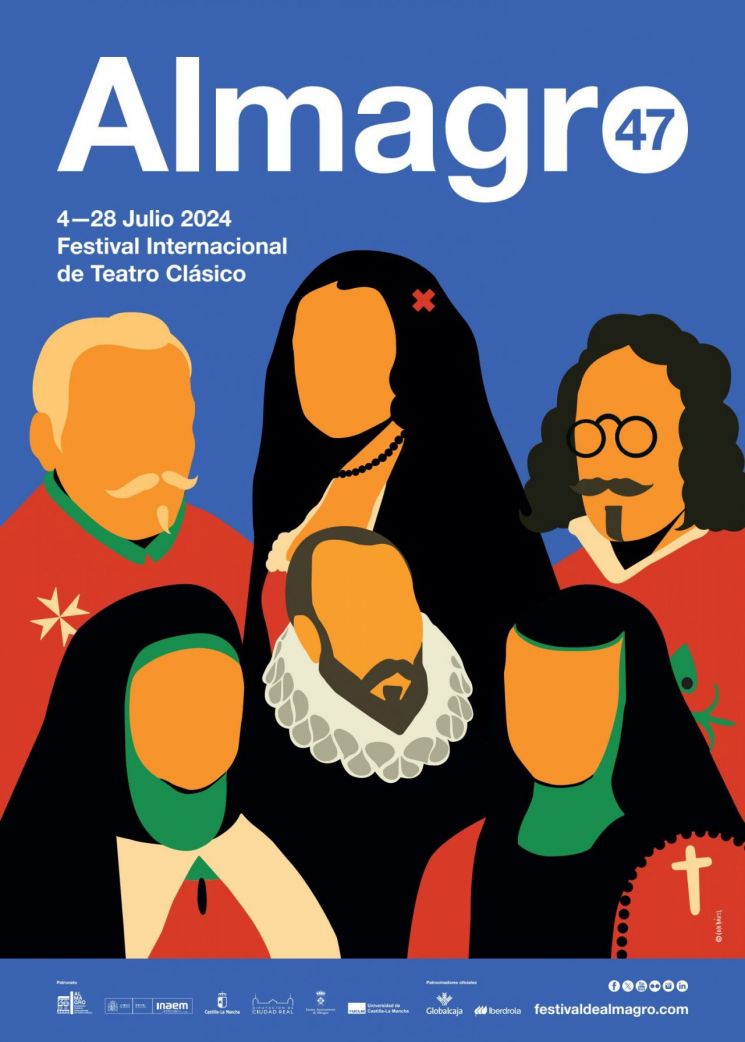
Celebrating its 47th edition, the Almagro International Classical Theatre Festival is a prestigious arts festival held in Almagro, Castilla-La Mancha, Spain, aiming to carry on the literary works of the Spanish Golden Age.
This year’s festival, held throughout July, featured more than 50 works including those by classical authors such as Cervantes and Calderon, as well as outstanding plays and dances from around the world, attracting an audience of over 60,000. The performance was especially meaningful as it promoted the unique cultural identity and artistic value of Korea through its traditional Talchum at a world-renowned festival, reaffirming Talchum’s status as a cultural heritage enjoyed by humanity worldwide.
▲UNESCO-inscribed Intangible Cultural Heritage Talchum presented in Spain for the first time
Showcasing Korean culture imbued with traditional satire, humor, and the spirit of reconciliation and harmony
The National Gugak Center in Busan has previously performed Talchum, a traditional mask dance from the Busan region, on domestic stages, but this was its first performance abroad. The “Talchum Nori” presented in Almagro was directed by Artistic Director Bok Mikyung of the National Gugak Center Dance Company, with Principal Dancer Kim Giwon participating as co-choreographer. The piece was adapted from Suyeong Yaryu, a representative traditional performance of Busan, tailored to suit the local Spanish audience.
This work consisted of three main acts from Suyeong Yaryu?Gilnori (street parade), Yangban Gwajang (aristocrat act), Halmi-Yeonggam Gwajang (old woman and old man act), Saja-mu Gwajang (lion dance act)?and concluded with Daedong Nori, a group play symbolizing harmony.
The performance depicted the lives and struggles of commoners through witty dialogue and the unique Dotbaegi dance of the Yeongnam region, satirizing and criticizing the class system and patriarchal culture.
▲Korean culture introduced for the first time in nine years since 2015
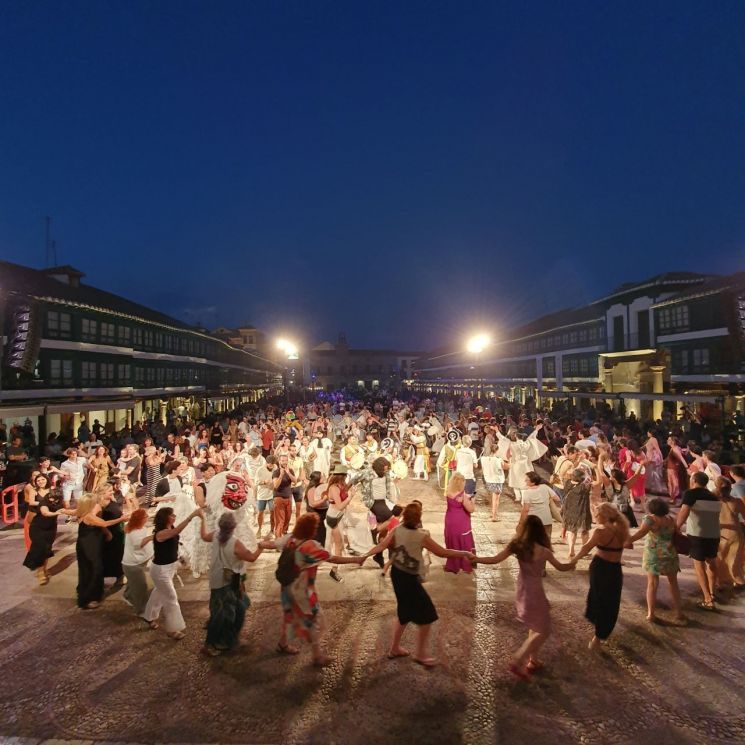 The National Busan Gugak Center performed Talchumnori at the 47th Almagro International Classical Theatre Festival.
A scene of harmony created by the enthusiastic cheers of the local audience filling the historic Plaza Mayor in Almagro
“Talchum Nori” was performed in Plaza Mayor, the heart of Almagro, where the 400-year-old Corral de Comedias theater is located. The outdoor plaza was packed with spectators showing great interest.
Following the humorous Talchum, the audience enjoyed a variety of Korean traditional performances, including Pungmulnori, responding with enthusiastic applause and cheers that overcame the sweltering 42-degree heat. Especially during the encore Daedong Nori, the audience in the plaza joined hands and danced together to the rhythm, creating a spectacular scene of unity.
The Director of Culture from the Office of the President of Spain, who attended the closing performance, praised, “Korean Talchum is an art that transcends language and culture, enabling communication and unity among all.”
The President of the Almagro International Classical Theatre Festival Foundation, Tania Swain, also expressed her admiration, saying, “We are very grateful to present the beautiful ‘Talchum Nori’ at the festival. The performance can be summed up in one word: ‘astonishing.’”
Audience members from all over Spain who came to see Korean Talchum said, “Despite the language barrier, we could perfectly understand and enjoy the story through acting, dance, rhythm, and gestures.” A spectator from Madrid commented, “I am very happy to see the beauty of Talchum in Spain, and I hope the day will come when this performance is staged throughout Spain,” expressing great satisfaction with the show.
▲An opportunity to showcase the diversity and excellence of Korean culture on the world stage
Shin Jaekwang, Director of the Korean Cultural Center, who brought the “Talchum Nori” performance to the festival through close cooperation with the Almagro International Classical Theatre Festival, shared his thoughts: “It is very meaningful to promote our cultural heritage, Talchum, in Spain, the country of world-renowned writers such as Cervantes and Lope de Vega. We will continue to strive to promote the diversity and excellence of Korean culture through collaborations with prominent local festivals and institutions.”
Lee Jungyeop, Director of the National Gugak Center in Busan, said, “It is a great pleasure to present the traditional Talchum of Yeongnam in Spain, the home of classical theater, for the first time and to receive such an enthusiastic response from the international audience. I hope that our traditional Talchum, which embodies the wisdom of our ancestors who achieved social harmony through satire and humor, will leave a lasting impression on the local audience and be remembered as a foundational culture of Hallyu and K-content.”
© The Asia Business Daily(www.asiae.co.kr). All rights reserved.


















