Decline in Preference for Luxury Imported Cars... First Half Sales Also Down
Tightening Belts Amid High Inflation... "Purchasing More Cautiously"
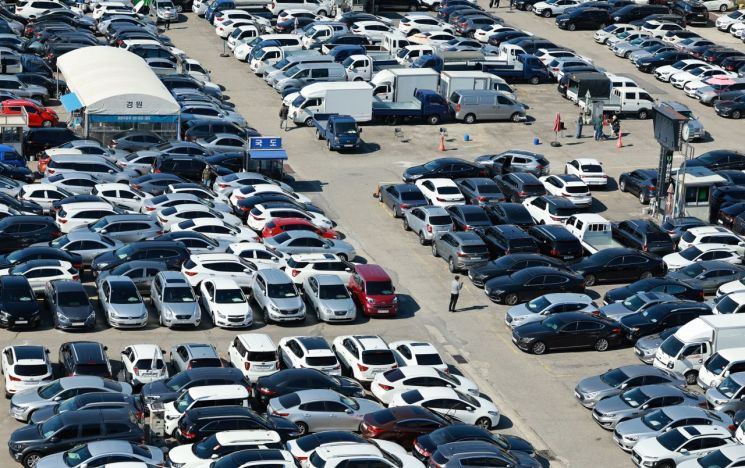
As the competitiveness of domestic cars strengthens, preference for imported cars is decreasing. The romantic notion of the “feel of getting out” of luxury imported cars is fading compared to the past. In a situation where the real economy is struggling due to high inflation, there is a noticeable tendency to prefer domestic cars with a good “price-to-performance ratio.”
According to a survey conducted on June 1 by Embrain, a market research company, targeting 1,000 adults aged 19 to 59 nationwide who hold a driver’s license, a decline in preference for imported cars has been observed this year. The proportion of people who agreed with the statement “I envy people who own luxury brand cars” dropped by about 10 percentage points from 46.1% last year to 36.7% this year. The percentage of respondents who answered “I want to buy a car that others envy” also decreased from 39.4% last year to 33.5% this year.
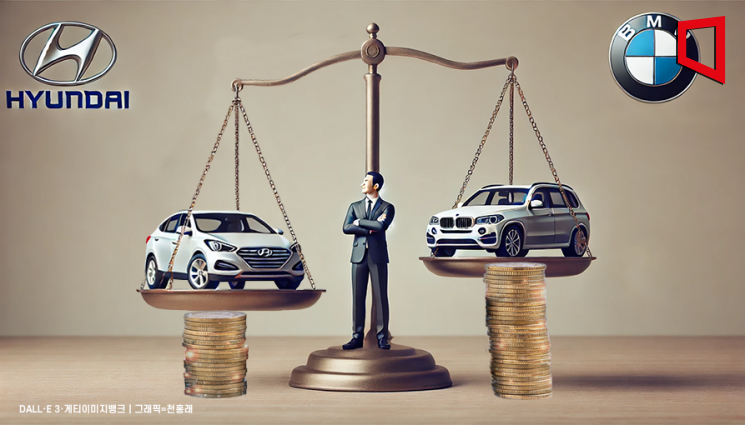
While brand image remains important when purchasing a car, the tendency to unconditionally prefer imported cars has diminished. The proportion of people who agreed with the statement “Imported cars are superior to domestic cars in technical aspects such as the engine” decreased from 36.8% last year to 33.3% this year. The percentage of those who considered “car repair and maintenance costs” important when buying a vehicle increased from 55.8% to 58.8% during the same period. This is interpreted as a decline in preference for imported cars as domestic cars become more competitive. It reflects a judgment to choose domestic cars that offer a good balance of price and performance rather than focusing on brand.
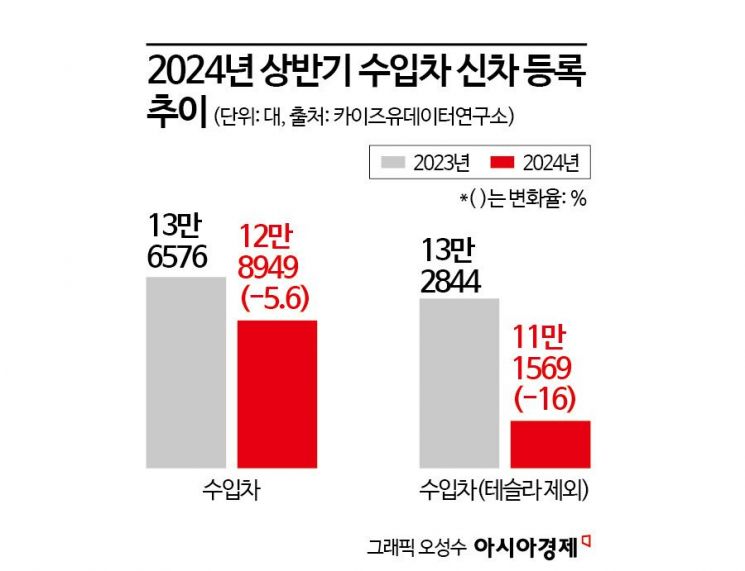
The reduced preference for imported cars is also evident in sales figures. According to the Kaizyu Data Research Institute, imported car sales in the first half of this year totaled 128,949 units, down 5.6% compared to the same period last year. Excluding Tesla electric vehicle sales, which surged nearly fivefold this year, imported car sales dropped to 111,569 units, increasing the decline rate significantly to 16.0%. Considering that Tesla somewhat deviates from the luxury car image typical of other imported cars, this is interpreted as a decrease in preference for luxury imported cars compared to the past.
Economic considerations are also reflected in preferences for car purchasing methods. The proportion of respondents considering long-term rental or leasing when purchasing a car in the future decreased from 11.2% to 8.9% and from 8.7% to 6.8%, respectively. This suggests reluctance to purchase methods that require high interest rates or monthly fees due to high inflation and economic downturn. An industry insider said, “Overall, it is noticeably felt that people are tightening their belts,” adding, “As the price and performance gap between domestic and imported cars has narrowed compared to the past, prospective buyers seem to be making decisions much more carefully than before.”
© The Asia Business Daily(www.asiae.co.kr). All rights reserved.
!["The Woman Who Threw Herself into the Water Clutching a Stolen Dior Bag"...A Grotesque Success Story That Shakes the Korean Psyche [Slate]](https://cwcontent.asiae.co.kr/asiaresize/183/2026021902243444107_1771435474.jpg)


















