Emergency National Assembly Inquiry... "Gu Young-bae Attendance"
Newly Confirmed 'T-Mef' Damage Cases
Concerns Over Card, PG, and On-투업 Investor Losses
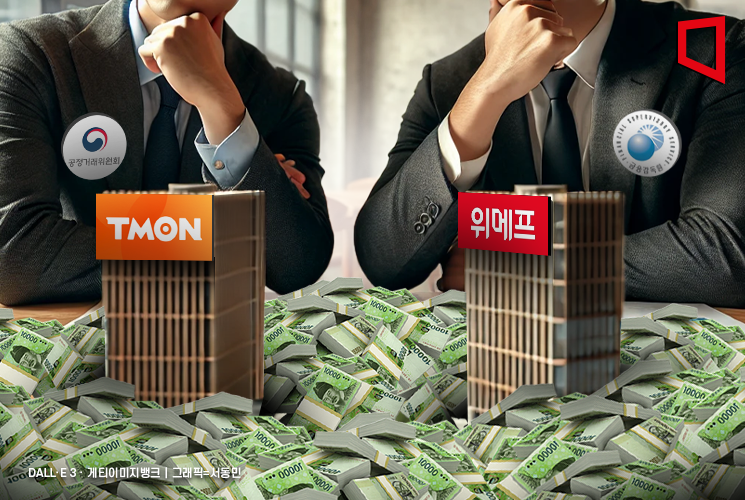
As the unpaid settlement issue involving TMON and WEMAKEPRICE continues to cause damage to consumers and sellers, the National Assembly's Political Affairs Committee is set to hold an emergency inquiry. TMON and WEMAKEPRICE, which had promised to minimize the damage, ultimately filed for corporate rehabilitation at the Seoul Bankruptcy Court, raising concerns not only among credit card companies and payment gateway (PG) providers but also investors in the online investment-linked finance industry (On-to industry) within the financial sector.
According to the National Assembly and financial authorities on the 30th, the Political Affairs Committee will hold an emergency inquiry at 2 p.m. regarding the unpaid settlement issue of TMON and WEMAKEPRICE. Officials from the Financial Services Commission, Financial Supervisory Service, Fair Trade Commission, and Korea Consumer Agency will be summoned to assess the situation and review the progress of countermeasures. It is expected that Koo Young-bae, CEO of Qoo10 Group, Ryu Kwang-jin, CEO of TMON, and Ryu Hwa-hyun, CEO of WEMAKEPRICE, will also appear before the National Assembly.
A representative from the office of Kang Min-guk, the ruling party's secretary of the Political Affairs Committee, said, "Each company's CEO has expressed their intention to attend. However, whether all three CEOs will actually appear will only be confirmed on the day of the meeting."
The situation is escalating. The two companies recently filed for corporate rehabilitation at the court, stating that they are unable to recover financially due to a large-scale refund crisis and loss of business partners. Meanwhile, new cases of damage caused by delayed settlements continue to emerge within the financial sector.
Online investment company Honest AI announced yesterday that some principal repayments are expected to be delayed in the TMON and WEMAKEPRICE selected advance payment receivables (SCF) investment products. The total amount expected to be uncollected at maturity is 562 million KRW. A representative from Honest AI stated, "It seems that principal repayment will be possible only if TMON and WEMAKEPRICE pay settlement funds to the vendors, supported by government measures."
Another online investment company, Nuri Funding, recently provided information on the receivables and recovery plans related to TMON and WEMAKEPRICE. In a notice on the 26th, Nuri Funding announced that it holds SCF products related to TMON and WEMAKEPRICE worth 239.3 million KRW. They stated that if the funds are not deposited by the maturity date, repayment will be made using the borrower's own funds, settlement amounts from other shopping malls, or their own capital.
The problematic products are structured as direct investments in the sales receivables (settlement claims) of vendors on TMON and WEMAKEPRICE platforms. When vendors receive sales proceeds from the e-commerce platform, the corresponding amount is paid to investors. If sellers on TMON and WEMAKEPRICE fail to repay due to this payment default, losses for investors in the online investment industry are anticipated.
The delayed settlement amount for TMON and WEMAKEPRICE sales proceeds has exceeded 210 billion KRW, raising concerns that risks could spread throughout the financial sector. While credit card companies have supported payment cancellations for TMON and WEMAKEPRICE, the PG industry is also expected to handle buyer disputes. Simple payment services such as Naver Pay, Kakao Pay, and Toss Pay began proactive refunds on the 28th. They plan to claim subrogation rights against TMON and WEMAKEPRICE later, but given the uncertain likelihood of repayment, financial companies may bear the risks.
Financial authorities have pressured the PG industry to reduce consumer damage. Park Sang-won, deputy director of the Financial Supervisory Service, explained at a briefing yesterday, "PG companies have an obligation to cancel payments under the Specialized Credit Finance Business Act. Since they receive fees from sellers who provide goods and services, they bear some responsibility as they have received risk costs." Article 19 of the Specialized Credit Finance Business Act stipulates that card companies must comply with transaction cancellations and refund requests from card members.
© The Asia Business Daily(www.asiae.co.kr). All rights reserved.

















